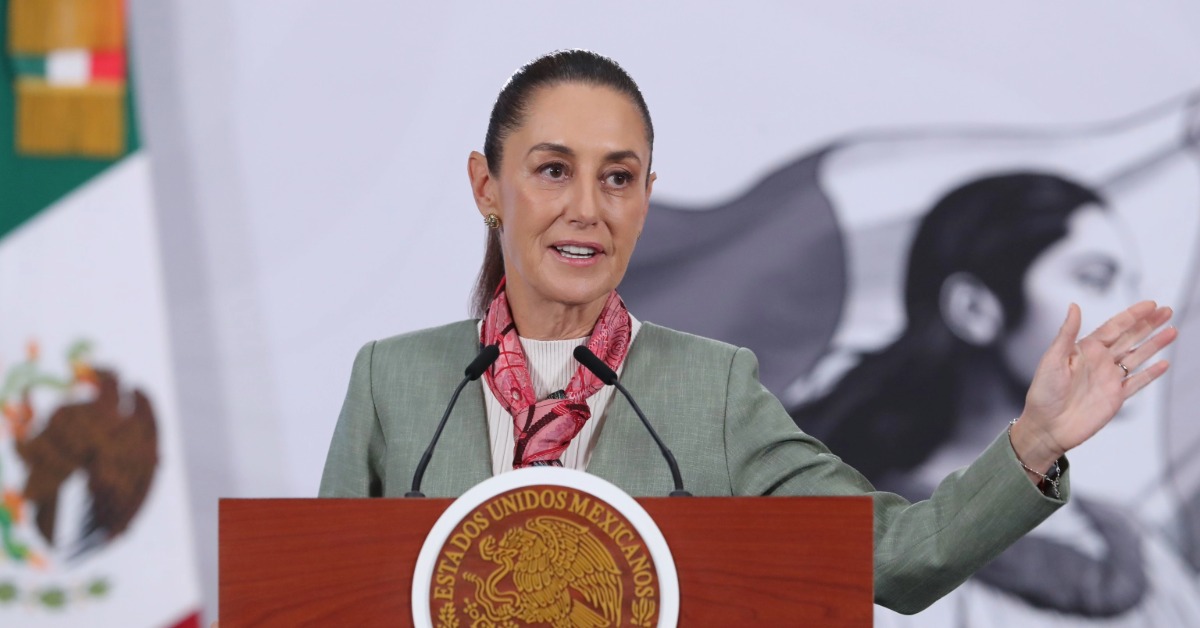
Mexico’s president is trying to send two messages at once. One is that households are feeling the effects of higher food prices, especially for produce. The other is that the broader economy still shows signs of resilience. Her answer is a familiar one with a new twist: widen the anti-inflation plan, cut out more intermediaries, and protect the trade pact that anchors much of Mexico’s manufacturing and cross-border commerce. Whether that balance holds may shape prices, jobs, and investor confidence in the months ahead.
Produce prices are back at the center of the story
President Claudia Sheinbaum acknowledged on Friday that the price of tomatoes, lemons, and zucchini has been rising. She said the federal government now wants to bring agricultural producers directly into the PACIC strategy. The goal, as she described it, is to reduce the role of middlemen and make it easier to reach price agreements earlier in the supply chain.
That matters because food inflation is often the first thing households feel. A national inflation figure can sound abstract. The price of produce at the market does not. When tomatoes or lemons jump sharply, families see it immediately in daily spending. That is especially true in Mexico, where fresh ingredients remain central to household budgets and small price changes can spread quickly through restaurants, fondas, and neighborhood shops.
The government’s argument is straightforward. If more agreements happen closer to the farm gate, there may be less room for markups between producers, transporters, wholesalers, and retailers. That does not guarantee lower prices. Agriculture still faces weather risks, logistics costs, and seasonal swings. But it shows that the administration sees part of the inflation problem as a question of market structure, not only monetary policy.
The optimistic message is real, but it has limits
Sheinbaum paired that price warning with a broader defense of the economy. She pointed to stronger tourism figures, higher vehicle sales, a slight increase in industrial activity, and continued investor interest in Mexico. That was not just political framing. Recent data do support parts of that message.
Mexico’s annual inflation rate rose to 4.59% in March, with especially strong pressure from the non-core side of the index. Fruits and vegetables were a major factor. At the same time, light-vehicle sales increased in March from a year earlier, and industrial activity showed a modest monthly gain in February. Separate government figures have also described 2025 as a record year for foreign direct investment.
Those indicators, however, do not erase the pressure consumers feel. That is the tension running through Sheinbaum’s remarks. A country can post decent readings in trade, industry, tourism, or investment while families still complain about the cost of groceries. Both things can be true at once. For officials, the challenge is to show that headline economic resilience eventually translates into lower day-to-day pressure. For the public, that promise is harder to judge than the price of food on a receipt.
Why Sheinbaum is still defending the USMCA
The second half of Sheinbaum’s message was about trade policy. As Mexico moves deeper into the 2026 USMCA review, she insisted that keeping the agreement intact with Mexico, the United States, and Canada remains in everyone’s interest. She also said the three countries benefit from fewer tariffs and more trade promotion.
That position reflects how deeply the three economies are tied together. Mexico’s auto sector, manufacturing base, logistics corridors, and export industries do not operate as isolated national systems. They function through North American supply chains. Parts cross borders several times. Investment decisions often depend on whether companies trust that those rules will remain stable.
For Mexico, the stakes go beyond exports. The USMCA affects factory jobs, industrial expansion, supplier networks, border-region commerce, and the broader case for nearshoring. It also shapes confidence in the peso and in long-term investment planning. For many foreign residents in Mexico, this may sound distant, but it can filter into everyday life through prices, employment, real estate demand, and the strength of local economies tied to trade.
Sheinbaum’s defense of the pact also matters politically. Some domestic sectors want stronger protections or carve-outs, especially in agriculture. Others worry that uncertainty around the review could chill investment. By defending the agreement while also discussing domestic price controls and producer support, the administration is trying to do both: preserve external trade certainty and show a willingness to intervene when internal prices become politically painful.
What readers should watch next
The next test is practical, not rhetorical. If the government reaches agreements with producers and commercializers, the question will be whether those agreements change shelf prices in a visible way. Produce inflation can cool quickly when supply improves. It can also remain stubborn when transport, fuel, storage, or regional concentration issues persist.
Readers should also watch whether the government broadens PACIC in a way that affects only a few headline products or whether it changes how more of the food chain is managed. That distinction matters. A narrow response may calm a short-term spike. A broader redesign could signal a longer effort to influence how food moves from producers to consumers.
On trade, the issue is continuity. The USMCA review is no longer a distant event. It is already underway. If the talks stay orderly, Mexico can keep selling the idea that it remains one of the most attractive production platforms in North America. If the process becomes more confrontational, inflation and trade uncertainty could feed on each other. That is why Sheinbaum’s comments landed as both a reassurance and a warning. Mexico’s economy still has positive signals, but the pressure at the grocery counter is forcing the government to respond in more visible ways.