Mexico City’s new public rental housing program targets 20,000 affordable units to ease a 50,000-unit deficit, combat gentrification, and support vulnerable families.
Mexico City is rolling out an ambitious public rental housing program aimed at addressing a long-standing crisis in affordable rentals and curbing the displacement of working-class families from central neighborhoods.
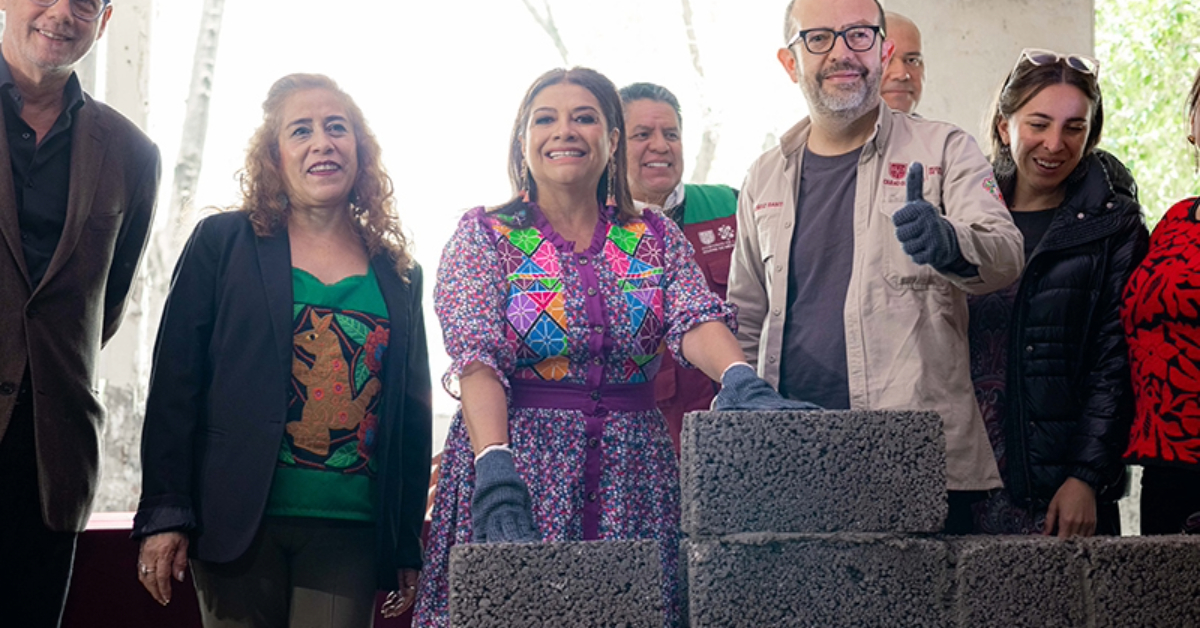
The head of government, Clara Brugada, announced that 1,000 new homes will be built this year, with initial deliveries scheduled between late 2025 and early 2026. This marks the first phase of a broader effort to construct 20,000 affordable rental units during the current six-year term.
The announcement comes as the city faces a rental housing deficit exceeding 50,000 units, with soaring rents pushing long-established residents out of neighborhoods like Centro Histórico, Doctores, and Tacuba. Brugada acknowledged the scale of the challenge:
“We can’t talk about well-being if there’s no affordable place to live. We can’t talk about justice if families have to be evicted from their neighborhoods.”
Affordable, central, and inclusive
The program is backed by more than 600 million pesos in public investment, earmarked for the acquisition, rehabilitation, and construction of housing in centrally located areas including Cuauhtémoc, Miguel Hidalgo, Azcapotzalco, and Doctores. This focus on central zones is a deliberate counter to the ongoing gentrification that has priced many residents out of the urban core.
Priority will be given to:
- People without current home ownership
- Households earning up to three minimum wages
- Vulnerable groups including young people, single mothers, older adults, informal workers, and displaced families
Rents will be set between 2,000 and 3,000 pesos per month for families earning one or two minimum wages. For those with higher incomes, rent will be capped at 30% of household income, a ceiling intended to reflect fair and sustainable housing costs.
This affordability is critical in a city where rent can consume up to half of a working family’s income. Officials hope the program will not only increase housing availability but also ease the financial strain on low-income renters, many of whom live paycheck to paycheck.
First construction underway in Centro Histórico
Construction has already begun on the first building, located across from Plaza Tlaxcoaque in the Centro Histórico. The site, once home to the Yale factory, will be transformed into 120 apartments, each measuring 60 square meters.
Four additional projects are in development in the neighborhoods of Doctores, Buenos Aires, Tacuba, and El Rosario. Combined, they will deliver more than 550 new homes, while the program also includes the rehabilitation of 300 houses damaged in the 2017 earthquakes.
More than just housing
One of the program’s standout features is its inclusion of integrated Care Systems within each residential building. These will include:
- Child development centers
- Community kitchens and dining halls
- Laundry services
- Multipurpose living and support spaces
These additions aim to transform housing units into complete, livable communities, especially for those without access to private services or family support networks. The approach reflects Brugada’s broader vision of “urban cohesion” and social support embedded in city infrastructure.
Tackling gentrification and price volatility
Alongside construction, the city is preparing a package of actions to stabilize rental prices in the medium term. While details are still emerging, the measures are expected to include rental regulation frameworks and expanded tenant protections—key tools to halt speculative rent increases and mass evictions.
This represents a sharp shift from recent trends in Mexico City’s real estate market, where foreign investment, digital nomadism, and luxury developments have driven rapid rent inflation, particularly in popular districts like Roma, Condesa, and Centro.
A model for other cities?
Housing experts have noted the uniqueness of Mexico City’s approach. Unlike many rental subsidy programs which rely on the private sector, this public rental initiative is government-built, government-owned, and socially targeted—a structure that gives it long-term affordability and legal protection against speculative pressures.
The city’s initiative could serve as a national model for other urban centers struggling with housing shortages and real estate speculation.
For now, the success of the program will depend on transparent implementation, continued funding, and community participation. But with 20,000 units planned and construction already underway, Mexico City is making a bold attempt to reclaim housing as a public good and restore the right to live in the heart of the city.
Mexico City housing, rental crisis, public housing program, affordable rent CDMX, Clara Brugada, gentrification Mexico City, CDMX real estate, low-income housing