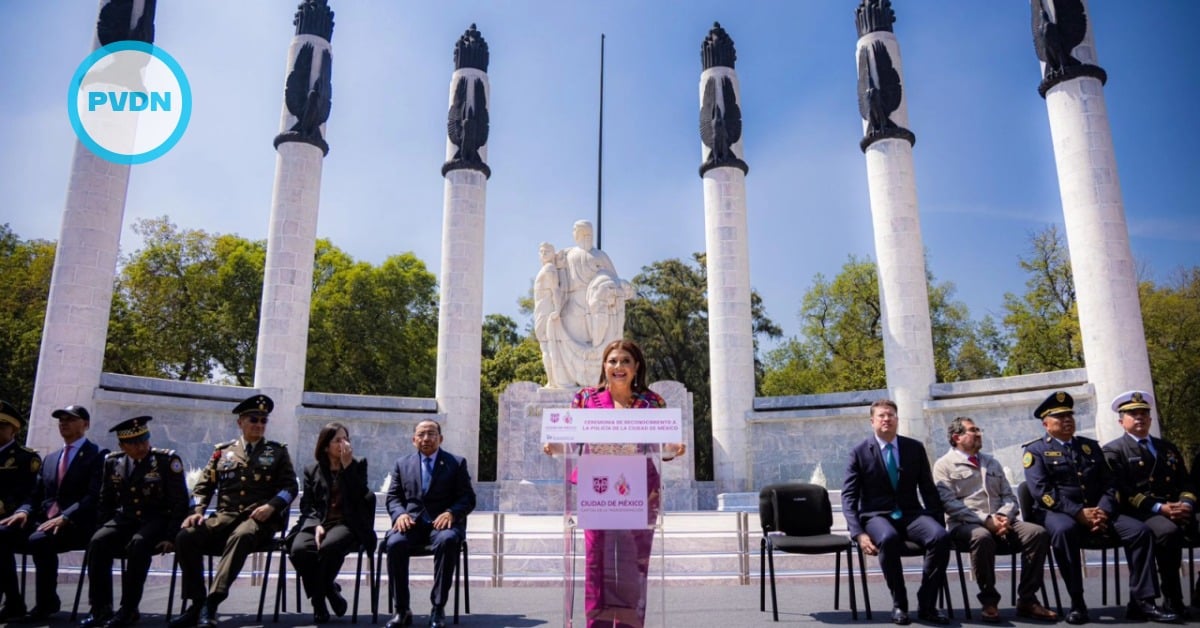
Mexico City turned a recognition ceremony into a message about safety. At the Altar a la Patria on October 23, the city honored officers for valor, service, and steady work in the streets. Mayor Clara Brugada thanked the rank-and-file and tied the celebration to a broader trend city leaders say is moving the right way: fewer high-impact crimes compared with 2019. The phrase “Mexico City crime drop” was the promise, repeated on stage.
The event itself was thick with symbolism. Awards covered the “officer of the month,” merit and valor distinctions, and years of service. Officials also singled out officers’ conduct during the October 2 march, framing restraint and proximity policing as part of a peace-building strategy. The city’s account of the ceremony, delivered from the podium, stressed both gratitude and results, and serves as the public record of what was said and promised.
Brugada’s numbers were striking. She said high-impact crimes are down roughly 60% since 2019, that homicides have fallen by about half, and that this year is showing another double-digit slide. These are administration talking points, but they are anchored in official reporting systems. Mexico’s crime statistics are tracked nationally and broken down by state and city, and Mexico City’s security cabinet has leaned on those records to argue a fundamental shift.
If you want to verify the raw material behind those claims, the data lives in the federal open-data repository—the same source analysts and newsrooms use. There, month-by-month tallies let you check long-range trends and year-to-date comparisons for the capital’s most sensitive crimes. What emerges is a multi-year arc: peaks in the late 2010s, followed by declines in key categories, with some variation by borough and offense.
Pride and scrutiny in the capital
The city has also poured money into gear and presence. This summer, Mexico City rolled out 3,500 new patrol cars to spread across its 1,020 police quadrants, with a plan to add roughly 40,000 cameras and rehabilitate shuttered neighborhood modules. The investment is part of a push branded as “more and better police,” aimed at quicker response times and tighter ties with residents. Independent reporting documented the rollout and noted a concurrent dip in high-impact crimes in early 2025, including homicides and auto theft.
Morale was another theme. The city has touted salary improvements, thousands of merit awards and promotions, and new health infrastructure for the force, including a police hospital under development. Those moves matter beyond optics; veteran officers say pay, training, and medical care influence retention and performance. The administration is betting that a steadier workforce—plus tech and visibility—will keep the numbers pointed downward even as major events test the city’s logistics and security.
All of this lives alongside a stubborn reality: people judge safety by what they feel on their block. Official statistics can improve while fear lingers, especially in pockets where robberies, assaults, or gunfire cluster. That gap between numbers and lived experience is where Mexico City’s strategy will be measured next. The recognition ceremony offered thanks and momentum. The rest of the year’s crime data—and how it matches daily life—will decide whether the applause sounds as convincing on the sidewalk as it did from the stage.