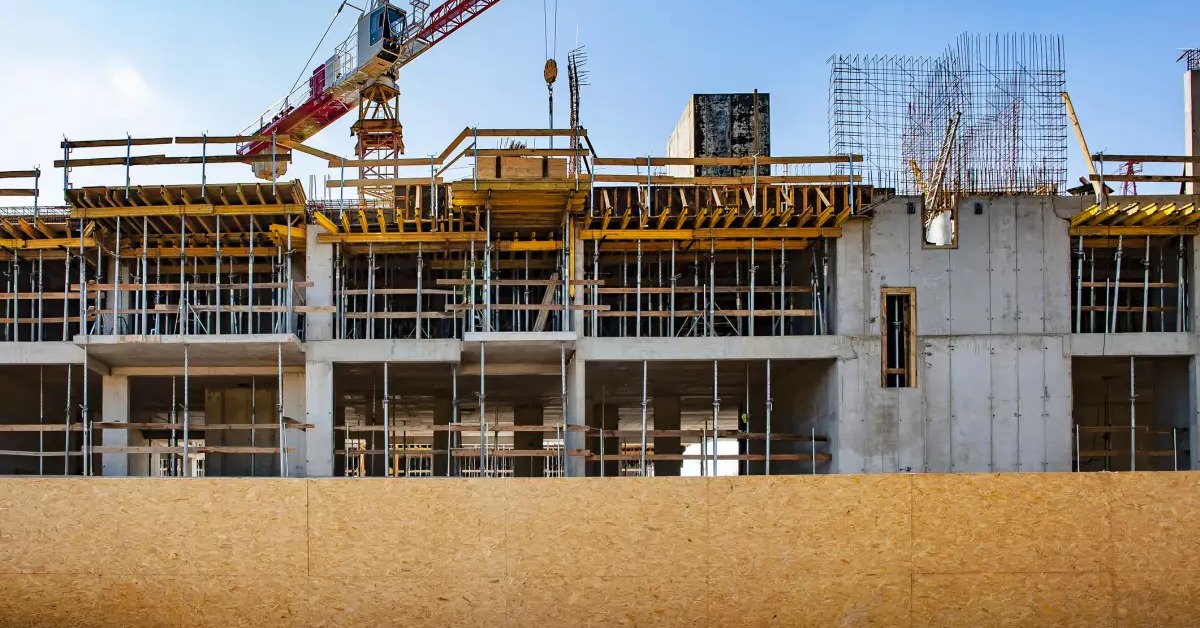
Mexico is still selling a growth story built on homes, towers, roads, and mixed investments. The April spending data points in a different direction. Public infrastructure money is moving more slowly, even as housing and private development keep asking more from water, power, drainage, and transport systems. The gap is not abstract. It can decide which projects move forward, which stall, and which communities absorb growth before public works catch up. The next reports will show whether April was only a slow start.
Mexico’s Building Boom May Be Outrunning Public Works
Public infrastructure investment fell sharply in Mexico through April. The drop left the federal works pipeline thinner, while demand for housing, real estate, and transportation continues to put pressure on local services.
The Finance Ministry’s April public finance figures put physical investment at 240.97 billion pesos from January through April. That was down 18.4 percent in real terms from the same period of 2025. The cuts reached areas tied to growth zones. Hydrocarbons fell 47.4 percent, communications and transport fell 41.3 percent, and electricity fell 7.2 percent, according to the published functional breakdown.
That creates an uneven development picture. Mexico is still promoting new housing, mixed public-private infrastructure, and a larger private real estate pipeline. The early 2026 spending data show the public works side has not yet caught up with that plan.
Hacienda called the drop “moderation.” It said the change responded, “essentially, to the schedule for the execution of public spending.” The agency said spending should accelerate as the federal infrastructure law and investment plan move forward throughout the year.
A smaller pipe for a larger buildout
The numbers do not show a simple construction collapse. INEGI’s fixed investment data for January showed construction investment up 3.8 percent from a year earlier. Residential construction rose 7.9 percent. Later February data kept construction in positive annual territory, led by residential work.
That is where the pressure sits. Housing can rise while roads, the grid, drainage, water systems, and public transport lag behind. Developers can finance towers, subdivisions, and industrial buildings. The public sector still carries much of the load for the systems that make those projects work.
Vallarta Daily recently covered how Mexico’s real estate developers are planning $18.4 billion in 2026 projects, with housing taking the largest share. That pipeline depends on permits, land-use approvals, service connections, and local works. The new public investment data adds a harder fiscal edge to that same problem.
The federal housing push adds another layer. Sedatu has said that more than 400,000 homes are expected to be built in 2026 through the Programa de Vivienda para el Bienestar. The broader program calls for Infonavit, Conavi, and Fovissste to produce 1.8 million new homes. Sedatu has described the investment as historic.
Housing leads the spending mix
The April figures do not show infrastructure money leaving housing and community services. They show that this category is now carrying much of the public investment mix.
Hacienda said physical investment through April went mainly to housing and community services at 40.7 percent. Fuels and energy took 33.5 percent. Transport took 11 percent. Housing and community services often include federal transfers that states and cities use for local work.
Mexico Evalúa has warned that federal physical investment is highly concentrated. Its 2026 budget analysis said fuels and energy, housing and community services, and transport together account for 83 percent of physical investment. The same analysis said many other areas have limited room.
The Center for Economic and Budgetary Research put the problem in sharper terms. “Public investment has remained at low levels compared to the country’s needs,” it said in an April analysis of public investment plans.
Transport and power are the weak links in the current data. Communications and transport posted one of the largest declines through April. Electricity also fell. Both are central to industrial parks, hotels, data centers, housing towers, and new urban corridors.
The pressure moves to city halls
The effect will not be limited to federal budget tables. It will show up in planning offices, water agencies, power connections, road access, school capacity, and project approvals.
Municipal governments often become the first place where the gap appears. A project may be privately financed. It still needs street access, drainage, drinking water, wastewater handling, and power capacity. Slow service approvals can delay a project, increase costs, or push construction into areas where services are already scarce.
That is already a recurring problem in housing. A previous Vallarta Daily report on why housing construction keeps stalling across Mexico found that developers often point to zoning, permits, and service approvals as the choke points between land acquisition and actual building.
The federal government is trying to answer that bottleneck with the Plan de Inversión en Infraestructura para el Desarrollo con Bienestar. The official project platform says the plan calls for 5.6 trillion pesos in public and mixed investment from 2026 to 2030. It also lists 722 billion pesos in added 2026 investment and more than 1,500 projects nationwide.
Its own presentation describes the effort as “a historic, public and mixed investment” in energy, trains, highways, ports, health, water, education, and airports.
Execution now carries the risk
The tension is timing. The country is promoting construction, housing, and mixed investment, while the first four months show a thinner flow of public infrastructure money.
Hacienda says the decline reflects the spending calendar. That explanation leaves a clear test in the next reports. If investment speeds up, the April data may look like a slow start. If it does not, development will continue to lean on local systems already asked to support more homes, more projects, and more traffic.
The risk is not that Mexico stops building. The clearer risk is that building continues in places where public works arrive late, unevenly, or only after private development has already altered the pressure on land, water, power, and roads.