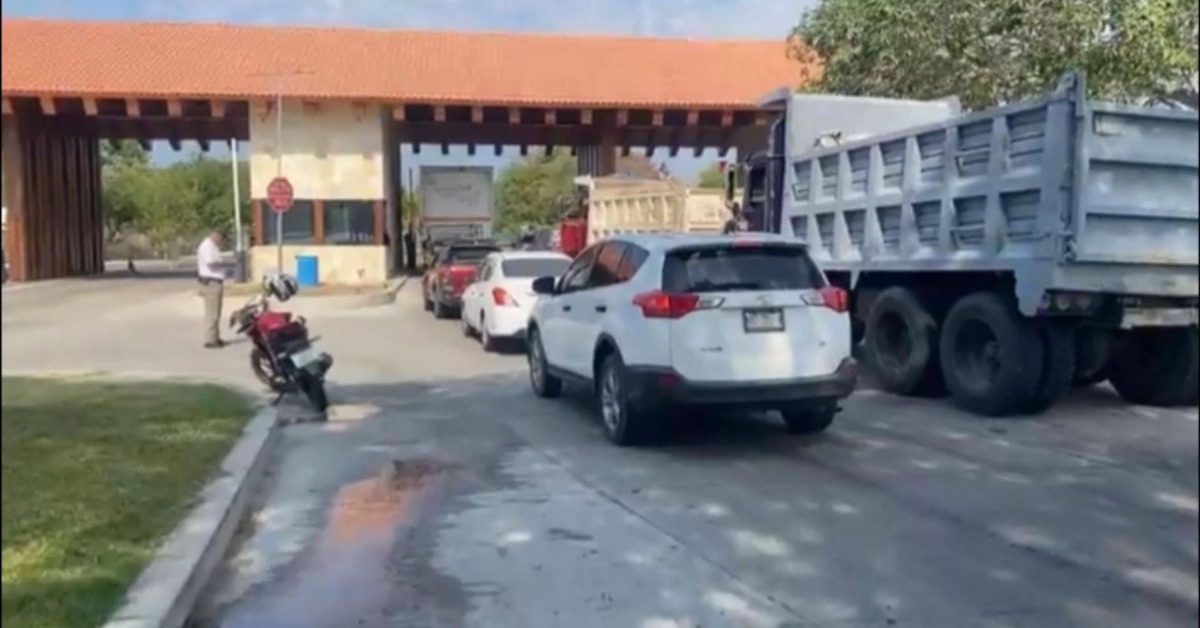
A security filter near the Maestro Flamingos has turned a local-access complaint into a broader test of beach rights in Nuevo Nayarit. The controls are being defended as private property management, while complaints point to the routes people use to reach the coast. Federal law is clear that beaches and the adjoining federal maritime zone cannot be blocked or conditioned. The harder question is whether the limited access is a private-road issue, a beach-access violation, or both.
Nuevo Nayarit Beach Access Restrictions Draw Scrutiny
Beach access controls near Maestro Flamingos in Nuevo Nayarit have revived scrutiny over beach routes in Bahía de Banderas. Residents and visitors have reported limits at a security filter used to enter the Flamingos area.
According to a May 29 report, the main filter at Condominio Maestro Flamingos has been limiting passage to internal roads. The stated reason is that the roads are private property. The same account cited complaints about access controls and parking charges on routes people say are used to approach the beach.
A separate report said a sign at the access point warns drivers that the streets within Condominio Maestro Los Flamingos are private. It says they are not alternate routes to Boulevard Riviera Nayarit. The sign also says controls are being used “to maintain order and internal security.”
The public record does not show a court or federal authority resolving the specific roads at issue. It does show a sharper conflict. Private access controls are now being weighed against the public’s legal right to reach the coast.
The private-road claim
Condominio Maestro Los Flamingos states on its website that it was created as a private tourist-residential destination through FIBBA. The association says its services include road and common-area maintenance, and 24-hour security with access-control booths. That supports the development’s private-property argument over internal streets. It does not answer a separate question. A usable route to the beach still has to exist.
What federal law says
Mexico’s General Law of National Assets lists maritime beaches and the federal maritime-terrestrial zone, known as ZOFEMAT, as common-use assets. The law says that access to beaches and the adjoining ZOFEMAT cannot be inhibited, restricted, blocked, or conditioned except as allowed by regulation.
The same law applies to areas where public roads or public access points do not exist. Owners of land next to ZOFEMAT must allow free access to the zone and to maritime beaches. Those access points are to be agreed with Semarnat. Owners, concession holders, permit holders, and others who block or condition access can face fines from 3,000 to 12,000 UMA. Repeat violations can lead to revocation.
That does not automatically make every private condominium street a public bypass. It gives federal authorities a narrower task. People must be able to reach the beach and ZOFEMAT through a route that is real, visible, and usable.
The federal government used similar language in Nayarit last month after the Playa Las Cocinas dispute in Punta de Mita drew national attention. The Interior Ministry said “free access to beaches is a right” that must be guaranteed under the current legal framework.
A wider Nayarit access dispute
The Nuevo Nayarit complaint arrives while the Playa Las Cocinas dispute continues in Punta de Mita. There, access, coastal works, and environmental permits have drawn federal attention. The cases are different. Both involve the same pressure along the Riviera Nayarit coast. Luxury development, private security, public land, and beach access are colliding in places where maps and daily use do not always line up cleanly.
Bahía de Banderas’ planning institute presented the first stage of a municipal beach atlas in 2025. The institute said the project sought to make the full beach inventory transparent and guarantee free, equitable access. It said more than 100 beaches had been identified in the municipality. Seven were inside protected natural areas.
As of publication, the public record reviewed for this story showed no official determination on whether the Maestro Flamingos controls violate federal beach-access law. Any complaint would likely turn on property titles, municipal maps, designated access points, ZOFEMAT boundaries, and the condition of the actual route to the sand. Those records would determine whether the issue is a private-road dispute, a beach-access violation, or both.