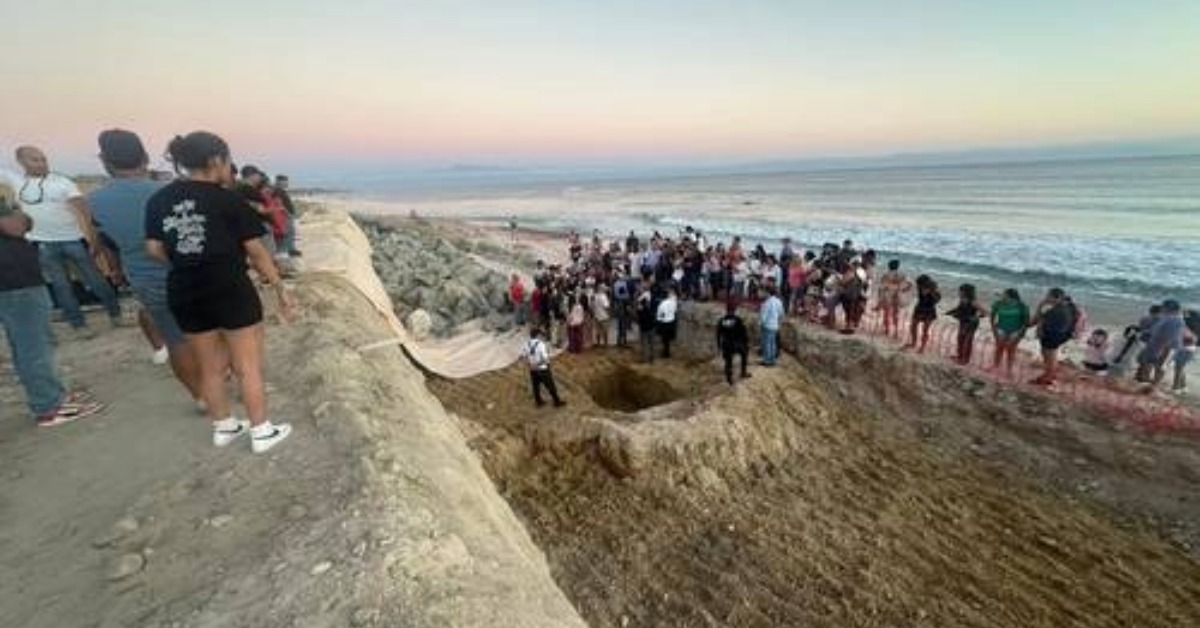
Nayarit prosecutors have withdrawn investigation files against demonstrators who defended public access to Playa Las Cocinas, easing one part of a dispute that has placed Corral del Risco, Punta de Mita, and Bahía de Banderas under national scrutiny.
The move, described in a May 28 account of the case, came after weeks of pressure from residents and a visit by Senator Gerardo Fernández Noroña to the community. It does not close the broader conflict. Residents continue to demand a review of permits, concessions, and tourism-related works near the beach.
The dispute centers on Playa Las Cocinas, a coastal area in Corral del Risco where residents have challenged construction activity, beach access conditions, and the use of land tied to high-end tourism development. The conflict has already moved through road protests, negotiations, environmental complaints, and criminal accusations.
Legal pressure eases but the dispute remains open
The latest change follows a tense week in which the legal status of demonstrators appeared to shift several times. On May 27, Nayarit Fiscal General Ludmila Heredia Verdugo confirmed that eight arrest orders existed but said they were not being executed.
“Before the demonstration on the beach, there were already complaints from private parties because eight people entered a property, destroyed a fence, and threatened to burn machinery,” Heredia said in an earlier account of the case. She said the orders were not tied to the road blockade itself, but to prior allegations.
Heredia also said the orders had not been carried out because the people involved had sought legal protection and because talks had opened between the company, the state government, and the protesters. Her statement left the orders alive but inactive at that point.
The May 28 withdrawal changes that picture. It appears to reduce the immediate criminal exposure faced by the demonstrators, though the public record still lacks a detailed official explanation from the prosecutor’s office on what was withdrawn, under what terms, and whether any related complaint remains active.
That gap is important because the earlier accusations included threats, criminal association, apology for crime, and property damage. Those are not minor administrative claims. They placed a local beach-access protest inside the criminal justice system.
A conflict built around the federal beach zone
The legal fight grew from a deeper dispute over the Zona Federal Marítimo Terrestre, known as ZOFEMAT. PROFEPA defines that federal zone as the 20-meter strip of firm, walkable land next to the beach, a definition that has become central to the Las Cocinas dispute.
Residents have argued that access and public passage must be protected according to that rule. They also want authorities to show clearly which works are authorized, which concessions are valid, and whether construction has affected federal beach land.
The federal government had already stepped into the case. In late April, the Secretaría de Gobernación said it would maintain institutional attention to guarantee public access to Playa Las Cocinas, with participation from Semarnat, PROFEPA, state authorities, the developer, and residents.
That statement promised dialogue, technical review, and environmental verification. One month later, the criminal cases may be receding, but the promised clarity on permits and works remains the harder test.
Residents still want permits and concessions reviewed
The prosecutor’s withdrawal does not answer whether the coastal works comply with environmental and federal beach rules. Nor does it answer whether public access is open in a way that can actually be used.
Previous reporting by Vallarta Daily has traced the conflict through several stages, including the Punta de Mita blockade over beach access, questions over the tourism project’s permits, and the municipal approval tied to more than 21 million pesos in fees for a Playa Cocinas license.
Those issues now return to the center of the case. The criminal files may have drawn the sharpest attention because they put named demonstrators at risk. The unresolved administrative questions are what keep the conflict alive.
Residents have repeatedly said they want the 20-meter federal beach zone respected. They have also questioned whether tourism works near the shoreline is changing the beach in ways that affect public use and the coastal environment.
Federal law gives beaches a public-use character, but disputes like Las Cocinas often turn on enforcement. A beach can remain public on paper while access narrows through construction, fencing, private security, terrain changes, or unclear concessions.
Political intervention changed the pressure
The withdrawal also shows how fast the case changed once it gained national visibility. Fernández Noroña’s visit placed the local dispute inside a wider political frame. According to the May 28 account, he committed to help seek the withdrawal of legal actions and federal environmental intervention.
The case also exposed contradictions among officials. Bahía de Banderas Mayor Héctor Santana García had previously denied that arrest orders or investigation files existed against demonstrators, even as later accounts described judicial records and statements from the prosecutor’s office.
“If there were any responsibility, there would also have to be responsibility for Héctor Santana, because I have also been at all the demonstrations,” Santana said earlier, while denying that citizens would be detained.
The mayor’s position has since become harder to square with the prosecutor’s own confirmation that eight orders existed. The new withdrawal may reduce legal tension, but it does not erase the public confusion created by conflicting official statements.
The next phase is less likely to be decided by speeches. It will depend on documents, boundaries, and enforcement. Residents are asking for permits, concessions, and works to be reviewed. Federal authorities have already said that access must be guaranteed and that environmental checks must comply with the law.
Until those reviews are public, the Las Cocinas dispute remains open.