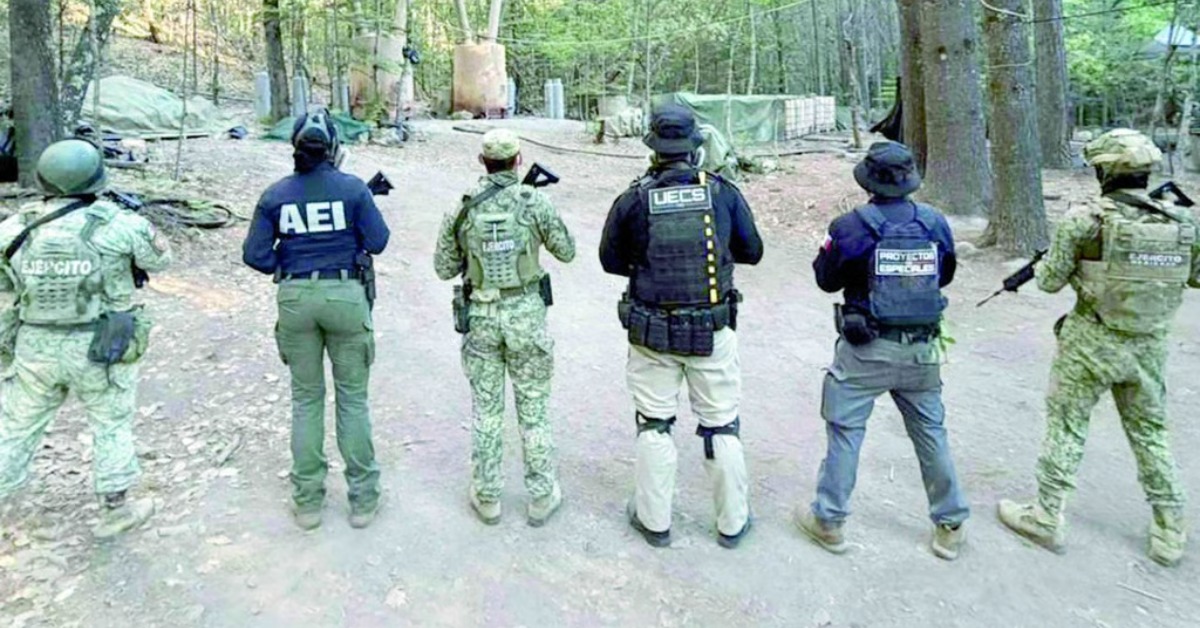
A report published this week says CIA personnel took part in at least three anti-drug operations in Chihuahua this year. It also says some of those agents wore local investigative-agency uniforms to blend in with Mexican officers. If that account is confirmed, the story is not only about cartel enforcement. It is also about national sovereignty, the limits of foreign involvement, and whether a Mexican state government allowed security cooperation that should have been handled through federal channels.
The issue gained national attention after a deadly crash in Chihuahua exposed the broader operation. Two U.S. officials and two Chihuahua investigators died after returning from an anti-drug mission in a remote part of the state. At first, the public description of the Americans was narrow and vague. Later reporting identified them as CIA officers. Since then, the state and federal versions of events have not aligned cleanly, and that gap is now driving the controversy.
What is known so far
The clearest confirmed facts are these. A joint anti-drug action took place in Chihuahua, four people died after the mission, and Mexico’s federal government has said it wants a full explanation. What remains disputed is the exact role the Americans played before the crash and whether that role stayed within the limits of Mexican law.
That is where the latest reporting matters. The new account says there were at least four CIA personnel involved in the operation that ended in the crash, and that this was at least the third such mission in Chihuahua this year. It also says the Americans used local uniforms during the raid. The U.S. side has not publicly explained those details in full. Mexican federal officials, meanwhile, have stressed that cooperation with foreign agencies may include intelligence sharing, but not field operations carried out outside the legal framework set by Mexico.
Why Mexico sees a legal problem
Mexico’s Ley de Seguridad Nacional does not ban all contact with foreign agents. It allows foreign personnel to enter the country for information exchange under bilateral security agreements and places their accreditation under federal control. But the same law also draws a hard line. Foreign agents may not exercise powers reserved for Mexican authorities, apply foreign laws on Mexican soil, or induce detentions and similar actions.
That distinction is the heart of the case. If foreign personnel were present only as accredited liaisons, the legal issue would be narrower. If they joined an operational mission on the ground, wore local uniforms, and participated in tactical operations, the matter becomes much more serious. That is why federal officials have framed this not as a routine security story, but as a question of law, oversight, and sovereignty.
Why the case reaches beyond Chihuahua
For many international readers, this may seem like a technical dispute between agencies. Inside Mexico, it lands differently. The country has a long political memory regarding foreign intervention, especially from the United States. Security cooperation has continued for years, but it has always been sensitive. Mexican governments have tried to balance the need for intelligence support with the need to show that enforcement decisions remain in Mexican hands.
This case threatens that balance because it suggests the line may have blurred. It also comes at a moment when pressure from Washington on cartel policy has been intensifying. That adds a second layer to the story. It is not only about what happened in one mountain operation. It is also about whether Mexico can keep security cooperation on terms that are politically sustainable at home.
There is also a domestic angle. If a state government coordinated or accepted foreign participation without clear federal approval, it would expose a deeper problem in Mexico’s security structure. It would suggest that rules are being interpreted differently depending on the level of government involved. That matters because cartels operate across state lines, but foreign policy and national security law are federal matters.
What happens next
The next stage will likely turn on a few basic questions. Were the U.S. personnel formally accredited under Mexican law? Was the federal government notified in advance? What exactly were the agents doing during the operation? And why, if the report is accurate, were local uniforms used?
Those answers matter because they will determine whether this becomes a diplomatic irritant, a state-federal dispute, or a more significant test of bilateral security cooperation. The case does not yet prove a broad new U.S. role inside Mexico. But it does force both governments to define the limits more clearly. For Mexico, that means showing whether its legal framework still controls real-world operations. For the United States, it means explaining whether its anti-drug partnership stayed within the terms Mexico says it accepts.
In the end, the story is bigger than a single raid. It goes to the question of who sets the rules when foreign security interests and Mexican law meet on Mexican soil. That is why this report has moved so quickly from a border-state operation to a national debate.