The fight over the Generation Z march began long before anyone steps onto Reforma this Saturday. From the presidential podium, the federal government now argues that the youth-led protest is being engineered by a sophisticated, well-funded operation linked to the “international right,” not by teenagers and twenty-somethings organizing on their own.
On Thursday morning, Infodemia coordinator Miguel Ángel Elorza presented a slide deck in the daily press conference of President Claudia Sheinbaum, tracing how the call for the march exploded across TikTok, Facebook, and X in just a few weeks. According to his report, nearly 200 TikTok accounts began pushing the hashtag and videos about the march, with at least 50 of them either created or posting for the first time in October and November. On Facebook, he said, 359 groups picked up the narrative, 28 administered from outside Mexico.
Elorza’s team says that pattern, along with the use of AI-generated images showing a burning National Palace, is evidence that the campaign was designed, not organic. In the official narrative, the march is the product of an orchestrated digital strategy that blends bots, paid influencers, and opposition-friendly media. The government estimates the value of that online push at more than 90 million pesos between mid-October and early November, largely in advertising and content amplification.
Generation Z march
The march itself is being called by a loose network operating under the name “Generación Z México,” which has invited young people to gather on November 15 in Mexico City under slogans against insecurity, corruption and impunity. The main route, according to organizers, runs from the Ángel de la Independencia toward the Zócalo, mirroring the path of many major political demonstrations in the capital. Smaller rallies are planned in cities from Aguascalientes to Tijuana.
In its own messaging, the movement insists it is neither partisan nor paid. “No somos bots, no somos acarreados. Somos la Generación Z exigiendo democracia,” one widely shared graphic declares: “We are not bots or hired crowds. We are Generation Z demanding democracy.” The group has also publicly distanced itself from at least one online fundraiser that claimed to be collecting money in its name, arguing that it does not accept external financing.
The contrast between those claims and the government’s version is stark. In the president’s press conference, Elorza linked the online surge around the march to businessman Ricardo Salinas Pliego, former president Vicente Fox, activist Claudio X. González, and the transnational conservative network Atlas Network, among others. His timeline starts on October 3, when TV Azteca, owned by Salinas Pliego, broadcast a segment on Generation Z protests abroad. Within days, new accounts using names like “generacionz_mx” began calling for a Mexican version of that protest wave.
The government’s argument leans heavily on digital forensics. The presidency’s own media site published the presidency’s official transcript and a series of slides mapping networks of accounts that shared the same videos in rapid bursts, with similar captions and hashtags, and often with profiles created just weeks ago. To Infodemia, that looks like a textbook case of coordinated inauthentic behavior. To skeptics, it still falls short of proof that money changed hands.
So far, officials have not presented bank records, contracts or ad receipts to back the 90-million-peso figure. The estimate comes from what Elorza describes as media value calculations, based on the reach and frequency of posts. Researchers who study digital propaganda in Latin America say that kind of analysis can show patterns of coordination, but it rarely offers definitive answers on who is paying whom.
For organizers and sympathizers of the march, the government’s diagnosis feels like an attempt to discredit genuine anger over insecurity and precarious jobs. In interviews and social media posts, young supporters talk about friends killed or disappeared, the fear of walking home at night, and a sense of being locked out of stable work and housing. They argue that even if politicians or media outlets try to ride the wave, the frustration bubbling up is their own.
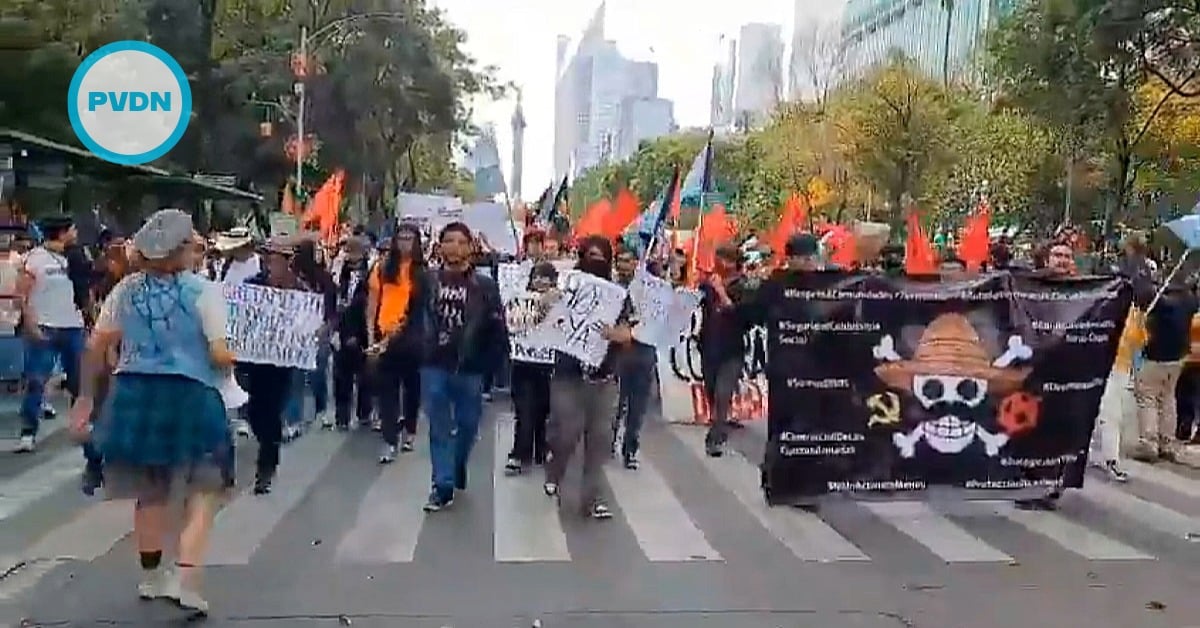
The reality on the street has been modest so far. A first march under the Generation Z banner in Mexico City on November 8 drew roughly 300 people, according to city authorities, who blocked access to the Zócalo because of a concert. Videos from that day show homemade signs about insecurity and 40-hour work weeks, teenagers in anime T-shirts, and parents marching alongside their kids. For critics of the government, the small turnout shows that the administration is overreacting. For the presidency, it proves their point that the hype is happening more on screens than on the ground.
At the same time, the broader information battle is not new. Mexico has already seen large-scale bot campaigns aimed at both boosting and attacking those in power, including a 2024 wave of roughly 20 million messages tied to anonymous accounts targeting the president. A recent policy paper from German think tank GIGA, a recent study on digital disinformation in Latin America, notes that Mexico is among the region’s countries most affected by organized online manipulation, often around elections and security crises.
A new test for Mexico’s digital politics
The Generation Z dispute lands in the middle of a wider global struggle over who gets to define youth politics online. Conservative organizations have built cross-border networks, money and messaging flows that target debates on security, gender, and democracy from Brazil to Poland. Mexico’s government now argues that the march is one more front in that fight, with Atlas Network and allied actors using memes and influencers to weaken a left-wing administration.
Opposition figures flip the script. They accuse President Sheinbaum of using the full weight of the state’s communication machine to paint any protest as a foreign-backed plot, while her own party benefits from government-friendly media and armies of pro-government accounts. Some analysts warn that, in a country with Mexico’s history of repression, repeated talk about “artificial” or “violent” protests can end up stigmatizing dissent and discouraging young people from taking to the streets at all.
For many of the teenagers and twenty-somethings watching this clash unfold on their phones, both narratives may feel incomplete. They live in a Mexico where homicide and extortion still shape daily life in many regions, where public universities are overcrowded and entry-level salaries lag far behind rising rents and food prices. Some may share videos tagged with the march’s slogans without ever intending to attend the rally. Others may be marching for the first time in their lives, even if they dislike the opposition politicians cheering them on.
What happens on November 15 will not settle the argument over who is really behind the Generation Z march. A large and peaceful turnout could strengthen the movement’s claim to be a genuine youth uprising, even if powerful interests are trying to ride along. A small, tense, or violent protest would give ammunition to those insisting the whole thing was an artificial operation from the start.
In the end, the deeper test may be whether Mexico can debate digital manipulation, foreign influence, and the real grievances of a young, wired generation without turning every protest into a proxy war. The accounts, bots, and money trails matter. So do the lives and fears of the people who might still decide, at the last minute, to log off for a few hours and walk into the street.