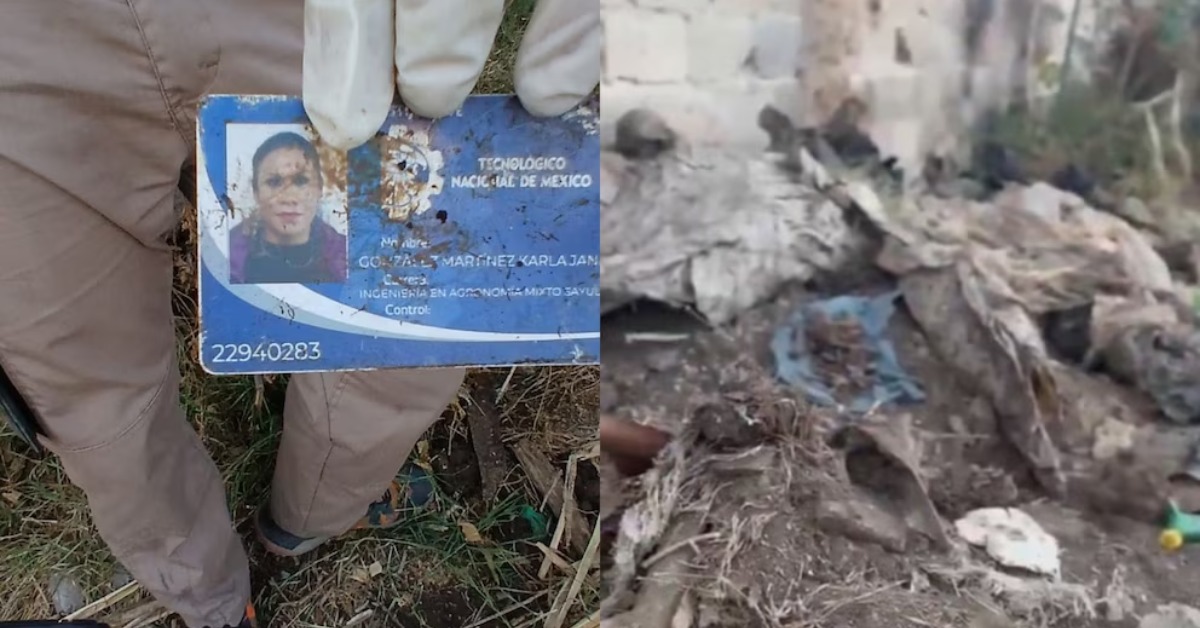
Preliminary identification documents found in a clandestine grave in El Salto, Jalisco, may correspond to two people among the five bodies located at the site.
The discovery was made after members of a search collective entered a difficult area in the municipality, part of the Guadalajara metropolitan zone. The bodies were reportedly found in plastic bags in a ravine area near the colony known as La Piedrera or Las Piedras.
The documents included an identification card linked to the Tecnológico Nacional de México and a card associated with a cargo transport workers’ union in Manzanillo. The names attached to the documents have circulated publicly, but authorities still must confirm whether the documents match any of the bodies recovered.
That distinction matters. In cases involving clandestine graves, an identification card found near remains is an important clue. It is not, by itself, a formal identification. That process typically involves forensic work, including physical evidence, DNA comparison, and notification of relatives.
What searchers say they found
Searchers reported finding at least five bodies at the site. They also said the area may contain more remains, but they stopped moving material to avoid disturbing evidence.
The discovery appears to have followed an anonymous tip. Search collectives in Mexico often rely on such tips because families say official investigations move slowly or fail to reach areas where victims may be buried.
Members of the search group also raised concerns about the time it took authorities to reach the scene. That concern is common in grave discoveries, where delay can affect the preservation of evidence and the dignity of the victims.
In Mexico, search protocols place responsibility on authorities to act quickly, coordinate agencies, and protect possible evidence. Families and collectives often argue that those rules are not applied with enough urgency.
Why the documents matter
The documents may provide an initial path to identifying the victims. One was connected to a woman who had studied agronomy. Another was connected to a cargo transport worker.
If confirmed, the findings would move the case from an unidentified-body discovery to a clearer investigation involving named victims and their families. That can affect the direction of the criminal probe, the handling of remains, and the ability of relatives to demand answers.
For families of missing people, even a document can change everything. It can reopen a case, connect separate investigations, or give investigators a new timeline to examine. It can also bring fear, because a clue found in a grave may be the first sign that a missing person was killed.
Authorities will still need to establish when the victims died, whether all five bodies are connected to the same crime, and whether more remains are present at the site.
Jalisco remains central to Mexico’s disappearance crisis
The El Salto discovery lands in a state already tied to Mexico’s wider missing persons crisis. Jalisco has repeatedly appeared among the states with the highest numbers of missing and unidentified people.
The crisis is not limited to a single city or criminal group. It involves disappearances, clandestine graves, unidentified remains, weak investigations, and overloaded forensic systems. Families often describe the same pattern: they report a disappearance, wait for action, and then begin searching on their own.
Search collectives have become a visible part of public life in Mexico. Many are led by mothers, sisters, and wives of missing people. Their work can involve walking through vacant lots, ravines, farms, abandoned homes, and rural areas where tips point to possible graves.
That work is dangerous. Searchers have faced threats, attacks, and intimidation in several states. They also face the emotional burden of finding remains that may belong to someone else’s missing relative, while still looking for their own.
What happens next in the investigation
The next step should be forensic confirmation. That means authorities must process the site, recover all remains, preserve evidence, and compare genetic material with families who have reported missing relatives.
The Instituto Jalisciense de Ciencias Forenses is expected to play a central role in the identification process. Prosecutors will also need to determine whether the documents were with the victims at the time of burial or were placed there separately.
That question matters because clandestine grave scenes can be complex. Bodies may be moved, buried in layers, or mixed with unrelated evidence. Personal documents can help, but they can also be damaged, misplaced, or separated from the person they belonged to.
For relatives, the wait can be difficult. A possible match can bring both hope and dread. Until officials confirm identities, families are left in a painful middle ground.
Why this case matters beyond Jalisco
For foreign residents in Mexico, the story is also a reminder of how local security issues can reflect national failures. El Salto is not a remote place. It sits within one of the country’s major metro regions, near industrial corridors, highways, and communities tied to daily life in Guadalajara.
The case also shows why disappearance stories should not be treated as routine crime briefs. Each grave may involve several families, separate missing-person reports, and years of unanswered questions.
The documents found in El Salto may help identify two victims. But the broader issue remains much larger: families across Mexico are still searching for people who disappeared into a system where evidence, investigations, and answers often arrive late.