Mexico and the United States are signaling a new phase in their security partnership. The language is shifting from arrests and seizures to financial networks, money laundering, and the systems that keep criminal groups alive. For many foreign residents, that may sound technical. It is not. When both governments say they want to follow the money, they are talking about the businesses, brokers, transfers, and hidden structures that can keep organized crime functioning even when leaders are arrested.
Mexico and the US step up efforts against organized crime finances
Mexico and the United States are putting fresh emphasis on organized crime finances, with both governments framing money laundering as a central battleground rather than a side issue. The immediate trigger was a workshop in Mexico involving U.S. Ambassador Ronald Johnson, Mexican authorities, and international partners to strengthen efforts against illicit finance. The message was direct. The goal is no longer only to pursue individual operators, but to go after the broader financial networks that enable criminal organizations to move money, protect assets, and operate behind the scenes.
That shift matters because cartel power does not rest only on armed men, drugs, or local corruption. It also depends on the ability to place dirty money into the financial system, move funds across borders, and disguise profits through businesses, intermediaries, and layered transactions. A criminal group can lose a shipment or even a senior figure and still survive if the money keeps flowing. That is why officials on both sides of the border are now talking more openly about disrupting financial infrastructure, not just breaking up cells or making arrests.
Why the money trail matters more than ever
For years, anti-cartel policy has often been judged through visible actions such as raids, extraditions, and troop deployments. Those steps produce headlines, but they do not always weaken an organization in the long term. Following the money is slower and less dramatic, but it can be more damaging. It targets the accountants, brokers, shell companies, exchange channels, and front businesses that turn criminal profits into usable capital.
That broader approach also reflects how organized crime has evolved. Modern criminal groups do not operate only through street-level violence. They use more sophisticated tools, including cross-border transfers, corporate structures, trade-linked transactions, and, in some cases, digital assets. In recent years, U.S. authorities have warned that Mexico-based criminal organizations increasingly rely on specialized laundering networks, including foreign intermediaries, to move and recycle proceeds. When officials say they want to attack entire networks, they are acknowledging that organized crime now functions as a business system, not just a collection of gunmen.
This is not an isolated statement
Johnson’s remarks fit into a wider policy pattern that has been building for some time. U.S. Treasury officials and Mexican counterparts had already been holding high-level discussions on illicit finance before this week’s public message. Those talks focused on cross-border financial crimes linked to drug trafficking, human trafficking, fraud, corruption, and the professional laundering structures used to hide profits.
Washington has also moved beyond general warnings. In 2025, the U.S. Treasury used a stronger legal tool against three Mexican financial institutions, alleging serious anti-money-laundering failures and links to transactions tied to the illicit opioid trade. Around the same period, FinCEN issued a detailed advisory warning financial institutions about Chinese money laundering networks that allegedly help Mexico-based criminal groups move proceeds. In other words, the current rhetoric is not appearing in a vacuum. It sits atop a growing enforcement architecture that already includes sanctions, advisories, intelligence sharing, and regulatory pressure.
Mexico is also strengthening its own tools
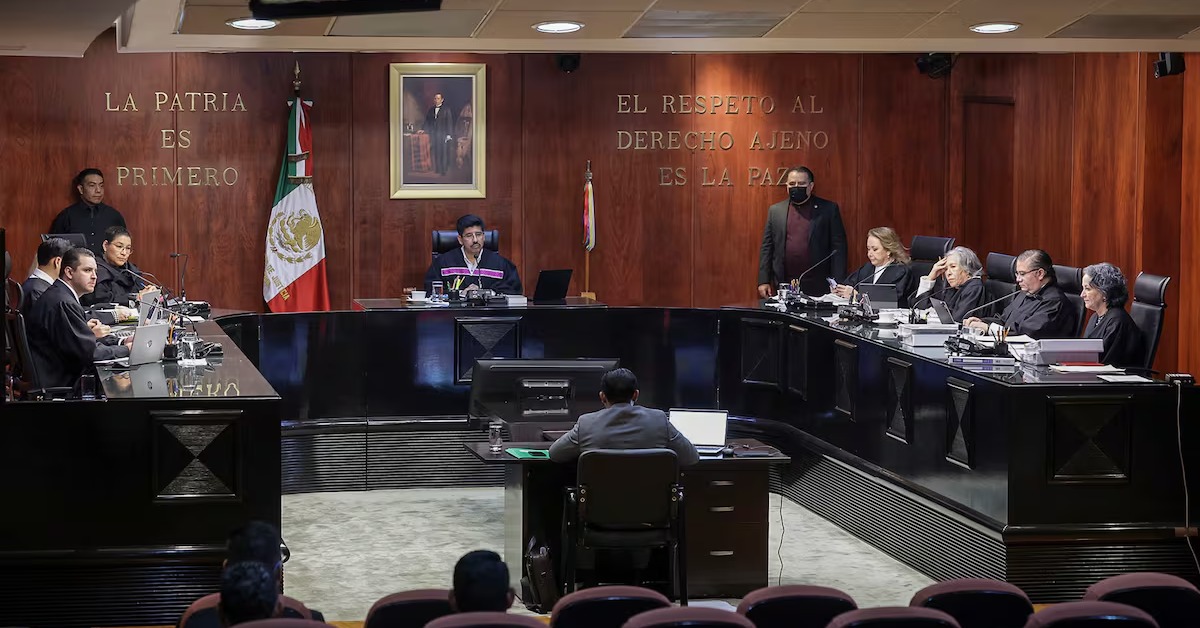
The Mexican side of the equation has changed as well. In early April, the Supreme Court cleared the way for the UIF, Mexico’s financial intelligence unit, to freeze suspicious bank accounts without a prior court order in certain cases involving suspected illicit activity. President Claudia Sheinbaum defended that ruling days later, saying the purpose is to make it harder for criminal proceeds to move before they disappear.
That legal shift is significant because it gives Mexican authorities a faster instrument to immobilize funds. Supporters argue that criminal finance moves quickly and that delays can render enforcement ineffective. Critics warn that stronger freezing powers also raise due process concerns if they are not used carefully. Both arguments are real. But from a security standpoint, the ruling gives Mexico a more aggressive domestic tool at the same moment that bilateral cooperation with the United States is becoming more openly finance-focused.
What foreign residents and businesses should watch
For many foreigners living in Mexico, this story may seem distant because it is about compliance, regulation, and intelligence work rather than street violence. In practice, it could become highly relevant. A more aggressive focus on cartel finances can ripple outward into banking, large transfers, corporate due diligence, real estate scrutiny, and oversight of cash-heavy sectors. Most legitimate residents and businesses will see little direct impact, but documentation, source-of-funds clarity, and transaction transparency may matter more as financial enforcement tightens.
There is also a broader public-interest reason to watch this shift. Criminal money does not stay confined to one sector. It can distort property markets, fuel fraud schemes, protect corruption, and support the logistics of violence, even when the laundering itself appears white-collar and distant from daily life. For readers in Mexico, especially those navigating banking, property, or business activity across borders, a stronger anti-money-laundering push is not abstract policy. It is part of how both governments are trying to weaken organized crime, where it is often hardest to see.
The real test comes next
The harder part starts after the speeches. Announcing a campaign against financial networks is much easier than proving it works. Laundering systems adapt fast. Money can be rerouted through new intermediaries, companies, jurisdictions, or methods. Authorities can also freeze accounts more quickly than they can win complex cases in court.
That is why the next months matter more than the headline. If this cooperation is real, it should yield measurable outcomes, stronger asset actions, better intelligence sharing, and clearer links between financial disruption and reduced criminal capacity. If it remains mostly rhetorical, cartel finances will continue to do what they have often done best: stay alive even when the public spotlight is elsewhere.