Mexico’s Tianguis Turístico 2026 is opening part of its program to the public in Acapulco, giving residents and visitors access to cultural and food events tied to the country’s largest tourism trade fair.
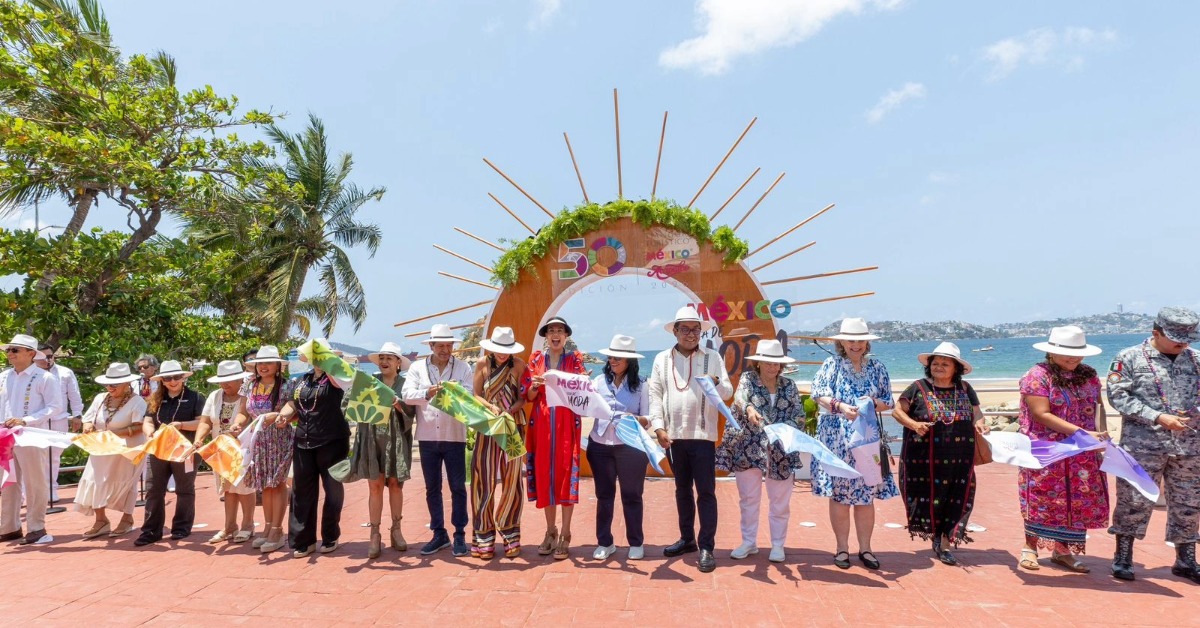
The public-facing program, called Ventana a México, was launched on Costera Miguel Alemán as part of the 50th edition of the event. Federal tourism officials said the goal is to create direct economic benefit for artisans, traditional cooks, and local producers.
The main Tianguis Turístico is still a business event. It brings together tourism companies, destinations, buyers, and officials to sell Mexico’s travel products to national and international markets. But this year’s public activities add a community layer to a fair that is usually focused on industry meetings.
That matters because tourism in Mexico is not only about hotels, flights, and package tours. It also depends on food, crafts, markets, music, heritage, and local identity. Those are often the things visitors remember most, but the people who preserve them do not always benefit directly from major tourism campaigns.
What Ventana a México offers
Ventana a México brings together participants from 16 states, including artisans and traditional cooks offering textiles, pottery, regional foods, ingredients, and other local products.
The space was designed as a free, open event where people can walk through, meet producers, and buy directly from those who make or prepare the items. It was scheduled for April 25 and 26 at Plaza Quebec, from 10 a.m. to 6 p.m.
Tourism officials framed the program as a way for the public to experience the Tianguis outside the convention setting. Instead of limiting the event to private business meetings, the program gives local residents and visitors a way to participate in the week’s tourism activities.
The idea is also practical. Direct sales can put money into the hands of cooks, makers, and small producers during a week when Acapulco is receiving tourism officials, buyers, and media attention from across Mexico and abroad.
Why Acapulco is central to this year’s event
The 2026 edition marks the 50th Tianguis Turístico and returns the event to Acapulco, where it began decades ago. The official program runs from April 27 to 30 at Expo Mundo Imperial.
Acapulco’s role gives this year’s fair added weight. The city has been working to rebuild its tourism image after years of storm damage, economic pressure, and public safety concerns. Hosting the country’s top tourism event is part of that effort.
Officials have projected more than 58,000 business appointments and around 3,000 exhibitors during the 2026 Tianguis. They also expect thousands of tourism participants from Mexico and abroad.
For Acapulco, those figures matter beyond the convention center. Hotels, restaurants, transport operators, event workers, and small businesses can all benefit when a major national event brings people into the city.
Free events widen the reach
The public program is not limited to Ventana a México. Other free activities are also tied to the Tianguis week.
One of the announced events is the México Canta concert at the Auditorio Sinfonía del Mar. The program also includes a Festival del Taco in Taxco, from April 30 to May 2, at Plaza Borda, featuring cooks and food proposals from different regions.
These events show how tourism promotion is being linked to culture and gastronomy. The approach gives visitors more than a sales pitch. It lets them see how regional food, music, and craft traditions form part of Mexico’s travel identity.
For international residents in Mexico, this is a useful context. Tianguis Turístico helps shape how the country is marketed abroad. It can influence which regions receive attention, investment, and promotion in the months ahead.
A shift from selling destinations to sharing culture
The opening of public activities signals a broader shift in how Mexico presents itself to tourists. The country is still selling beaches, resorts, cities, and routes. But officials are also trying to show that tourism depends on communities and cultural producers.
That shift is visible in the way traditional cooks and artisans are being placed at the center of Ventana a México. Their work is not being treated as background decoration. It is being presented as part of the tourism product itself.
This distinction is important. When tourism promotion highlights food, crafts, and traditions, it can create new demand. But the benefit depends on whether the people who create those traditions are included in the economy that follows.
The public opening of Ventana a México is one attempt to close that gap. It does not solve every issue in tourism. But it does show a clearer effort to connect promotion with local participation.
What readers should watch next
The main question is whether this model will become part of future Tianguis editions or remain a special feature for the 50th anniversary in Acapulco.
If it continues, other host cities could use the fair to create public markets, food festivals, and cultural programs that benefit local producers. That would make the Tianguis more visible to residents, not just tourism professionals.
It could also help travelers understand Mexico more fully. Many visitors come for the beaches, the climate, and the historic cities. But the country’s strongest tourism draw is often its everyday culture, from regional cooking to handmade goods and local celebrations.
For Acapulco, the timing is also important. The city is using the Tianguis to show recovery, attract business, and reconnect with its role in Mexico’s tourism history. By opening part of the event to the public, officials are trying to make that recovery feel less distant from the people who live and work there.