For years, Quintana Roo’s picture-perfect beaches have faced a relentless tide of sargassum seaweed, an eyesore and a drain on tourism. Now, scientists say the problem goes beyond the smell and inconvenience — it might be affecting human health. New research is shedding light on the toxic gases and contaminants released as the seaweed rots, prompting urgent warnings. With talk of potential respiratory, skin, and even cardiac effects, authorities and locals alike are grappling with an unsettling question: could this natural nuisance be a hidden public health threat?
In an unusual turn this winter, the sargassum season along Mexico’s Caribbean coast began early, with large brown algae mats washing ashore in January. As cleanup crews and hotels scrambled to clear the foul-smelling piles from resort beaches, researchers from the National Autonomous University of Mexico (UNAM) issued a new warning: decomposing sargassum isn’t just an environmental and economic headache – it could be endangering people’s health.
Toxic Gases and Hidden Contaminants
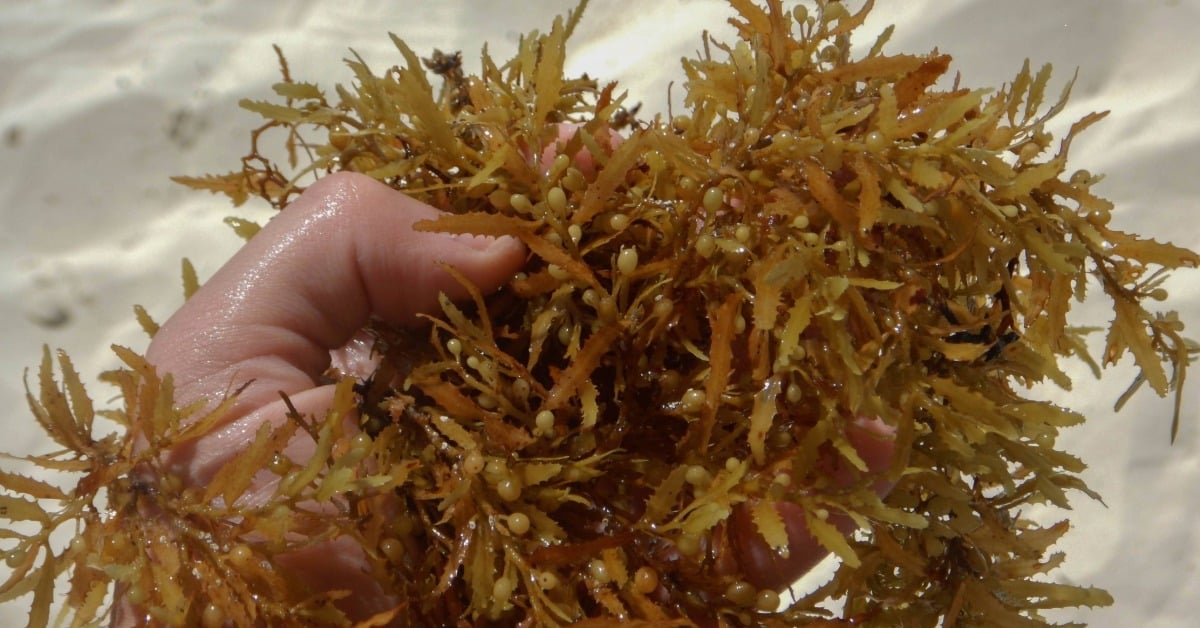
When sargassum decays on the shore, it releases a cocktail of noxious gases and leaches pollutants. Chief among these is hydrogen sulfide, the gas that gives rotten eggs (and rotting sargassum) their distinctive stench. In open-air beach settings, the concentrations are low, but even mild exposure can irritate the eyes, nose, and throat. People with asthma or other respiratory conditions may experience coughing or difficulty breathing near decomposing seaweed mounds. At high concentrations – for example, in confined or unventilated areas – hydrogen sulfide is acutely toxic and can even cause loss of consciousness or heart arrhythmia. While such extreme levels are unlikely on a breezy beach, the presence of this gas is a clear sign of a potential hazard.
But foul fumes aren’t the only concern. “It’s the issue that worries us,” explains Rosa Elisa Rodríguez Martínez, a marine researcher at UNAM’s Puerto Morelos unit, referring to the less visible dangers from sargassum. As the algae breaks down, it releases a stew of substances it absorbed while floating at sea. Scientists have found traces of arsenic, cadmium, and other heavy metals in sargassum, along with residual pesticides and hydrocarbons. The seaweed can also carry microbes – viruses and bacteria hitchhiking on its journey across the Atlantic. When tons of sargassum pile up and decompose on the coast, the contaminants they contain concentrate in the sand and nearshore waters. “If it’s removed before it starts decomposing, it helps,” Rodríguez says, noting that sargassum can actually collect these pollutants out of the ocean like a sponge. “But when it piles up and breaks down, those nutrients and toxins stay on the beach.” From there, they can seep into the water or enter the food chain, potentially causing illness in wildlife and humans alike.
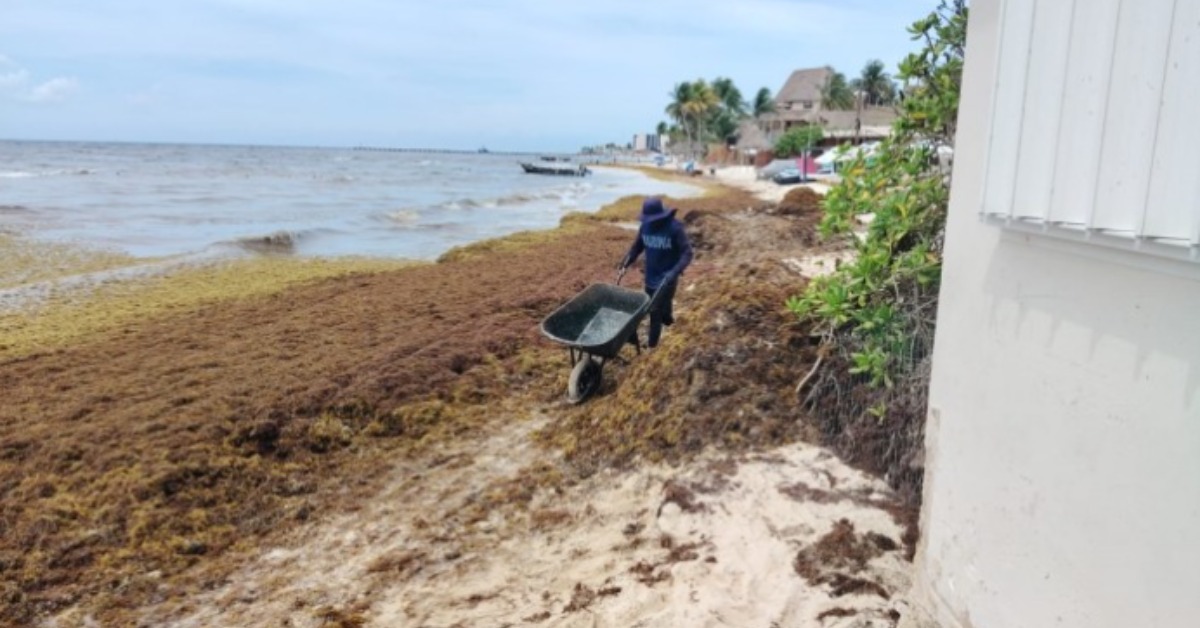
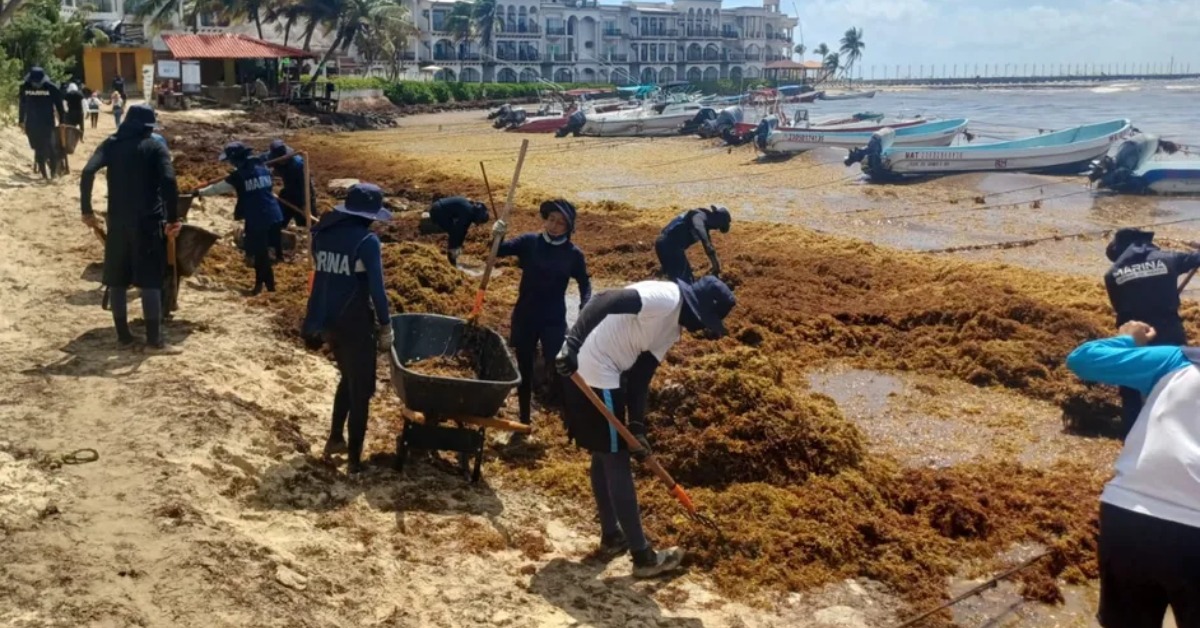
Officials say the seaweed should be cleared off beaches as quickly as possible – essentially a race against decomposition. However, maintaining that pace is challenging along hundreds of kilometers of shoreline. It’s also costly and labor-intensive. The hotel industry in the Mexican Caribbean already spends tens of millions of dollars each year on sargassum cleanup, deploying boat crews and heavy machinery to keep the beaches attractive. Despite these efforts, not all the incoming sargassum can be captured in time, especially during peak influxes or stormy weather that damages floating containment barriers. That means some of the algae inevitably rot on the sand, releasing their toxic payload into the air and water where locals and tourists might be exposed.
Health Complaints Emerge
In Quintana Roo’s coastal communities, anecdotal reports of health issues suspected to be linked to sargassum are growing. Beachgoers and residents have described persistent headaches, dizziness, and even trouble concentrating on days when the stench of decaying seaweed hangs in the air. Some people complain of nausea or other gastrointestinal distress that they attribute to the foul odor. Others report skin irritation – rashes or itching – after contact with water or sand near rotting sargassum, as well as burning, red eyes from the acrid fumes. While comprehensive medical studies are still in the early stages, the pattern of symptoms is worrying. “People are already starting to feel unwell,” one researcher noted, citing neurological, dermal, ocular, and even gastrointestinal problems among those living near affected beaches.
Health experts caution that vulnerable groups could be most at risk. Children, the elderly, and anyone with pre-existing respiratory conditions may experience stronger reactions to hydrogen sulfide and ammonia released by decomposing algae. Workers who remove sargassum – known as sargaceros – have the highest exposure of all, often spending hours amid the decay. These cleanup crews have been advised to wear protective gear such as gloves, boots, and masks to minimize contact with irritants. Mexico’s environment ministry issued voluntary guidelines for sargassum collectors to that effect, though enforcement is lax. In practice, many laborers still forgo masks or other protection in the sweltering heat, putting themselves at greater risk of respiratory or skin problems. “Those most at risk are the ones shoveling it day in, day out,” says one marine scientist, who argues that stricter safety regulations and monitoring (like installing gas sensors on beaches) are needed to safeguard workers’ health.
There is also a longer-term concern: if toxic metals and chemicals from sargassum enter groundwater or accumulate in fish and shellfish, they could subtly affect public health over time. Arsenic, for instance, is a carcinogen that can affect cardiovascular health with chronic exposure. Researchers emphasize that more study is needed to determine how much of these contaminants are entering local ecosystems and at what levels. But they agree that the first step is clear – prevent as much sargassum as possible from rotting on the beaches in the first place.
Urgent Calls for Action
The emerging health warnings add a new dimension to Quintana Roo’s ongoing sargassum crisis, which for years has been treated mainly as an environmental and tourism issue. Now, experts are urging authorities to treat it as a public health concern. That means involving Mexico’s health sector in monitoring and responding to sargassum-affected areas, not leaving the burden solely to environmental and tourism officials. “It’s truly a delicate issue,” Rodríguez Martínez says, adding that it hasn’t been talked about much – in part because nobody wants to scare away visitors. In the Caribbean region, where tourism is a lifeblood of the economy, there has been a tendency to downplay the severity of the problem. But as the mounds of seaweed keep coming (and even arriving earlier in the season than expected), scientists insist it’s time for a frank discussion of the risks and a plan to mitigate them.
A key preventive measure being pushed by researchers and coastal advocates is the deployment of more robust sargassum barriers offshore – and proper maintenance of them. These floating barricades can corral incoming seaweed mats and allow collection boats to remove the algae before it lands on beaches. In places where barriers are already installed, officials are urged to extend their coverage and ensure they remain in good repair. Of course, barriers are not foolproof; strong currents and storms can overwhelm them, and some seaweed still slips through. Still, experts say, every ton of sargassum diverted at sea is a ton that won’t decompose on land and potentially harm people.
Another crucial step is to speed up cleanup on the beaches themselves. The longer sargassum sits, the more gas and leachate it produces. This may require a greater investment in cleanup crews and equipment during peak season, as well as logistical support to promptly haul collected algae to disposal or processing sites. The government, stretched by the scale of the problem, “is doing as much as it can with the resources it has, and the hotel industry is doing a lot of the work too,” Rodríguez observes. Indeed, many resort owners fund daily raking and trucking operations to keep their beachfronts clear for guests. But given the sheer volume of seaweed, stopgap efforts might not be enough if a particularly heavy wave of sargassum hits.
Public education is also part of the response. Authorities have started advising residents and tourists to avoid areas with strong rotten-egg odors or at least limit their time there. Simple precautions, such as wearing a mask around decaying sargassum (especially for those with asthma) and rinsing off after swimming near it, can help reduce irritation. The hope is that by acknowledging the health aspect and taking proactive measures, Quintana Roo can prevent a bad situation from becoming a medical emergency.
For now, the message from scientists is one of caution, not panic. They aren’t calling for beach closures or scaring people away from the ocean. Rather, they want the community and government to recognize that the sargassum inundation is more than just an ugly nuisance – it poses hidden dangers that need to be addressed. As another sargassum season ramps up, the focus is shifting from simply cleaning up a mess to protecting the well-being of those who live in its shadow. The Caribbean paradise’s latest challenge is clear: safeguarding paradise itself now means keeping the air and water safe, too.
With information from Excélsior, Diario de Yucatán, Mexico News Daily, La Jornada