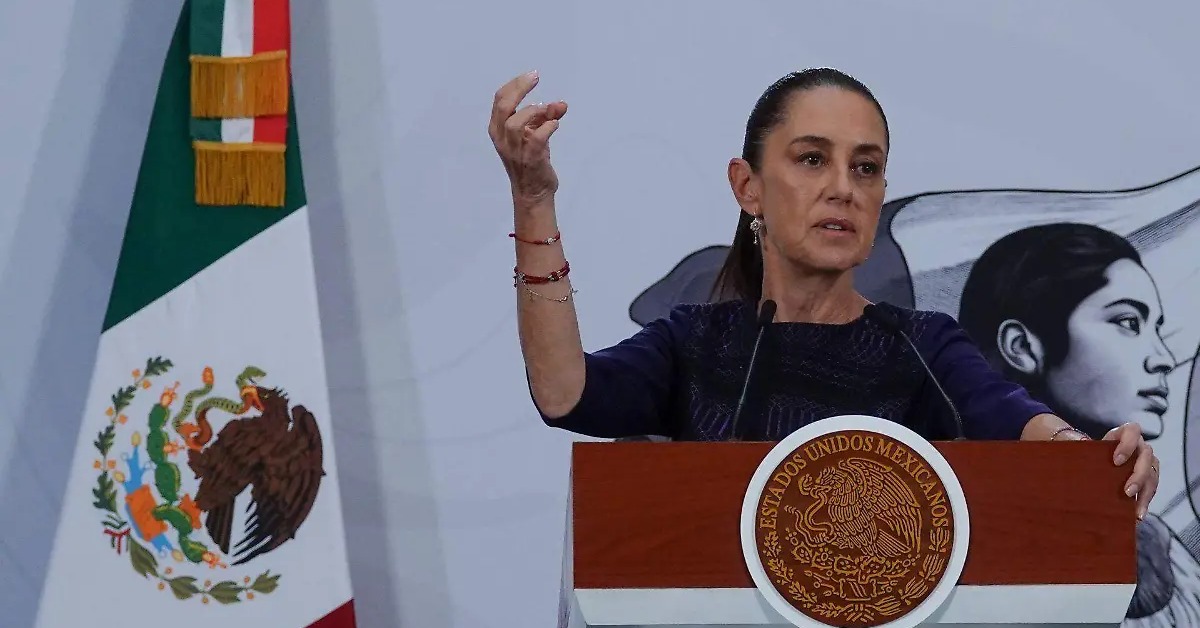
President Claudia Sheinbaum said her government is sending letters to Mexico’s governors reminding them that any security cooperation with foreign governments must comply with the Constitution and the National Security Law.
The message follows a controversy in Chihuahua, where two U.S. Embassy personnel and two Mexican state officials died in a vehicle crash linked to an anti-drug operation near a clandestine laboratory.
The case has raised questions about how foreign security personnel were working with state authorities, who authorized their presence, and whether federal agencies were properly informed.
Sheinbaum said state governments may cooperate with the U.S. or other countries’ agencies. But she said that cooperation must go through the proper legal channels. In practice, that means the federal government, the Foreign Relations Ministry, and Mexico’s federal security cabinet must be involved.
Her position is not a rejection of intelligence sharing. It is a reminder that foreign agents cannot operate independently in Mexico, and state governments cannot manage those relationships alone.
Why the Chihuahua case triggered a national response
The dispute began after a crash in Chihuahua killed four people, including two U.S. personnel attached to the U.S. Embassy and two members of Chihuahua’s State Investigation Agency.
The group was connected to a convoy returning from the area of an operation against clandestine drug laboratories in the municipality of Morelos. Those labs are part of the broader fight against synthetic drugs, including methamphetamine and fentanyl-related production networks.
Chihuahua officials have said the U.S. personnel were in the state for drone training and did not directly participate in the operation. Federal officials have questioned that explanation and asked for more information.
The exact role of the U.S. personnel remains disputed. U.S. officials have acknowledged the deaths of two embassy personnel but have not publicly confirmed what agency employed them.
That uncertainty is why the case quickly moved beyond Chihuahua. It became a national test of Mexico’s rules on sovereignty, security cooperation, and foreign intelligence work.
What Mexican law says about foreign agents
Mexico’s National Security Law allows foreign agents to enter the country to exchange information under formal cooperation agreements. Their presence must be authorized and limited to a defined territorial area.
The law also says foreign agents may only carry out liaison work for information exchange. They cannot exercise powers reserved for Mexican authorities. They also cannot apply or execute foreign laws on Mexican soil.
This is the core issue in the Chihuahua dispute. If foreign personnel were only providing training or intelligence through authorized channels, the matter is more limited. If they took part in field operations, raids, surveillance, or enforcement actions without federal approval, the legal problem becomes more serious.
The law also requires public officials who interact with foreign agents to follow reporting and authorization rules. Meetings with foreign agents must be authorized in advance, and the Foreign Relations Ministry must be represented.
For many readers, the distinction may sound technical. In Mexico, it is politically sensitive. Security cooperation with the United States has always raised concerns about sovereignty, especially when cartel violence is involved.
Why this matters beyond Chihuahua
The letter to governors is meant to prevent a repeat of the same confusion in other states.
Mexico’s state governments often work closely with federal agencies, local prosecutors, and foreign partners on organized crime, border security, weapons trafficking, and drug investigations. Those cases can involve U.S. agencies with intelligence, training, or technical roles.
But Sheinbaum’s message is that state-level cooperation cannot bypass federal oversight.
That matters because organized crime cases often cross borders. Cartels move drugs, weapons, cash, and people through international networks. Mexico needs cooperation with the United States and other countries to investigate those flows.
At the same time, Mexico’s government wants to avoid any appearance that foreign agents are conducting operations inside the country without permission.
The balance is difficult. Too little cooperation can weaken investigations. Too much informal cooperation can trigger legal and diplomatic problems.
The sovereignty issue at the center of the debate
Sheinbaum has repeatedly said Mexico will cooperate with the United States on security, but not under a model that allows foreign forces to operate in Mexican territory.
That line has become more important as Washington increases pressure on Mexico over cartels and synthetic drugs.
For Mexico, the legal issue is not only who was in Chihuahua. It is whether states understand that foreign policy and national security are federal responsibilities.
The Constitution gives the president authority over foreign policy. It also sets out principles such as non-intervention, peaceful dispute resolution, and international cooperation.
That does not stop Mexico from working with foreign governments. It does mean that cooperation must be formal, documented, and controlled by federal institutions.
What expats and foreign residents should understand
For foreign residents in Mexico, this story is not about day-to-day safety rules. It is about how Mexico manages security relationships with other countries.
The United States remains Mexico’s most important security partner. The two countries share intelligence, coordinate on trafficking networks, and negotiate around migration, border control, weapons, and organized crime.
But cooperation does not mean foreign agents can act as police inside Mexico.
That distinction is important for understanding the tone of the current dispute. Sheinbaum is not saying Mexico will stop working with U.S. agencies. She is saying the rules must be followed, especially by state governments.
The Chihuahua case may now force clearer procedures for how states communicate with foreign security personnel. It may also lead to more scrutiny of past or current arrangements between local officials and foreign agencies.
What happens next
The immediate question is whether federal investigators find that any law was broken in Chihuahua.
If the U.S. personnel were only in the state for authorized training, the fallout may be limited to paperwork, communication failures, and political tension. If evidence shows they were involved in operational fieldwork without proper authorization, the issue could escalate.
The letters to governors suggest the federal government wants to close the door on informal arrangements before another case emerges.
For now, Sheinbaum’s message is simple. Mexico can cooperate with foreign governments on security matters, but such cooperation must be legal, federal, and transparent to the proper authorities.