Playa del Carmen is not yet overwhelmed by sargassum, but officials are already talking about temporary hires for summer. That alone says a lot. After early arrivals, expanded barriers, and a stronger regional warning, the city is preparing for the months when cleanup crews can fall behind the fastest. The story is bigger than seaweed on the sand. It is about labor, public spending, tourism pressure, and whether one of the Riviera Maya’s main beach destinations can keep pace when June and July arrive.
The warning is about capacity, not panic
Playa del Carmen is entering the 2026 sargassum season with a warning rather than an emergency. The brown macroalga, which routinely washes onto Quintana Roo beaches, is still arriving at relatively low levels. Even so, local officials say the city could need temporary workers in June and July if demand for cleanup rises faster than crews can handle.
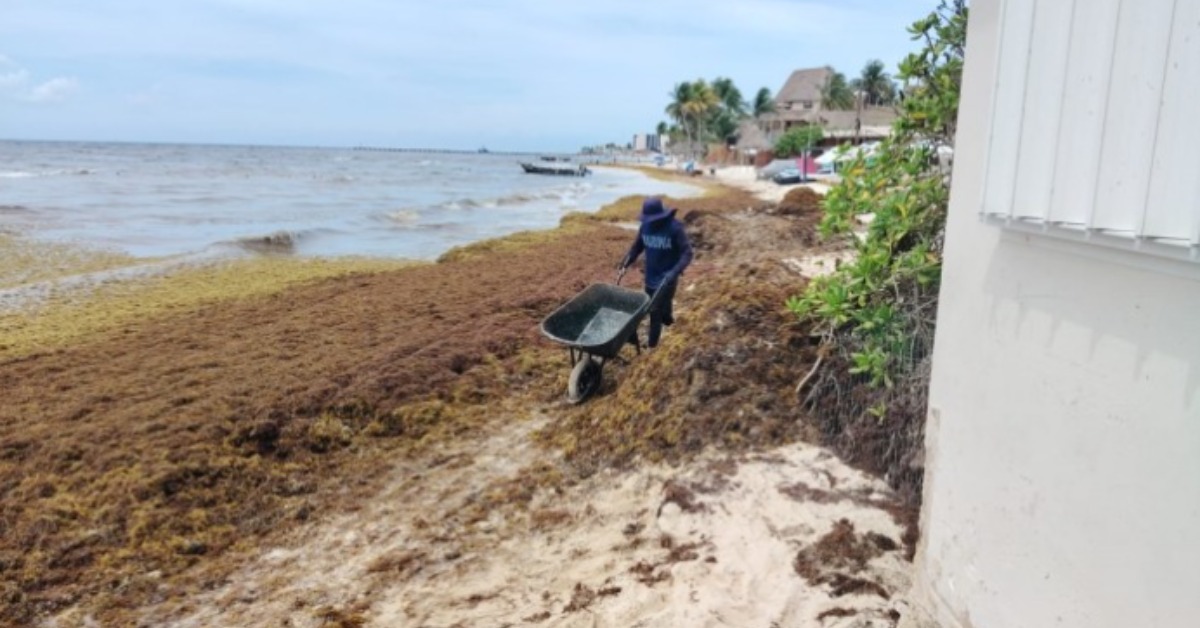
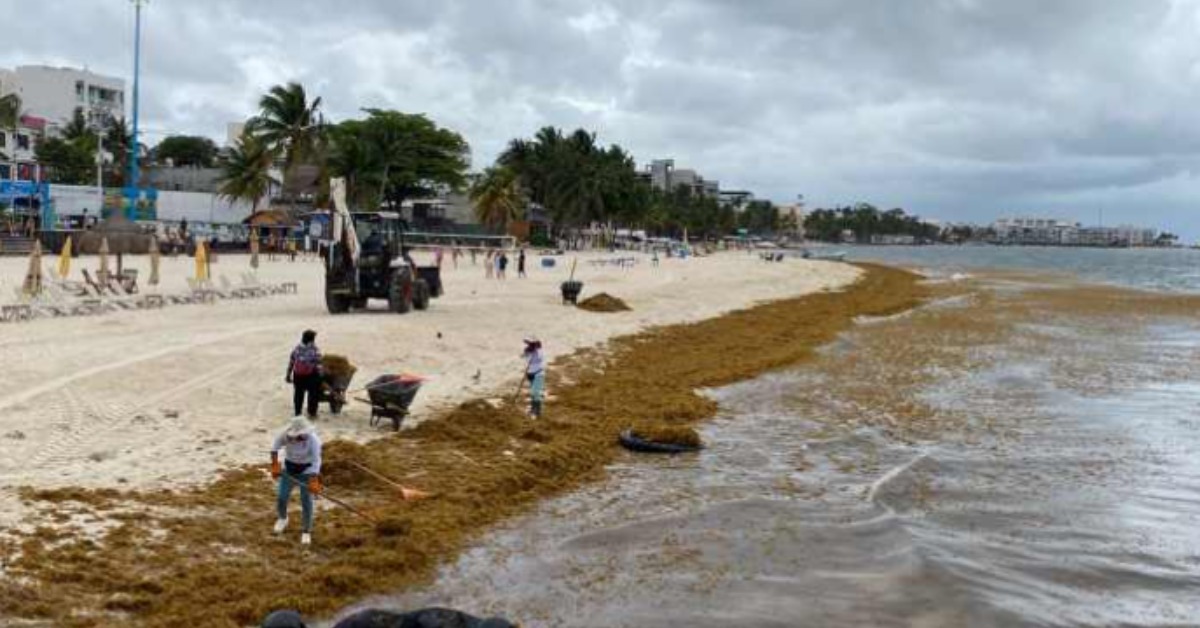
That warning matters because the city’s beaches are more than a tourist draw. They are public spaces, a daily economic asset, and one of the first things residents and visitors notice when conditions change. Officials say some beaches are already seeing impacts, but they still describe the current arrivals as limited and manageable. The concern is what happens when the season moves into its heavier months.
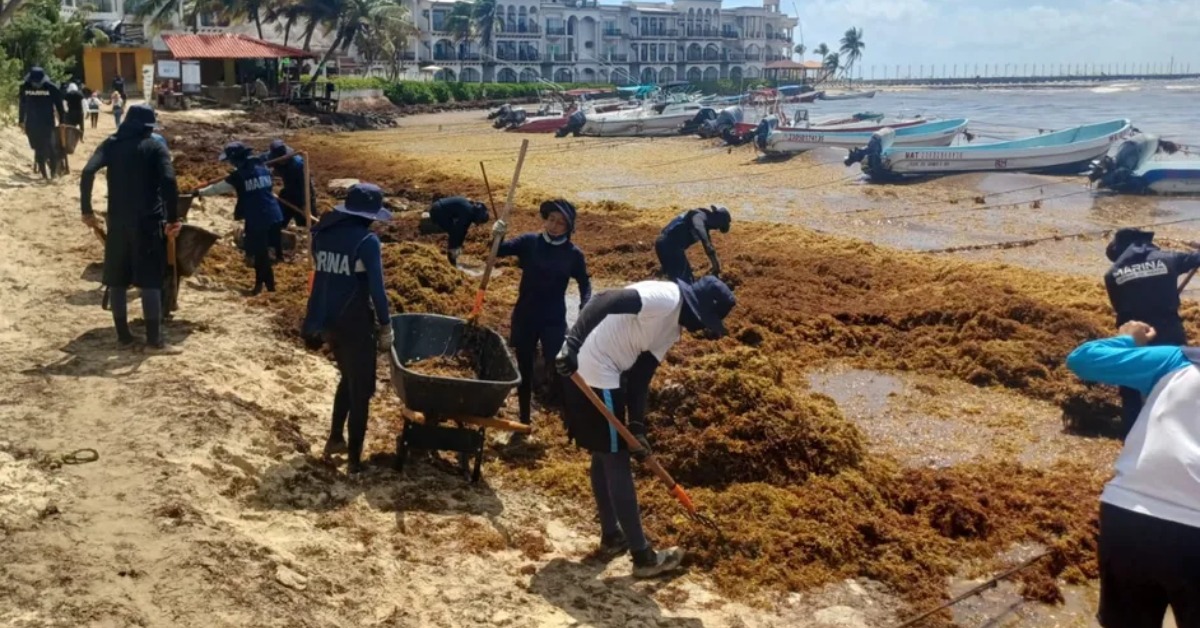
Local authorities say between 140 and 150 workers are currently spread across 22 beach access points. Their work includes cleanup, surveillance, and visitor guidance. The city is also operating with support from the Mexican Navy, using machinery and vessels to keep beaches usable. Two additional sargassum units are expected to reinforce the effort in the coming weeks. The discussion about temporary labor is important because it shows officials see a real chance that normal staffing may not be enough later in the season.
The city has been moving early
This year’s response did not begin with summer. Municipal officials moved earlier after unusual arrivals were reported from January onward. In February, the city said it had expanded anti-sargassum barriers from 2.5 to 5 kilometers, covering part of the coastline from Playa Cisne to Punta Esmeralda. The plan also included daily satellite monitoring, a beach-by-beach alert system, and tighter coordination with federal and state authorities.
Offshore, the strategy includes three sargassum vessels and two smaller boats. On land, Zofemat crews are working from 15 collection points. The state government also said it would intensify beach work from March because of the early arrivals. That broader plan includes state-hired brigades for Playa del Carmen and other coastal municipalities, along with manual and mechanical cleanup and transport to authorized disposal sites.
Money is also part of the story. Municipal finance officials say 86 million pesos are available for the 2026 response work. Of that amount, 46 million pesos come from the environmental sanitation fee, while another 40 million pesos sit in an emergency fund. That matters because sargassum is expensive long before visitors see it on the shoreline. Barriers, vessels, loaders, trucks, labor, and disposal all carry a cost. The city is also working from a difficult recent baseline. Officials say Playa del Carmen collected more than 30,000 tons in 2025, the largest volume in a decade.
Why the regional outlook matters
The broader regional outlook helps explain why local officials are speaking carefully. The University of South Florida’s Optical Oceanography Lab said in its January and February 2026 outlooks that sargassum levels continued to rise across much of the Atlantic and Caribbean. It described 2026 as likely to be another major sargassum year after months of continuous growth and record-high totals for the season. That does not predict the exact condition of a beach on any given day, but it does show why coastal cities are preparing early.
The Navy’s March 23 bulletin added a more immediate warning for Quintana Roo. It identified seven sargassum groups near the coast and flagged a likely arrival corridor from Playacar to Punta Maroma within 24 to 48 hours. The same bulletin estimated total biomass in the Mexican Caribbean at 32,387 tons. At the same time, the Navy made an important distinction. Sargassum observed at sea does not all end up on beaches. Winds and currents can still disperse it or keep it offshore.
That distinction helps explain why Playa del Carmen can still describe current beach conditions as limited, even as officials prepare for a harder season. Regional forecasts measure pressure building across the wider system. Beach managers deal with what actually washes ashore and how quickly they can remove it. Those are related problems, but they are not the same problem.
What this could mean by summer
For residents, workers, and repeat visitors, the real issue is speed. A beach can look normal in the morning and require a cleanup operation later the same day after a shift in wind or current. When removal happens quickly, the disruption stays contained. When it slows, the effects become harder to miss. Water access changes, the shoreline darkens, and the burden shifts to crews who must clear, move, and dispose of the material before it piles up.
That is why the city’s mention of temporary workers matters more than it may sound at first. It is not just a staffing note. It is a signal that officials expect the hardest part of the season is still ahead. For a beach city whose economy depends heavily on clean and accessible shoreline, labor capacity can matter almost as much as the forecast itself.
So far, Playa del Carmen is not describing the season as out of control. It is described as a preparedness challenge that could become a labor challenge. That distinction matters. The city is not yet saying its system has failed. It is saying the difficult months are still ahead, and the current response may need reinforcement when they arrive. For international readers, that is the key point. The 2026 question is no longer whether sargassum will arrive. It is whether the response can stay ahead of it.