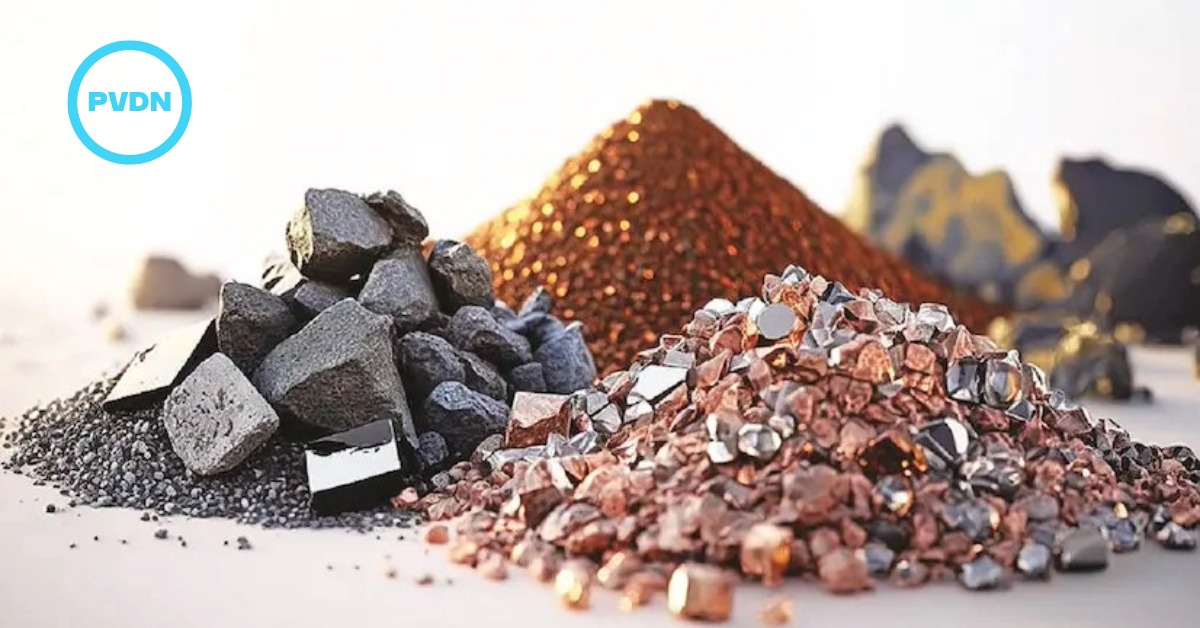
Mexico’s government is drawing a line in the sand over lithium and other “critical minerals” essential for modern technology. President Claudia Sheinbaum insists that these valuable resources won’t be ceded to any other country, even as Mexico joins global talks on securing mineral supply chains. Her stance, echoed by Economy Secretary Marcelo Ebrard, highlights a delicate balancing act: defending Mexico’s constitutional sovereignty while navigating a high-stakes geopolitical scramble for the minerals powering electric cars and advanced electronics. For foreign companies eyeing Mexico’s lithium and rare earth deposits, one question looms: how will they adapt to this uncompromising stance?
Mexico will not “cede” its critical mineral reserves to any other nation, President Claudia Sheinbaum declared this week. She emphasized that no international agreement will override Mexico’s Constitution, which enshrines national ownership of natural resources. “The reserves of these minerals are Mexico’s… So we are not giving anything to anybody,” Sheinbaum said on Thursday, stressing that such strategic materials are not up for negotiation. Her comments came amid heightened global interest in minerals like lithium – used in electric vehicle batteries – and rare earth elements essential for electronics and defense. This context underlines Mexico’s resolve to defend its sovereignty over these strategic assets.
Balancing Sovereignty with Global Cooperation
Standing alongside Sheinbaum, Economy Secretary Marcelo Ebrard elaborated on Mexico’s approach. He confirmed that Mexico is actively participating in international discussions on critical minerals, but only to ensure the country’s interests are protected. According to Ebrard, Mexico has “two paths: one, not participate and be a spectator – which would be a grave error – or two, take a seat at the table and defend the Mexican position.” Choosing the latter, Mexico is engaging with partners such as the United States, Canada, and others to shape fair rules for the critical mineral trade. Ebrard noted that he recently took part in talks in Washington on a possible multilateral agreement. However, he made it clear that “we won’t make any commitment that contradicts our laws or Constitution.” In other words, Mexico’s cooperation abroad will not come at the expense of its own legal framework or control over its mineral wealth.
Critical Minerals and Geopolitical Stakes
Sheinbaum’s pronouncement comes as the geopolitical stakes for critical minerals are rising. The United States – Mexico’s main trade partner – has been pushing to secure reliable supplies of these resources amid a global rush for materials that power the green and digital economy. Washington recently convened a high-level conference on critical minerals, aiming to secure agreements with dozens of countries as it seeks to reduce reliance on China, which dominates the processing of many rare minerals. In fact, as part of the scheduled USMCA trade pact review due by mid-2026, U.S. officials have put the future of critical minerals trade with Mexico at the top of the agenda. Just last week, the U.S. and Mexico unveiled a 60-day action plan to coordinate policies on critical mineral supply chains. That plan involves identifying key mineral deposits and even considering price floors for certain imports – a move aimed at preventing market distortions. Notably, the plan emphasizes respect for each country’s laws and sovereignty, reflecting Mexico’s insistence that any collaboration must honor its constitutional protections.
Mexico, for its part, plays a dual role in this global scramble: it is a significant producer of some critical minerals (such as silver, copper, and zinc) but lacks others (such as aluminum, cobalt, and certain rare earths) needed for its own industries. This mix of strengths and dependencies is driving Mexico to seek international cooperation – but on its own terms.
Resource Nationalism in Mexico
Mexico’s firm stance on “no ceding” of minerals is rooted in a long tradition of resource nationalism. The Mexican Constitution has long established that all subsoil resources belong to the nation. In recent years, this principle was reinvigorated with a landmark move to nationalize lithium in 2022. Under former President Andrés Manuel López Obrador, Mexico declared lithium a strategic mineral reserved for exclusive state exploitation. A new state-owned company, Litio para México (LitioMx), was created to oversee lithium development. Private and foreign companies can only participate as minority partners in joint ventures with LitioMx – ensuring Mexican control. So far, no commercial lithium mine is in operation, and technical challenges in extracting lithium from Mexico’s clay deposits have slowed progress. However, the government has remained adamant that any future lithium production will stay under national stewardship. Sheinbaum, López Obrador’s successor and political ally, has signaled continuity in this policy. Her message this week dispels rumors that engaging with international initiatives might lead to privatizing or handing over Mexico’s resources. It’s a clear reassurance to the Mexican public. Even as global demand for minerals grows, Mexico’s sovereign rights are not up for sale.
This protective approach has already impacted foreign investors. For example, a major Chinese firm, Ganfeng Lithium, had acquired rights to develop a large lithium deposit in Sonora prior to the nationalization. After the new policy took effect, Mexican authorities cancelled some of Ganfeng’s concessions last year, citing failure to meet investment commitments. Ganfeng responded by filing an international arbitration claim against Mexico – a sign of the tensions between the country’s nationalist policies and foreign corporate interests. Despite such disputes, Mexican officials maintain that companies can still be involved, but only under Mexican law. Notably, President López Obrador indicated that U.S. and Canadian companies would be welcome to partner on lithium projects, as long as the state holds the majority stake. That stance aligns with Mexico’s commitments under the USMCA. It also rules out ceding control of resources to outside entities.
Implications for Foreign Companies
For foreign companies interested in Mexico’s lithium, rare earths, and other critical minerals, the implications are clear: they must play by Mexico’s rules if they wish to participate. Direct concessions or ownership of these mineral resources are essentially off the table under current policy. Instead, international firms may need to collaborate through joint ventures, provide technological expertise, or invest in value-added processing within Mexico. U.S. and Canadian corporations, in particular, could find opportunities in partnering with Mexico’s nascent lithium industry, especially since the Mexican government has expressed interest in developing a domestic battery supply chain. Automakers and battery manufacturers might be invited to set up operations in places like Sonora, but with the understanding that the raw materials remain under Mexican stewardship. Meanwhile, companies from outside North America could face additional scrutiny or limitations. Mexico is aligning its mineral strategy closely with its North American trade partners and aims to avoid overreliance on any single foreign power.
Looking ahead, Mexico’s non-negotiable stance on critical minerals sovereignty might slow some foreign mining investments in the short term. Yet, it also provides clarity: any foreign engagement must contribute to Mexico’s long-term industrial goals and respect its legal boundaries. By holding firm on constitutional principles, Sheinbaum’s government aims to ensure that the rush for critical minerals benefits Mexico’s development rather than compromising it. In a world increasingly defined by competition for these resources, Mexico is trying to carve out a role that protects its interests – inviting international cooperation, but only on its own terms.
With information from El Universal, El País, Reuters