Puerto Vallarta, Jalisco, July 30, 2026 – An American shopping around ahead of a winter vacation can now encounter a result that would have seemed unlikely several years ago. A beachfront hotel in Puerto Vallarta may cost more than a five-star stay in Thailand or Vietnam, and the daily cost of meals, transportation and activities can be considerably lower after crossing the Pacific.
The flight to Asia is still longer and usually more expensive. Mexico remains the easier choice on a five-night escape. But once a trip stretches to 10 days or two weeks, lower costs after arrival begin to absorb the difference in airfare.
That is the part of Asia’s tourism growth that Mexico’s beach destinations cannot dismiss as a passing trend. Mexico’s old vacation bargain has been squeezed from two directions. Prices in pesos have risen, while the dollar buys fewer pesos. Across parts of Asia, the opposite experience awaits. The airfare may cause sticker shock, then the hotel, restaurant and transportation bills bring relief.
Mexico became more expensive in two ways
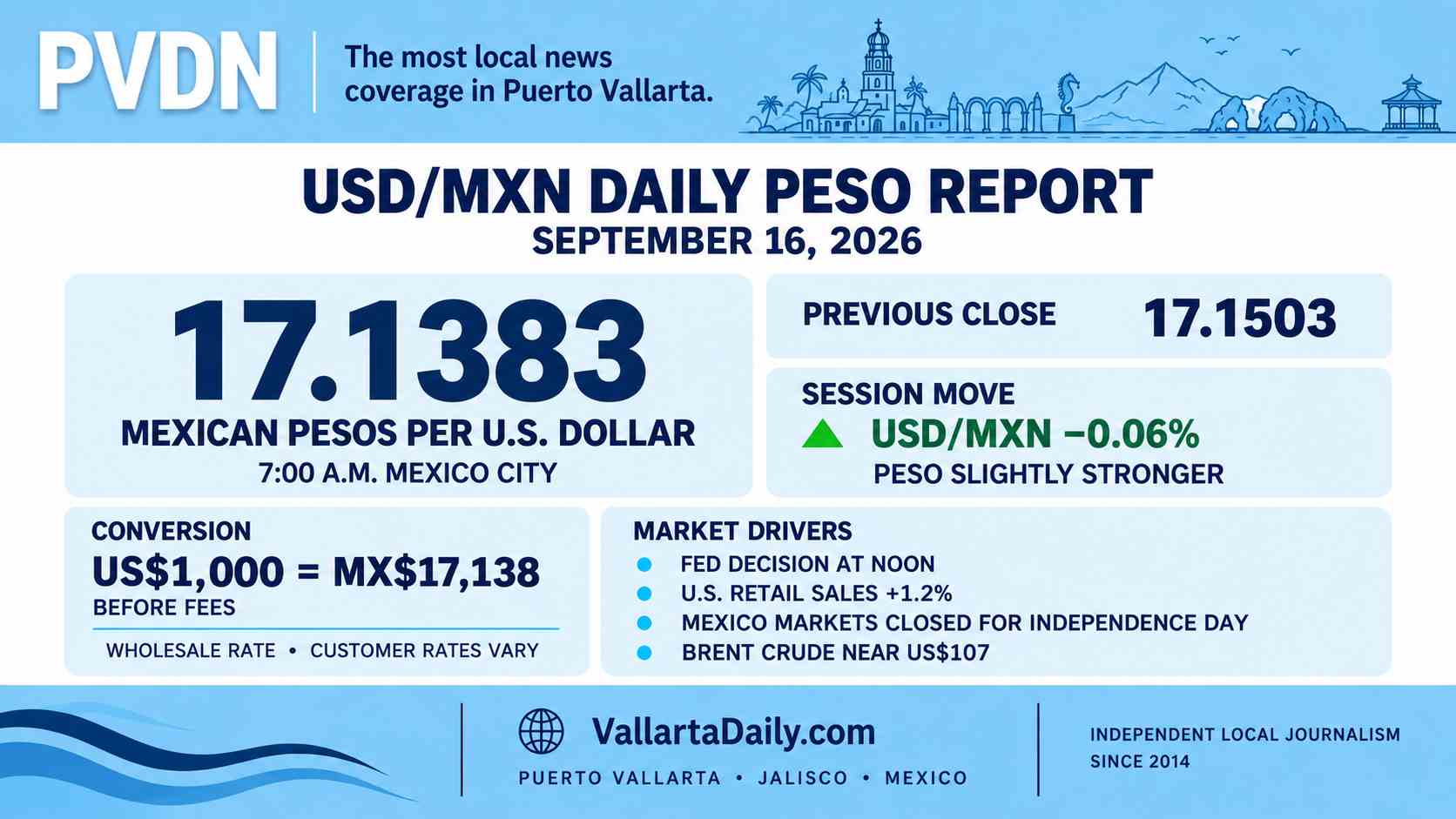
The exchange rate is the easiest place to see the change. The dollar traded near 20.85 pesos in March 2025. By late July 2026, Federal Reserve exchange data placed it near 17.4 pesos.
A traveler exchanging $100 went from receiving about 2,085 pesos to about 1,740 pesos. A 1,000-peso dinner that converted to roughly $48 at the earlier rate now costs close to $58, even if the restaurant has not changed the price.
The restaurant probably has changed it. Mexico’s official consumer price data show restaurant and lodging prices were 6.69 percent higher in May than a year earlier. The same category rose 7.35 percent across 2025.
That combination explains why repeat visitors say Mexico feels more expensive than the inflation figures alone suggest. Their hotel, dinner or tour costs more pesos, and each dollar buys fewer of them. Vallarta Daily previously examined the same pressure as local businesses reported more cautious spending among American tourists and expatriates.
The change is especially noticeable in beach resorts built around international demand. Hotels, airport transportation, boat trips and premium restaurants in Puerto Vallarta, Cancún and Los Cabos compete in a market where travelers routinely compare prices in dollars. Those destinations can still cost less than Hawaii, Miami or Southern California, but that is a different claim from being an inexpensive international vacation.
What the same budget buys after landing
Travel prices vary by season, neighborhood and comfort level, so no single average can quote a future vacation precisely. Comparisons drawn from the same methodology can still reveal why travelers are looking farther away.
Budget Your Trip, which compiles expenses reported by previous travelers, estimates a mid-range Puerto Vallarta visit at $135 per person each day. That amount includes a share of a double room, meals, local transportation and sightseeing. The comparable estimate is about $98 in Thailand, about $65 in Vietnam and about $135 in Japan.
Two people spending 10 days on the ground would use roughly $2,700 at the Puerto Vallarta average, compared with about $1,960 in Thailand or $1,300 in Vietnam. The savings of $740 to $1,400 can cover a meaningful share of the additional airfare to Asia. Stretch the trip to two weeks and the lower daily cost becomes more important. Cut it to five nights and Mexico’s shorter, cheaper flight usually regains the advantage.
The airfare is paid once. The difference in hotel, food and transportation costs repeats every day.
Hotels make the comparison even more visible during a booking search. The Puerto Vallarta cost guide, drawing on hotel data supplied by Kayak, places the city’s average room at $228 in low season and $425 during the peak winter period before taxes and fees. Expedia’s 2026 Hotel Price Index found five-star rooms averaging $119 in Nha Trang, Vietnam, and $144 in Phuket, Thailand.
Those figures do not compare identical dates, properties or room types. They do explain the surprise facing a traveler who opens several booking tabs and discovers that a luxury room in Southeast Asia can appear beside a mid-range or lower-end resort price in Mexico.
Food widens the gap. The same traveler-expense database places daily meal spending at about $61 in Puerto Vallarta, compared with $35 in Bangkok and $21 across Vietnam. Thailand and Vietnam also offer inexpensive local transportation, massages, excursions and domestic travel, allowing visitors to add experiences without turning every day into a larger credit card bill.
The phrase “the dollar buys more in Asia” describes two different advantages. In Japan, exchange rates are a major part of the story. In Thailand and Vietnam, the larger advantage is a lower local price base. Hotels, restaurants, taxis and personal services operate at costs below those in Mexico’s major resort zones, even without a dramatic currency change. Southeast Asia also has a dense supply of hotels competing at the mid-range and luxury levels.
Japan offers a different kind of bargain
Japan does not fit the image of uniformly cheap Asia. Tokyo’s estimated daily cost is higher than Puerto Vallarta’s, and rail travel between major cities can add significantly to a budget. Japan’s appeal comes from how much more attainable it has become compared with its old reputation.
The yen recently fell to its weakest level in about 40 years, reaching nearly 164 to the dollar before a sharp rebound on July 30, according to Reuters currency reporting. The exchange rate gives Americans far more yen than they received through much of the previous decade.
Japan also removes several small charges that Americans have learned to expect in resort areas. Tipping is not customary in restaurants, taxis or hotels. Extensive rail and subway systems reduce the need to hire a car, and a large market of compact business hotels and neighborhood restaurants gives travelers choices outside the luxury tier.
The result is not necessarily a cheaper trip than Puerto Vallarta. It is a destination once considered prohibitively expensive becoming available at roughly the same daily budget, with an entirely different cultural experience attached.
Thailand and Vietnam compete more directly on price. Japan competes on the feeling that a rare or ambitious trip is suddenly within reach.
Asia is also easier than it used to be
Price alone does not explain the shift. Travelers who spent years returning to a familiar Mexican resort are now finding Asian trips easier to research, book and navigate.
Airlines have restored more routes since pandemic restrictions ended. Online booking platforms display rail tickets, airport transfers, restaurant reservations and guided experiences in English. Digital payment and translation tools remove some of the uncertainty that once pushed less experienced travelers toward familiar destinations.
TravelAge West reported that two-week Asia itineraries are leading American demand. Japan often acts as the first trip because of its transportation system and tourism infrastructure. Interest then expands toward Vietnam, South Korea, China and other destinations. Vietnam is gaining particular attention through its food, cultural depth and value.
Asia also offers a different type of vacation. A traveler can combine a modern capital, historic temples, regional food, beaches and several cities during one trip. Mexico offers the same breadth nationally, but many American vacationers experience it through a single resort destination. When prices approach those of a larger touring vacation, some begin to question whether another week beside a familiar pool offers the same value as a first trip across Japan or Vietnam.
Where Puerto Vallarta still wins
Puerto Vallarta does not need to become cheaper than Vietnam to remain competitive. Matching those prices would demand an entirely different local cost structure. Its advantage is time.
A visitor from much of the United States can leave home in the morning and reach Puerto Vallarta that afternoon. There is little jet lag, no lost day crossing the International Date Line and no need to move among several hotels to feel that the trip was worthwhile. English is widely understood across the tourism economy, repeat visitors know the neighborhoods, and many travelers already have relationships with local restaurants, hotels and service providers.
Puerto Vallarta also offers more range than its resort prices suggest. Local buses, public beaches, taco stands, small hotels and restaurants outside the main visitor corridors can still produce an affordable trip. The difficulty is that many first-time shoppers see beachfront hotel rates, tours sold in dollars and increasingly expensive restaurant districts before they discover those options.
Cancún and Los Cabos face a similar challenge. Their largest visitor zones are more heavily concentrated around all-inclusive properties, purpose-built hotel districts and premium transportation. Puerto Vallarta’s mix of neighborhoods, independent restaurants and repeat winter visitors gives it a broader value proposition, if the destination does not reduce itself to another high-priced beach resort.
The competition is already reaching the local market. Puerto Vallarta’s international passenger traffic fell sharply during the first half of 2026, while airline schedules point to another reduction in U.S. seats this summer. Competition from Asia is one influence among several, including security perceptions, a strong peso and airline decisions, but it changes the destination choices available to the same American traveler.
The visitor Puerto Vallarta risks losing is usually not the person booking a quick long weekend. It is the traveler with 10 days or more who can absorb the longer flight and then benefit from lower daily costs.
Mexico remains difficult to beat on a short vacation. Asia becomes more competitive as the trip grows longer and the traveler spends more days paying local prices. Puerto Vallarta is no longer selling the cheapest option. It is selling convenience, familiarity and a complete vacation without two days of long-haul travel.
That can remain a strong offer, but the old assumption that Mexico will win because it is nearby and inexpensive no longer holds as easily. Travelers are comparing the total receipt, and Thailand and Vietnam now make that comparison much closer than the airfare alone would suggest.