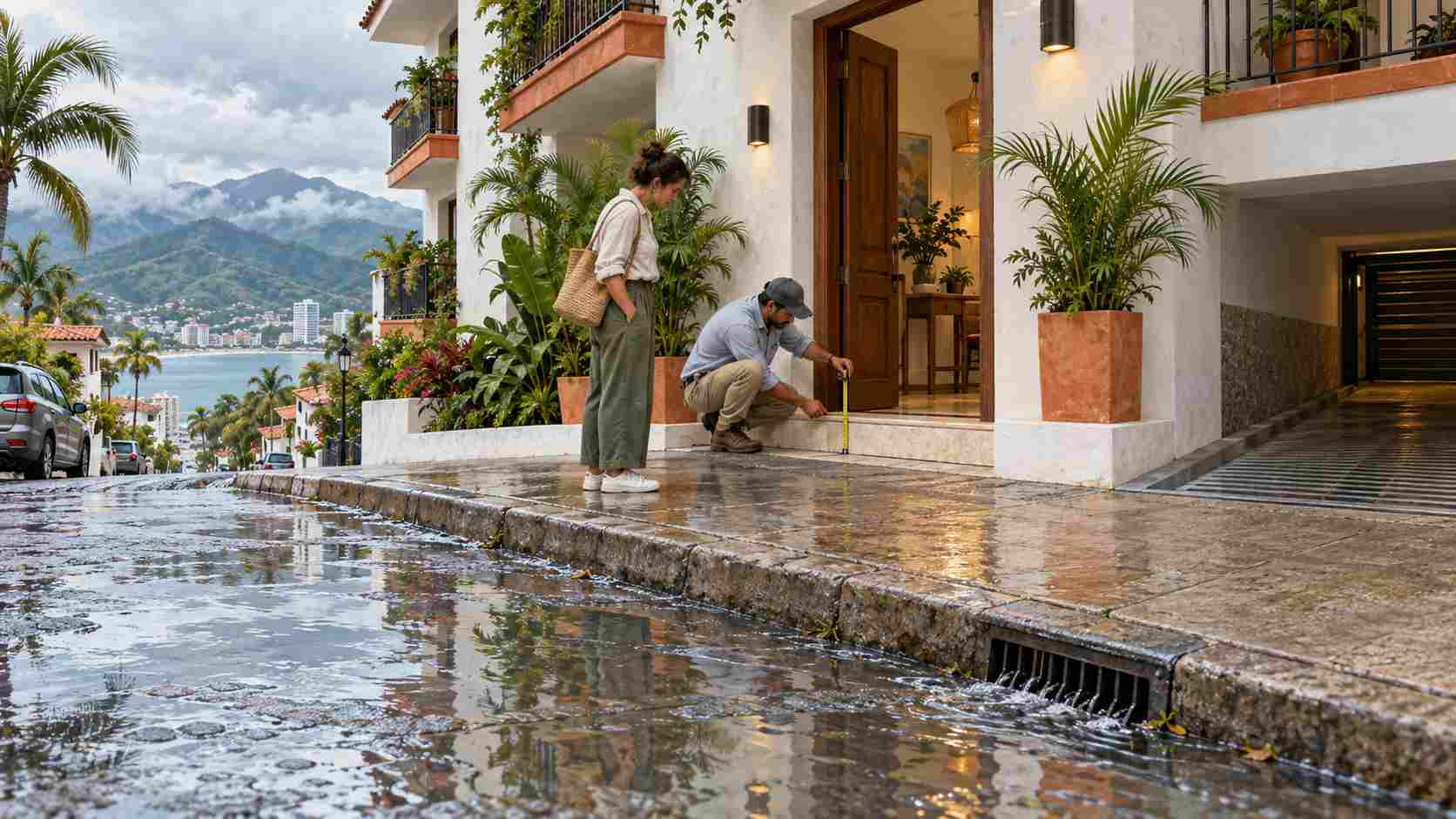
The most important Romantic Zone story this month is not one grand opening, one construction project, or one police call. It is the slow collision of three things everyone who lives here can feel: a neighborhood trying to organize itself, public services still being tested by rain and density, and development changing the ground floor as quickly as the skyline.
Here is the honest read. The neighborhood is getting better at naming its problems. Solving them is taking longer.
One boundary note before we get into it: Zona Romántica is a commercial name, not an official colonia. It covers much of Emiliano Zapata but spills into Amapas and nearby streets around Los Muertos. That matters because traffic, trash, drainage and construction do not stop where the municipal map changes color.
The neighborhood is still organizing
In early July, Romantic Zone businesses and city officials agreed to hold regular meetings addressing trash, sewer service, power reliability and pressure from major events.
That effort did not quietly disappear after the first meeting.
More than 50 business owners and representatives gathered again on August 10, this time to discuss whether the district needs a formal business association, a broader neighborhood organization or an LGBTQ+ chamber of commerce. It was their third meeting, and no final structure was selected.
That lack of a decision is not necessarily bad. Creating another organization without defining its job could simply give the neighborhood one more WhatsApp group and no clearer way to get a blocked drain fixed.
The organizers also acknowledged that the existing Emiliano Zapata neighborhood association must be part of the conversation. The next useful step is therefore not a logo or launch party. It is a published structure showing who represents businesses, who speaks for residents, how complaints are documented, and which government office is responsible for answering them.
This organizing is happening during a difficult summer. VallartaDaily’s broader restaurant review found that local business was running roughly 20% to 25% below normal, with at least 12 restaurants across the city pausing or ending operations. That gives Romantic Zone owners a practical reason to cooperate beyond the usual high-season concerns.
Trash is the first test
Emiliano Zapata and Olas Altas were placed on a daily morning garbage route beginning at 6:30 a.m. under the collection calendar introduced July 15. The city also assigned daily cleaning crews to the Romantic Zone and Malecón.
Yet trash was still among the first problems raised at the August 10 business meeting.
The schedule only works when household bags are placed at the designated corner shortly before the truck arrives. Leaving them overnight gives rain, animals and passing traffic hours to scatter everything across the street. Regular collection trucks also do not accept furniture, mattresses, appliances, construction waste or tree branches. Those items require separate handling, and dumping them at a household collection point can result in a municipal fine.
A separate volunteer effort, Vallarta Limpio, is beginning a Romantic Zone pilot involving permanent masonry collection bins, smaller metal sidewalk bins, neighborhood cleanups and public education. One masonry bin was already in place across from Margarita Grill when the pilot was announced.
The proposed masonry bins cost about MXN 50,000 each, while smaller sidewalk bins are estimated at MXN 5,000. The group is seeking sponsors.
It is a promising idea, but the real measure will be whether bins are installed at known trouble spots, emptied consistently and kept from becoming collection points for mattresses and construction debris. A new bin without dependable collection simply makes the pile look more official.
For residents, the practical rule is simple: put household trash out near collection time, keep bulky waste separate and photograph repeated missed pickups with the date and exact cross streets visible.
The bigger problem may be under the pavement
Trash is what everyone sees. Drainage is what can ruin a block before most people understand what happened.
SEAPAL has acknowledged that parts of Emiliano Zapata are working with sanitary lines that have been overtaken by neighborhood growth. After meeting with Romantic Zone businesses, the utility agreed to increase preventive sewer cleaning, primarily at night, while strengthening inspections of grease traps at restaurants and other food businesses.
According to SEAPAL, two recurring causes of blockages are accumulated cooking grease and stormwater entering the sanitary system. That combination helps explain why a hard rain can be followed by slow drains, odors or backups even after the street surface begins to clear.
This is also where development pressure becomes more than an argument about building height. Every additional restaurant kitchen, condominium and commercial space adds demand to systems that SEAPAL already describes as undersized.
Nighttime Vactor work is a sensible short-term response. What the neighborhood still needs is a longer-term rehabilitation schedule with identified blocks, funding and expected completion dates. Otherwise, crews will remain trapped in a cycle of clearing the same lines without replacing the infrastructure causing the problem.
Development is changing the ground floor too
At Madero and Insurgentes, the new Avida Market food hall opened in early July with space for 22 commercial operations. During a mid-August visit, roughly half to two-thirds of its vendors were open or staffed.
The useful neighborhood story is not the menu. It is the conversion of a large condominium ground floor into a concentrated food and retail destination. That can bring foot traffic and fill an important corner, but it also concentrates deliveries, waste, scooters and late-day activity at one intersection. Those effects are worth watching once the remaining stalls are occupied and high season returns.
A few blocks away, the proposed 94-unit Velōa Residences would place an 11-story residential and commercial project at Lázaro Cárdenas and Constitución. The original plan anticipated relocating several established businesses from the site.
The development remains in active presale marketing, but a clearly documented August construction milestone was not available for this report. One affected business, Don Chava, has already reopened two blocks away at Venustiano Carranza 212.
That move is a small but important example of how development pressure should be tracked. A business leaving its familiar corner is not automatically a closure, but relocation changes customer habits, rent obligations, and the commercial identity of a block.
Construction traffic deserves equal attention. On August 1, a dump truck lost control on Calle Púlpito and struck a CFE pole outside The Tryst. No injuries were reported, but the crash caused a power outage and closed the street for several hours.
The location is technically on the Amapas edge, but it is part of the same pedestrian and commercial district. The incident shows why construction oversight must include truck routes, traffic control, utility protection and sidewalk access—not only permits for the building itself.
The Friendly District still needs a calendar
Last year’s tourism infrastructure package reserved MXN 10 million for a Romantic Zone “Friendly District,” with proposed improvements including crosswalks, accessibility, pedestrian areas, bicycle facilities, lighting, signage, urban furniture, façades and waste management.
On paper, the Friendly District proposal touches nearly every recurring neighborhood complaint. What residents and businesses still need is a public, street-by-street work calendar.
There is reason to ask for firm dates. A separate lighting project funded through the same tourism program had not visibly started by July 21, even though its contracted work period was approaching its scheduled end.
That does not prove the Romantic Zone project is delayed. It does mean the neighborhood should judge the plan by contracts, start dates and completed work—not renderings.
Two safety notes without inventing a crime wave
Residents recently renewed a request for municipal action on a large tree they consider dangerous during heavy rain and wind. The complaint was reportedly filed last year under folio 09-20-25, but the published account did not identify the street.
That missing location makes public follow-up difficult. It also reinforces why service complaints should include exact cross streets, current photographs, and a folio number that can be shared with neighbors.
On August 4, equipment valued at approximately MXN 25,000 was taken from an unattended delivery truck near Francisco I. Madero, Aquiles Serdán and Camichín. The vehicle had reportedly been left open while its crew stopped for breakfast.
One opportunistic theft is not evidence of a neighborhood crime trend. It is a practical reminder for delivery drivers, contractors and residents not to leave tablets, tools or bags visible in an unlocked vehicle—even during a short stop.
Los Muertos and Río Cuale remain active safety zones
Los Muertos Beach was under a yellow precaution flag on August 18 while five other monitored beach and river-mouth zones remained closed. A yellow flag is not a closure, but conditions still require caution and attention to lifeguard instructions.
The Mexican Navy conducted its second summer rescue drill at Los Muertos this week, testing the response from the water to shore. Navy personnel also secured 62 sea turtle eggs and transferred them to protected incubation.
Upstream, warning signs along the Río Cuale should not be treated as decoration. Authorities captured and relocated a second crocodile within ten days in late July after residents reported several animals near the riverbank. Anyone seeing a crocodile should keep a safe distance, avoid feeding or attempting to capture it, and report the location through 911.
What to watch before the next report
The neighborhood has five clear tests over the coming weeks:
- Whether the emerging business group chooses a structure and coordinates with the existing residents’ association.
- Whether Vallarta Limpio installs additional bins at documented problem locations.
- Whether SEAPAL’s nighttime cleaning reduces repeated backups during heavy rain.
- Whether the Friendly District receives a public construction schedule.
- Whether development sites provide dependable pedestrian access and safe routes for heavy vehicles.
None of those questions produces a dramatic headline by itself. Together, they determine whether the Romantic Zone remains livable for residents and workable for the businesses that give it its identity.
That is the real neighborhood watch this month: not simply what is opening, but whether the basics can keep up.