At first light in Oaxaca de Juárez, residents of the Morelos and José Vasconcelos neighborhoods formed a line and said, “Enough.” A pop-up tianguis had tried to set up near the General Cemetery. Tires burned, tempers flared, and after a tense faceoff, the vendors pulled back. Locals insist the market lacked permits and threatened already congested streets. The morning ended without arrests, but not without smoke and bruised trust. What happened, who’s responsible, and what rules actually apply when a market wants to move?
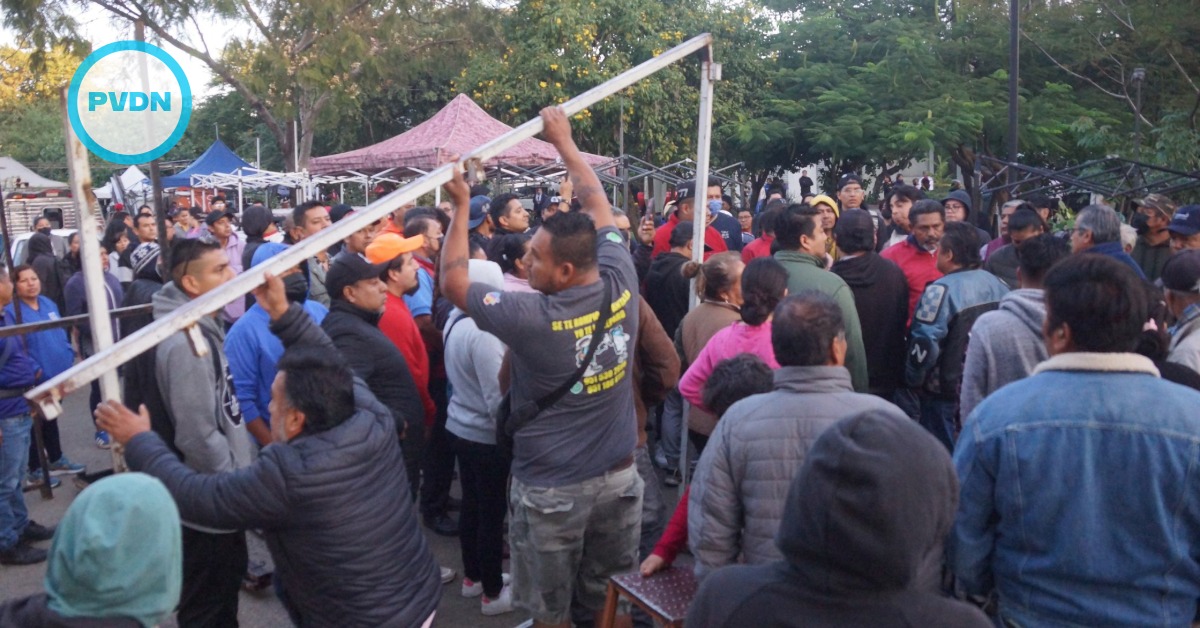
Neighbors in two barrios of Oaxaca de Juárez woke to the smell of rubber and the crackle of flames. Before 7 a.m. on October 24, residents of the Morelos and José Vasconcelos colonies blocked the installation of a pop-up tianguis near the Panteón General. Tires burned at the barricade. Vendors gathered on the other side. The standoff escalated, then ended with the merchants withdrawing from the area. Local reporters on scene documented the confrontation and confirmed the withdrawal.
Residents say they organized after hearing the market planned to relocate to their streets for the day. Video posted by Oaxaca outlets shows neighbors holding a banner rejecting the tianguis, as black smoke rises amid arguments over whether the market had municipal authorization to occupy public roads next to the cemetery. The morning passed without a formal police operation or mass detentions, but the images capture a volatile civic moment: neighbors asserting control over their block, vendors defending the day’s income.
What the rules say about pop-up markets
Behind the shouting is a paperwork story. Street trading in Oaxaca de Juárez is regulated at the municipal level; permits are required to occupy the public right-of-way, and those authorizations are typically issued or renewed annually. Separately from trade permits, the state’s environmental law prohibits activities that pollute air and soil—such as burning tires—because of public health risks. That means both unauthorized vending and tire fires can trigger sanctions, depending on who did what and where.
The timing added friction. Late October brings Day of the Dead crowds and a surge of permitted fairs and temporary sales around cemeteries and historic streets. City hall has been issuing limited, event-specific permissions for seasonal stalls near burial grounds and along central corridors. That controlled expansion can collide with attempts to relocate or extend informal markets into new residential blocks—especially when residents fear gridlock, trash, or late-night noise.
Oaxaca street market clash
Residents who blocked the tianguis argue their streets were not authorized for commerce that day. Vendors counter that families depend on Friday sales and that relocation is sometimes necessary during busy seasons or when usual sites are unavailable. Eyewitness reporting places the first arrivals at about 6:30 a.m.; by sunrise, neighbors had already organized their blockade. Minutes later, tires burned, people shouted, and the market pulled back—avoiding a larger confrontation but leaving a political mess for city authorities. Oaxaca street market clash wasn’t just a morning spat; it exposed how fragile the city’s informal-economy truce can be.
Health and safety concerns also linger. Burning tires release toxic compounds that can aggravate asthma and contaminate nearby surfaces. Oaxaca’s environmental framework allows authorities to fine or sanction those responsible for open tire burning, and municipalities routinely suspend such fires when detected. If the city opens an administrative file, inspectors may need to determine who lit the blaze—and whether any market organizer sought permission to occupy that block in the first place.
What comes next for neighbors and vendors
This isn’t an isolated tension point. As Oaxaca ramps up holiday events, it also expands the footprint of temporary commerce in central neighborhoods. Officials will have to show where pop-up markets are permitted, how inspectors enforce those lines, and what recourse residents and vendors have when boundaries blur. Transparent maps of authorized corridors, clear hours, on-site waste management, and quick lines to mediate disputes could prevent the next dawn standoff—and the next plume of smoke.
On Friday, the only clear outcome was retreat: the tianguis stood down, the neighbors held their ground, and the city’s fragile balance between livelihood and livability snapped into view. Video from the scene shows how fast it can happen, and how quickly it can be defused when one side steps back.