Playa Mamitas in Playa del Carmen woke up to a January surprise: a thick band of sargassum that arrived months before locals usually brace for it. Crews moved fast to keep the seaweed from smothering the sand and dune edge, but the timing is what has people talking. Early beachings can be a one-off driven by wind and currents—or the first hint that the next season won’t wait for spring. With last year’s totals still fresh in memory, residents are watching the waterline for what comes next.
An early hit on Playa Mamitas
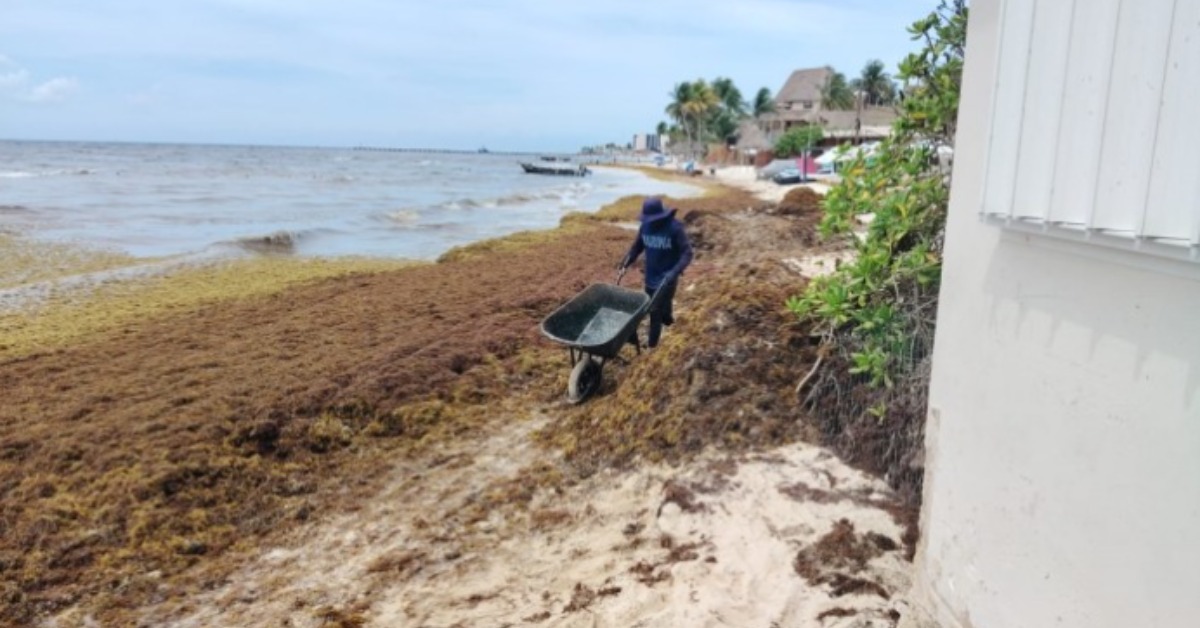
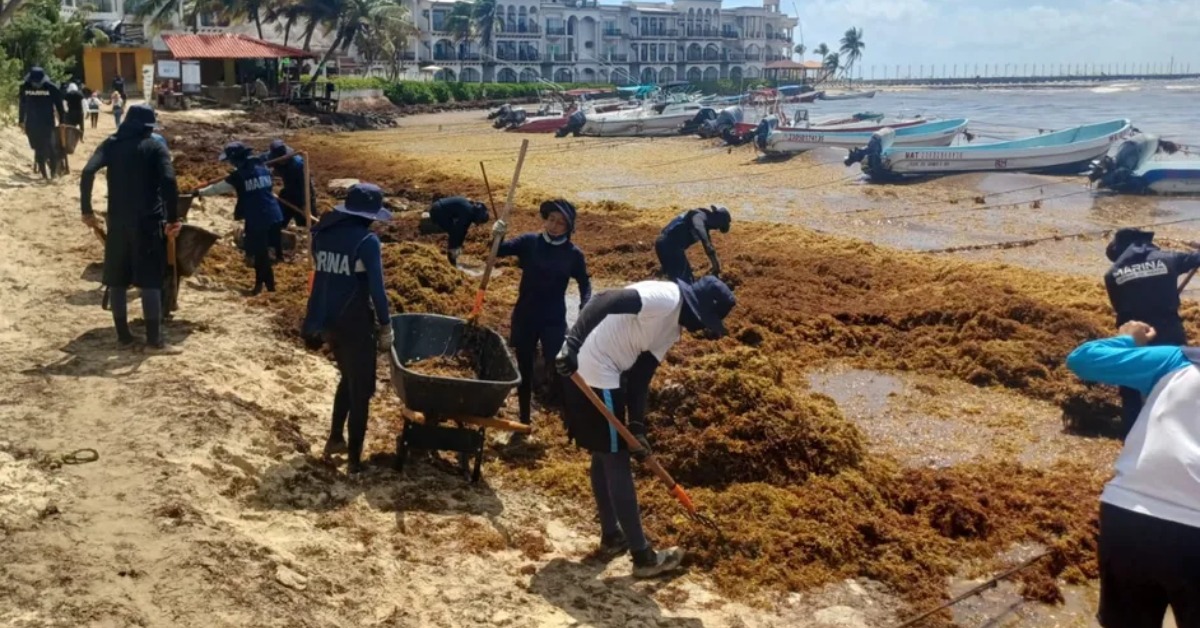
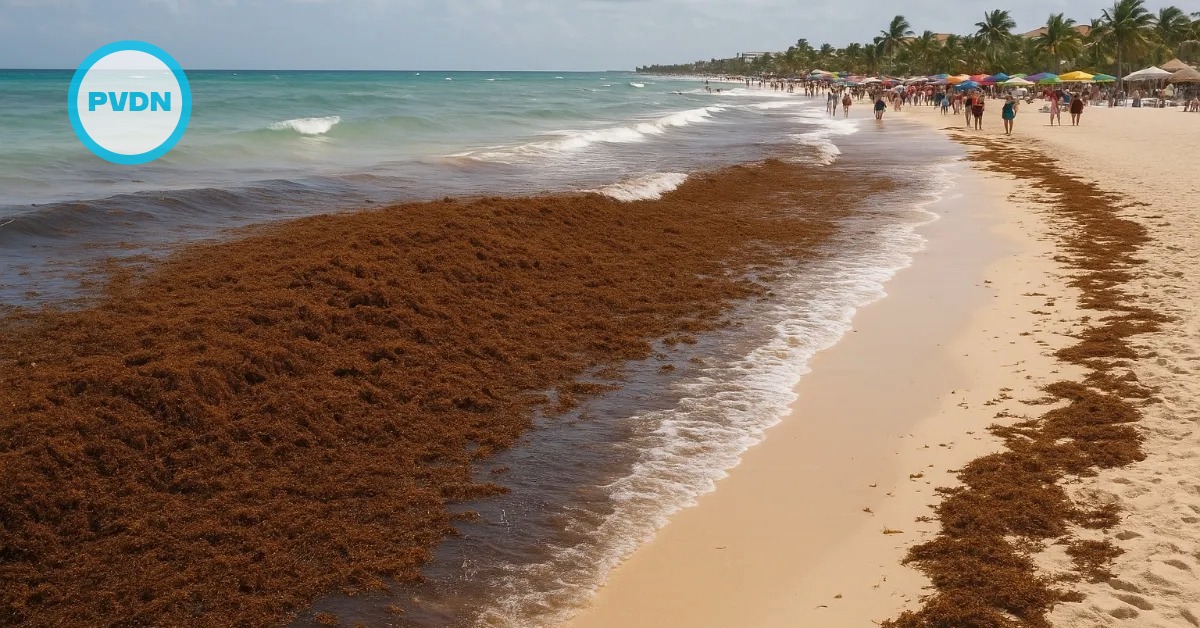
Playa Mamitas in Playa del Carmen took an unexpected hit on Thursday, January 8, when a dense patch of sargassum pushed ashore and spread across the beach. Municipal officials estimated the arrival at about 25 tons, a hefty load for a time of year when most residents and regular visitors aren’t even thinking about seaweed season. By 5 p.m., workers had already collected roughly 22.5 tons, and the remaining material was expected to be removed the next day as long as another patch didn’t follow behind it.
The race to clear it without damaging the dune
The urgency wasn’t only about how the beach looked for tourists and beach clubs. The bigger worry was what happens when sargassum sits and compacts at the shoreline: it can bury the natural slope of the sand, trap moisture, and accelerate erosion in sensitive areas. It can also end up pushed into the dune edge if cleanup is rushed or poorly handled, which is why the operation focused on removing the algae along the waterline while protecting the dune system.
The work was carried out by ZOFEMAT, the municipal team that manages and maintains the federal maritime beach zone. In practical terms, they’re the crew you see when a beach needs to be restored fast, especially in high-traffic areas like Mamitas where the coastline is both an ecosystem and a daily gathering place.
Why January matters more than the tonnage
Sargassum has become part of the Caribbean’s new normal, but the calendar still matters. In Quintana Roo, the season is commonly tracked from April, when warmer conditions and shifting winds tend to steer more floating mats toward shore. A January arrival doesn’t automatically mean the rest of the year is doomed; ocean currents can swing a patch toward the Riviera Maya, then pull it away again just as quickly.
Still, out-of-season beachings raise eyebrows because they can be an early hint of what’s building offshore. Recent satellite-based monitoring has flagged fast growth in sargassum across the broader Atlantic basin, along with the possibility of early beach impacts in the Mexican Caribbean. If that offshore growth keeps building through late winter and early spring, April doesn’t arrive with a gentle start—it arrives with momentum.
That’s why specialists are treating the Mamitas event as more than a weird January fluke. The worry isn’t that one beach had one rough morning. It’s that 2026 could behave like a season that starts early, pauses, then returns in heavier waves.
What a heavy year feels like for residents
For expats living along the Riviera Maya, the concern is also personal and practical. Quintana Roo closed the 2025 season with more than 91,000 tons collected statewide, and Playa del Carmen accounted for a large share of that volume. Those numbers translate into real-life disruptions: morning walks that turn into detours, a shoreline that changes texture underfoot, and weekends that become a weather-and-wind guessing game instead of a simple beach plan.
There’s also the part nobody romanticizes. When sargassum decomposes, the odor can drift inland and linger, and the gases released during decay can irritate eyes and throats. Most people experience it as an unpleasant nuisance, but anyone with asthma or respiratory sensitivities often feels it more sharply—especially on still, humid days when the smell hangs close to the ground. That reality is one reason rapid cleanup matters even in the off-season: the longer it sits, the worse it gets.
What to watch in the weeks ahead
For now, the most honest takeaway is cautious attention, not panic. Conditions can be wildly uneven along the coast—one beach can look hammered while another a few kilometers away stays clear enough to swim. Wind direction, surf, and offshore concentration can flip the story overnight.
What will matter in the short term is whether more out-of-season patches arrive through January and February. If they do, it’s a sign local response may shift from occasional cleanup to early-season readiness: more coordination with beachfront businesses, more preventive measures offshore, and a faster cycle of removal to keep dunes and water quality from taking the hit first.
For residents, that means keeping plans flexible and watching the shoreline the way locals do—by the wind, the smell, and the color of the water long before the seaweed actually lands.