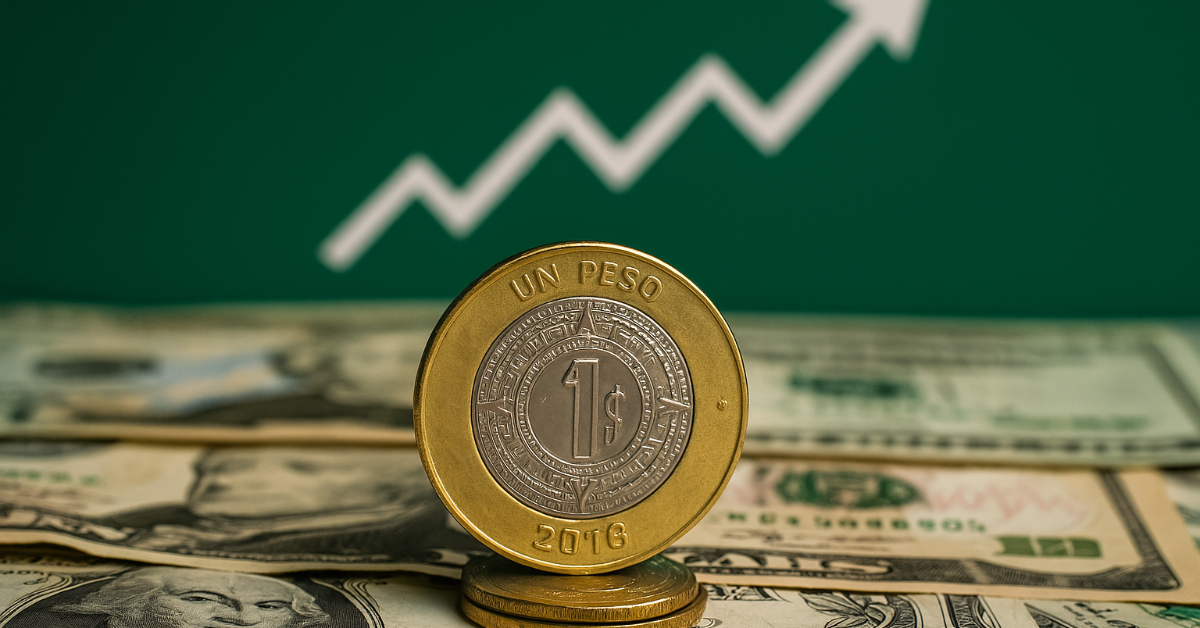
The Mexican peso exchange rate rose to 18.6169 per dollar after Banxico minutes hinted at slower rate cuts, while U.S. tariff concerns and solid jobs data shaped market moves.
The Mexican peso exchange rate closed at 18.6169 per U.S. dollar on Thursday, marking a modest gain after initial losses and reflecting fresh guidance from the Bank of Mexico. Traders reacted swiftly to the minutes of Banxico’s June meeting, which signaled that upcoming policy adjustments may slow in pace. The local currency climbed 1.15 centavos, or 0.06 percent, off yesterday’s record close of 18.6284 per dollar according to official data.
Throughout the session, the peso traded between a high of 18.7062 and a low of 18.5950. The Intercontinental Exchange’s Dollar Index (DXY), which tracks the greenback against six major currencies, ticked up 0.01 percent to settle at 97.60. A softer dollar tended to support the peso’s advance, even as global investors weighed fresh trade tensions.
Banxico’s meeting minutes revealed that governors view further adjustments to the key interest rate as likely to come in smaller increments. Over the past four policy meetings, Banxico cut its benchmark rate by 50 basis points each time, bringing it down to 8 percent. But a recent uptick in consumer inflation prompted the board to signal restraint. Officials agreed that a more measured approach would let them guard against potential price pressures without derailing Mexico’s economic recovery.
“Minutes suggest a shift toward a gradual path for rate cuts, which traders saw as supportive of the peso,” noted a report from Monex Grupo Financiero. Market strategists interpreted the guidance as an acknowledgement that inflation remains a risk, even as growth dynamics improve.
Meanwhile, U.S. trade policy added a layer of uncertainty. President Donald Trump confirmed plans to impose a 50 percent tariff on copper imports beginning August 1. Mexico exports substantial amounts of copper to the U.S., and levies could raise input costs for manufacturers ranging from automakers to appliance makers. “The exchange rate continues to be driven by adjustments in macroeconomic expectations in the U.S. and uncertainty from tariff policy,” Monex added.
On the data front, traders welcomed stronger U.S. labor market signals. Weekly new unemployment claims fell by 5,000 in the period ending July 4, dropping to 227,000 against a consensus forecast of 235,000. The lower-than-expected figure underscored ongoing resilience in hiring and may temper the Federal Reserve’s policy outlook, thus keeping upward pressure on the dollar.
Looking ahead, analysts say the peso’s near-term path will hinge on two factors: follow-through from Banxico and Washington’s trade stance. If Banxico’s next policy statement reaffirms a cautious pace, the peso could find firmer support. Conversely, escalation in U.S. tariffs—particularly on industrial metals—could revive bouts of volatility.
For now, investors appear to have embraced the view that Mexico’s central bank is ready to finesse its approach, threading a balance between taming inflation and supporting growth. That stance may underscore the peso’s ability to weather external shocks in the weeks ahead.