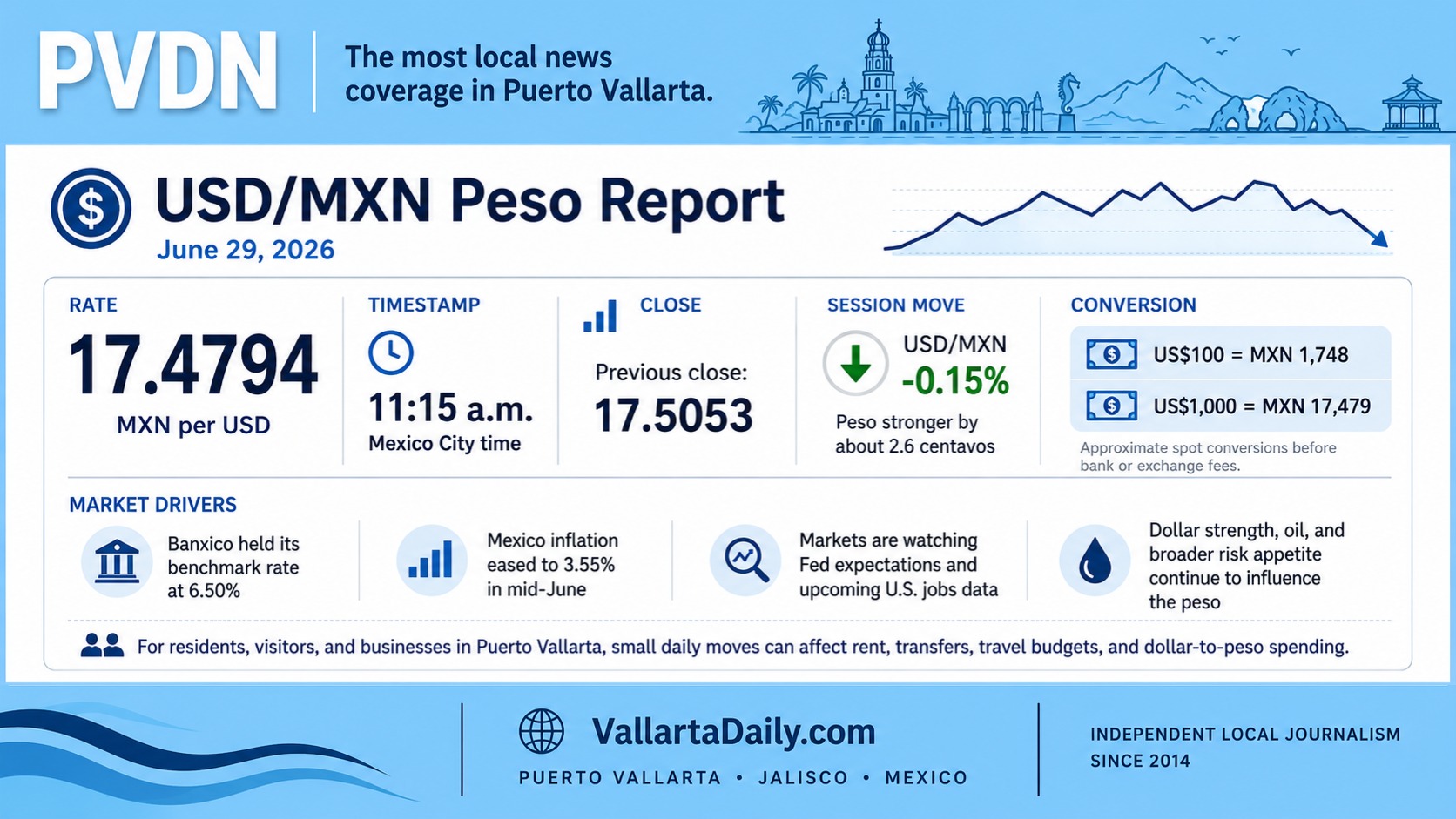
Puerto Vallarta, Jalisco, June 29, 2026 – The Mexican peso traded near 17.48 per U.S. dollar late Monday morning, with the dollar at 17.4794 pesos on a live USD/MXN market quote for June 29.
The quote was down 0.15% from a previous close of 17.5053, a move of about 2.6 centavos in favor of the peso. The same feed showed the dollar moving between 17.4430 and 17.5606 pesos during the session, with an intraday quote of 17.4789 at 11:15 a.m. Vallarta Daily is using Mexico City time for this report.
A second market feed showed a similar spot level, around 17.48 pesos per dollar, with a previous close near 17.5010. Retail rates at banks, airport counters and exchange houses in Puerto Vallarta can differ from spot-market quotes because they include spreads and fees.
Dollar rate today
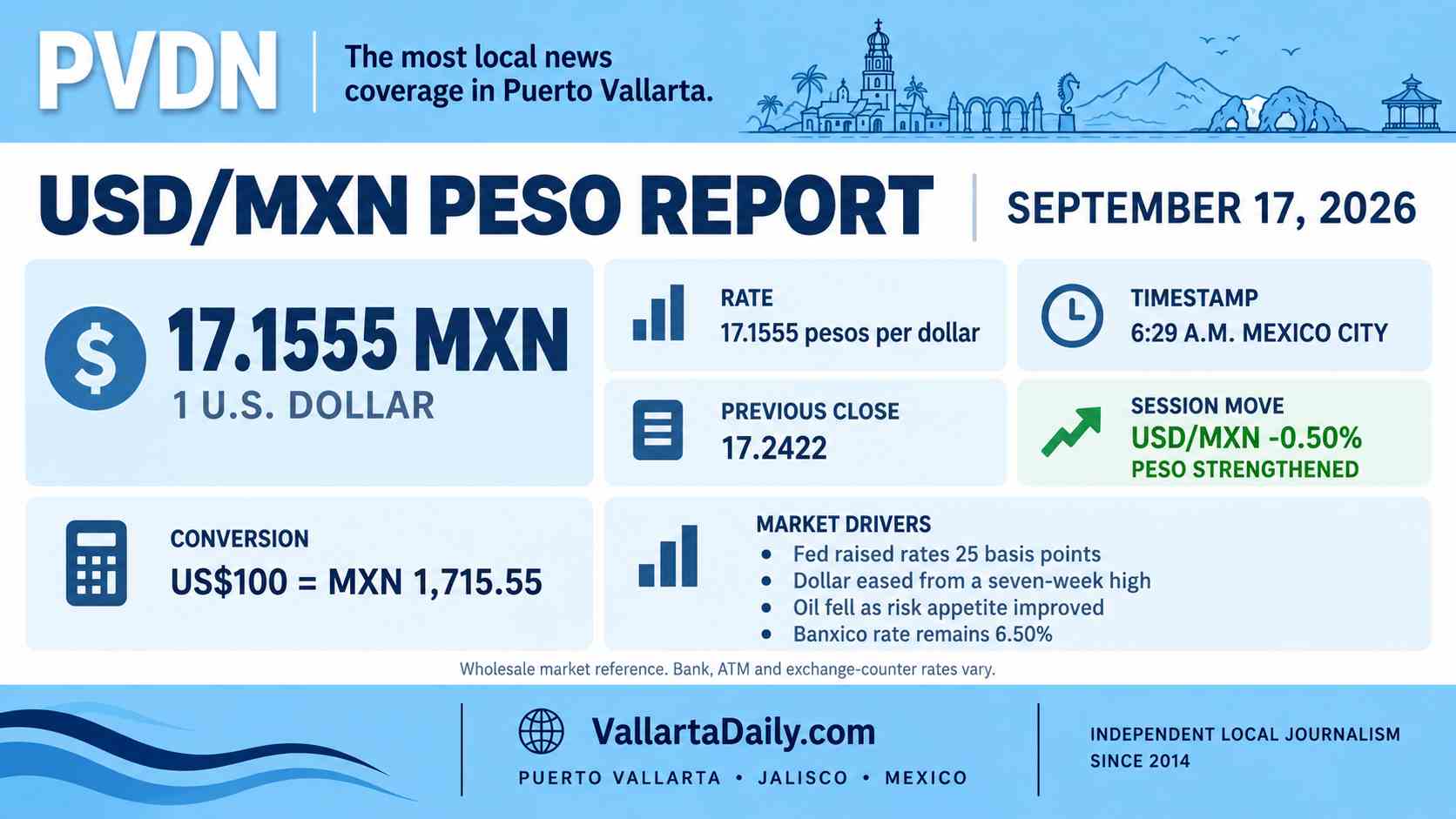
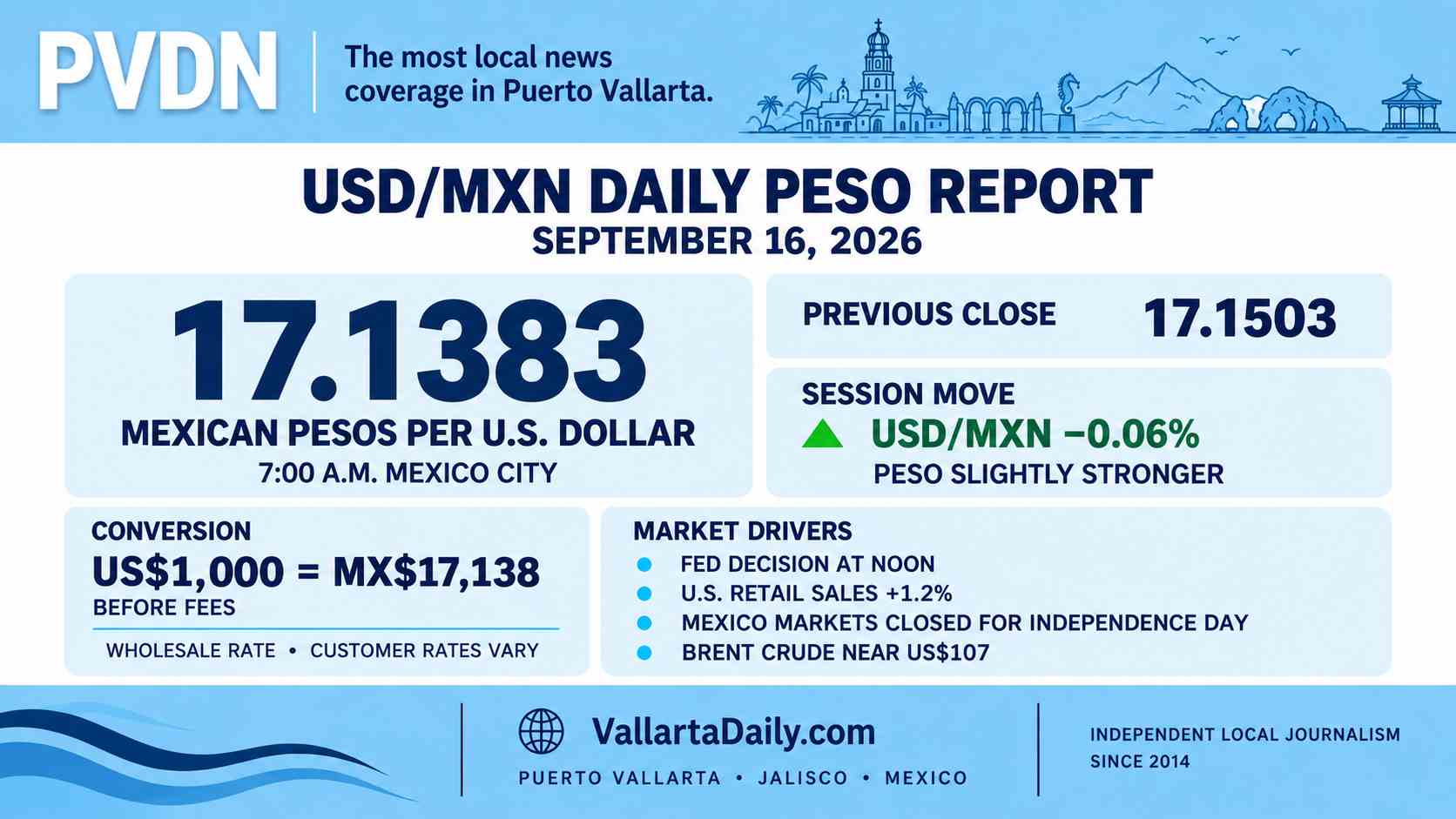
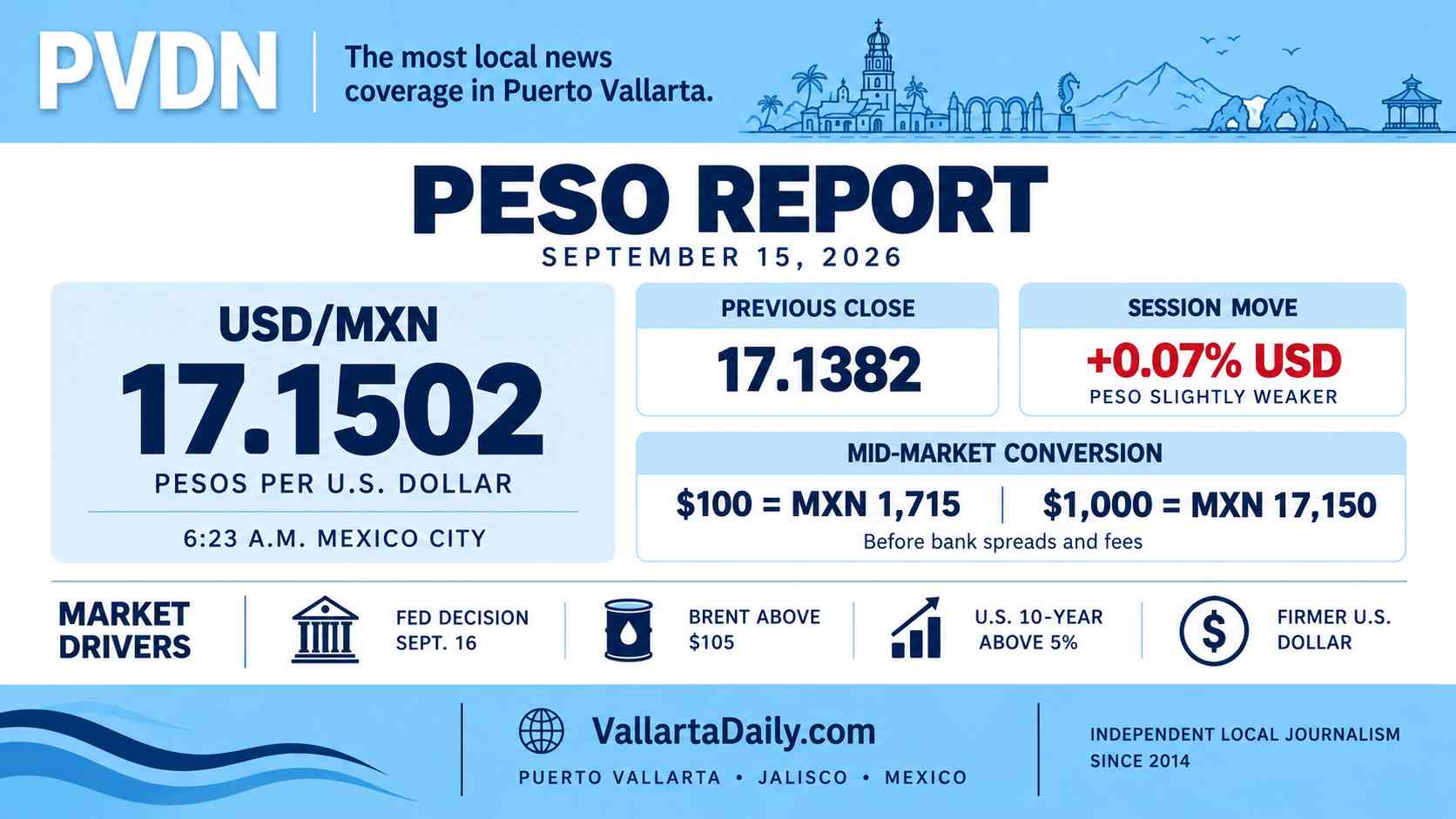
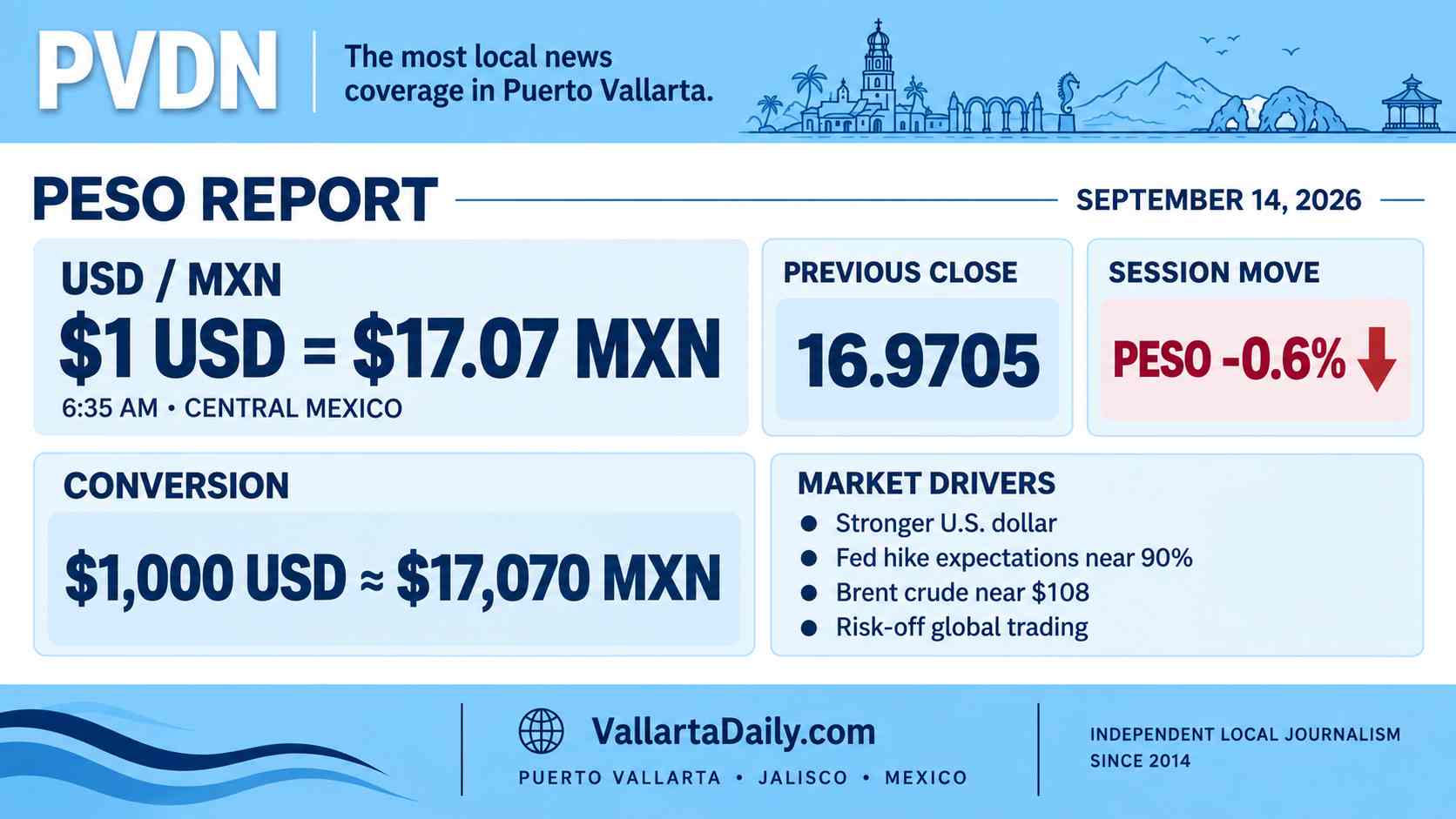
At Monday’s spot level, US$100 converts to about 1,748 pesos before fees. US$1,000 converts to about 17,479 pesos.
Compared with the previous close of 17.5053, a person exchanging US$1,000 would receive roughly 26 fewer pesos at the late-morning spot rate. The difference is small for daily spending, but it matters for larger transfers, rent payments, property costs, tuition, medical bills or business expenses priced in pesos.
For residents and visitors earning in dollars, a stronger peso reduces the buying power of dollars in Mexico. For people earning or saving in pesos, the same movement slightly lowers the peso cost of dollar-priced expenses.
Market pressure behind the move
The peso’s modest gain came while global markets continued to watch a firm U.S. dollar, changing expectations for Federal Reserve policy and oil prices tied to Middle East tensions.
A global currency market report said the dollar was heading for its strongest monthly gain since July 2025, supported by expectations that U.S. rates could rise and optimism about the U.S. economy. Traders were also waiting for U.S. jobs data later in the week.
Those factors usually matter for USD/MXN because higher U.S. rate expectations can support the dollar, while stronger risk appetite can help emerging-market currencies such as the peso. Monday’s move was narrow, so it should be read as a session-level adjustment rather than a clear shift in trend.
Mexico data in the background
Mexico’s latest local driver remains monetary policy. In its June 25 policy statement, Banco de México kept its overnight interbank interest-rate target at 6.50% by unanimous vote.
Banxico said inflation had slowed, but it also pointed to external uncertainty, geopolitical risks and the possibility of pressure from changes in U.S. economic policy. The central bank said it considered the current policy stance appropriate for the macroeconomic environment.
Inflation data gave the market another reference point. INEGI reported that annual inflation was 3.55% in the first half of June, while core inflation was 4.12%. The headline figure was lower than earlier readings, but core prices remained above Banxico’s 3% target.
Mexico’s pause in rate hikes, lower headline inflation, and still-elevated core inflation leave the peso in a mixed setting. The currency is supported by Mexico’s still-relevant interest-rate differential, but it remains exposed to U.S. rate expectations, oil, trade headlines and swings in global risk appetite.
Puerto Vallarta budget math
For households in Puerto Vallarta, the practical issue is not only the headline exchange rate. The rate used by a bank transfer, ATM withdrawal, credit card, exchange house or cash counter can vary from the spot quote.
A dollar earner paying a 25,000-peso monthly rent would need about US$1,430 at a spot rate of 17.48, before transfer fees or exchange spreads. At a slightly weaker peso rate of 17.50, the same rent would be about US$1,429. The difference is small day-to-day, but it adds up over recurring payments.
For visitors, today’s level keeps most travel-budget math close to recent sessions. A 1,000-peso restaurant bill equals about US$57 before card fees or tips. A 5,000-peso tour, medical bill or household purchase equals about US$286 at the spot rate.
The peso remains near the stronger side of the broad range seen over the past year. For people living between dollars and pesos in Puerto Vallarta, the useful habit is to check the rate at the point of exchange, not only the market headline.