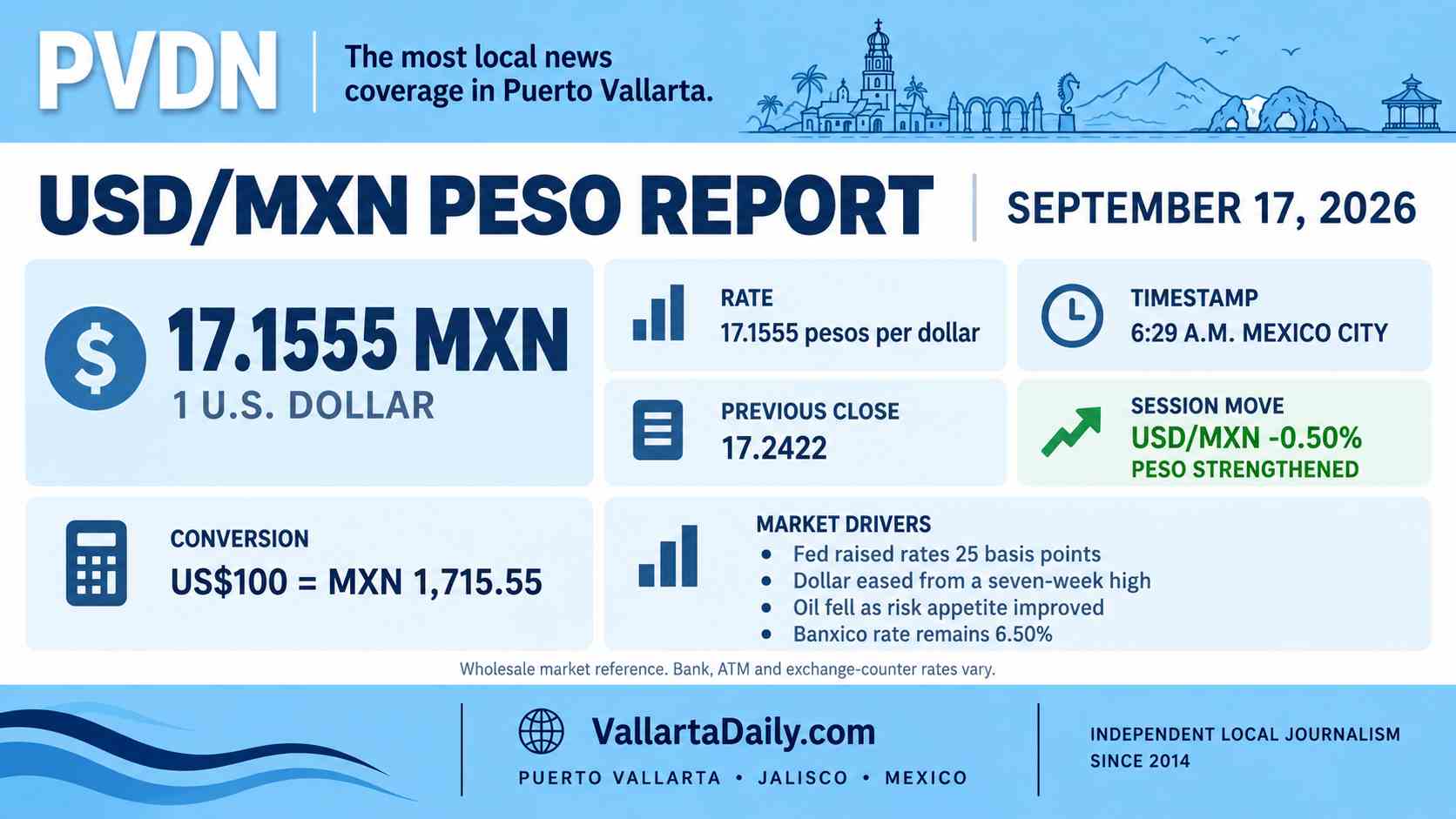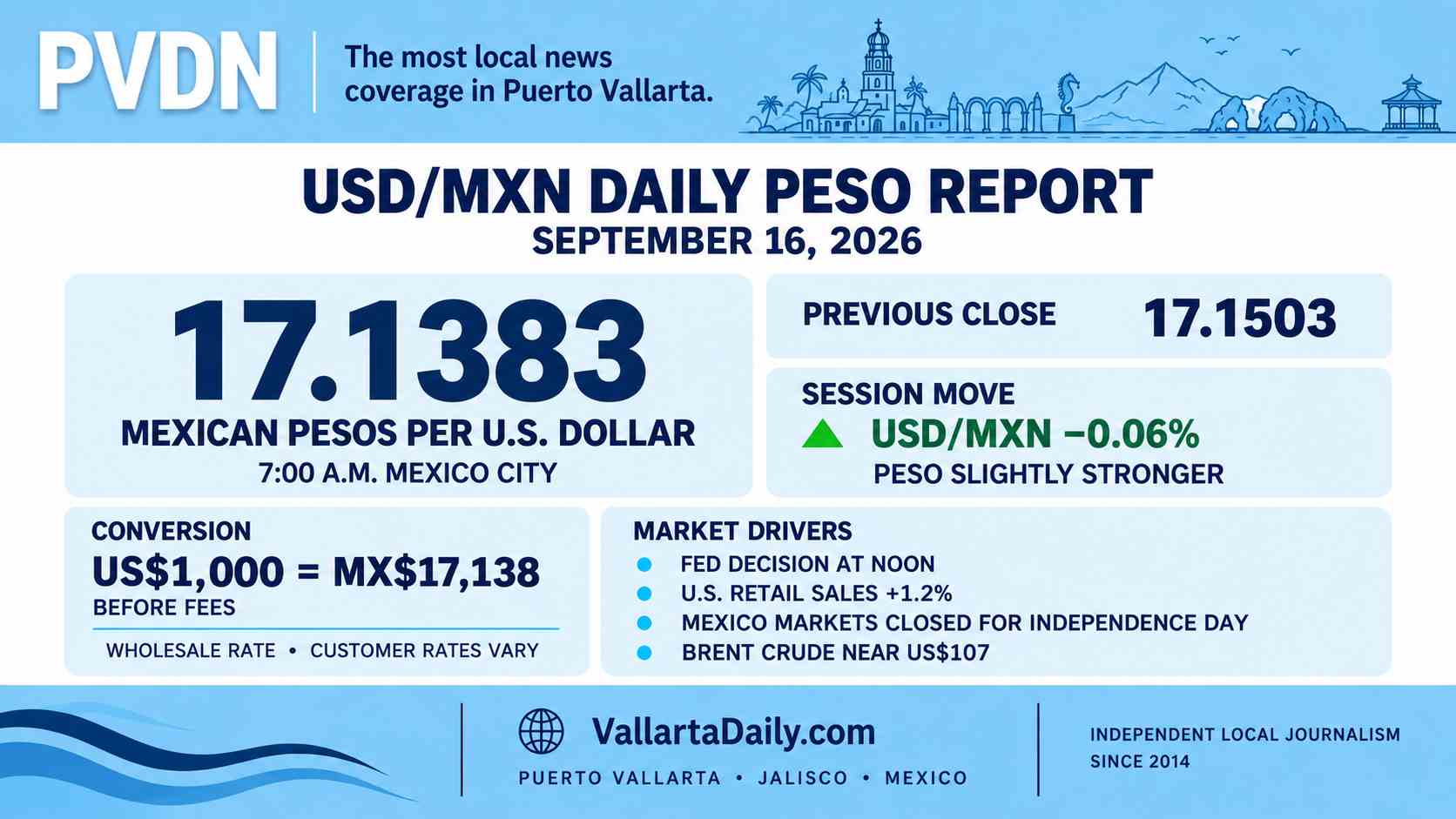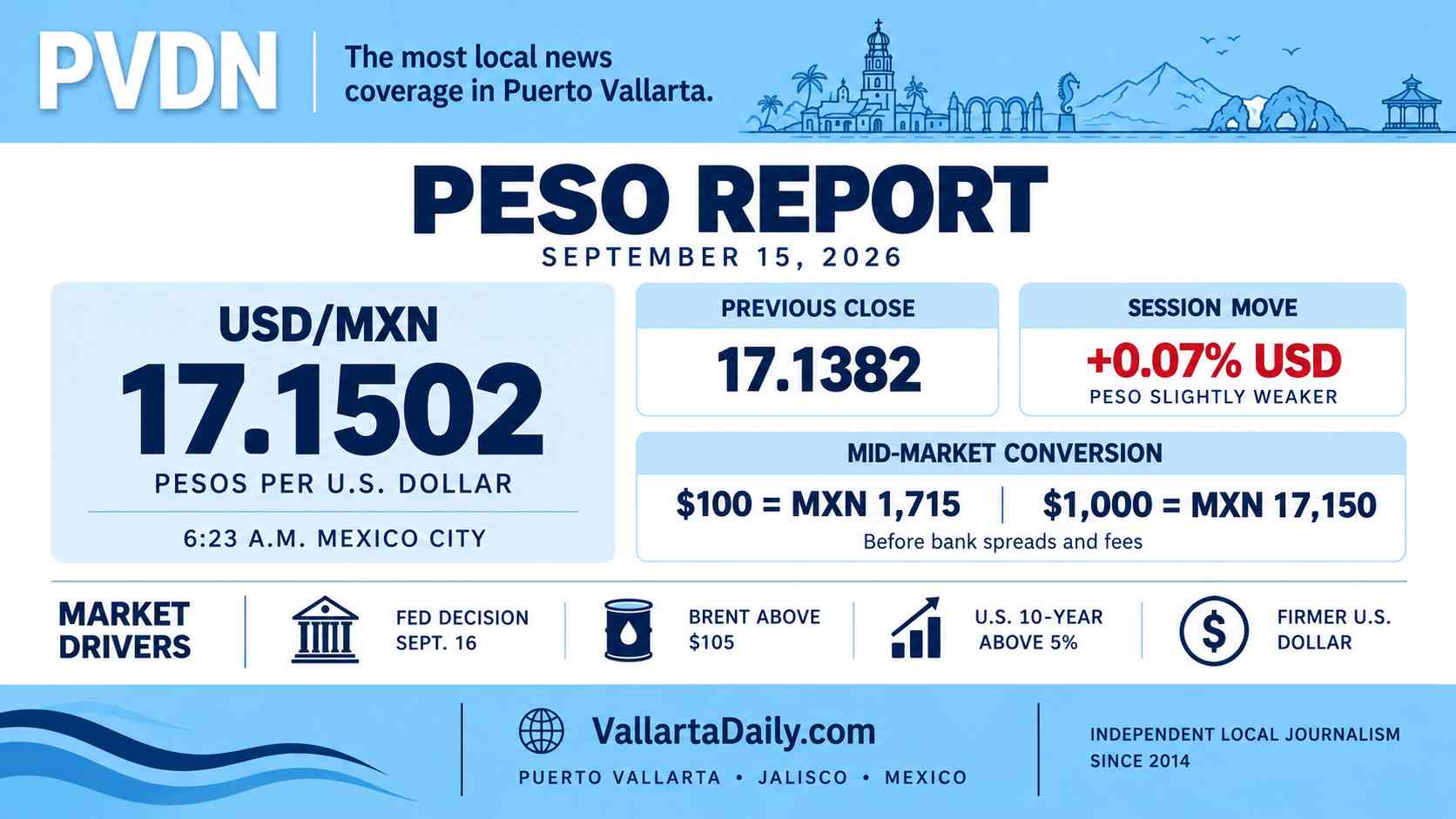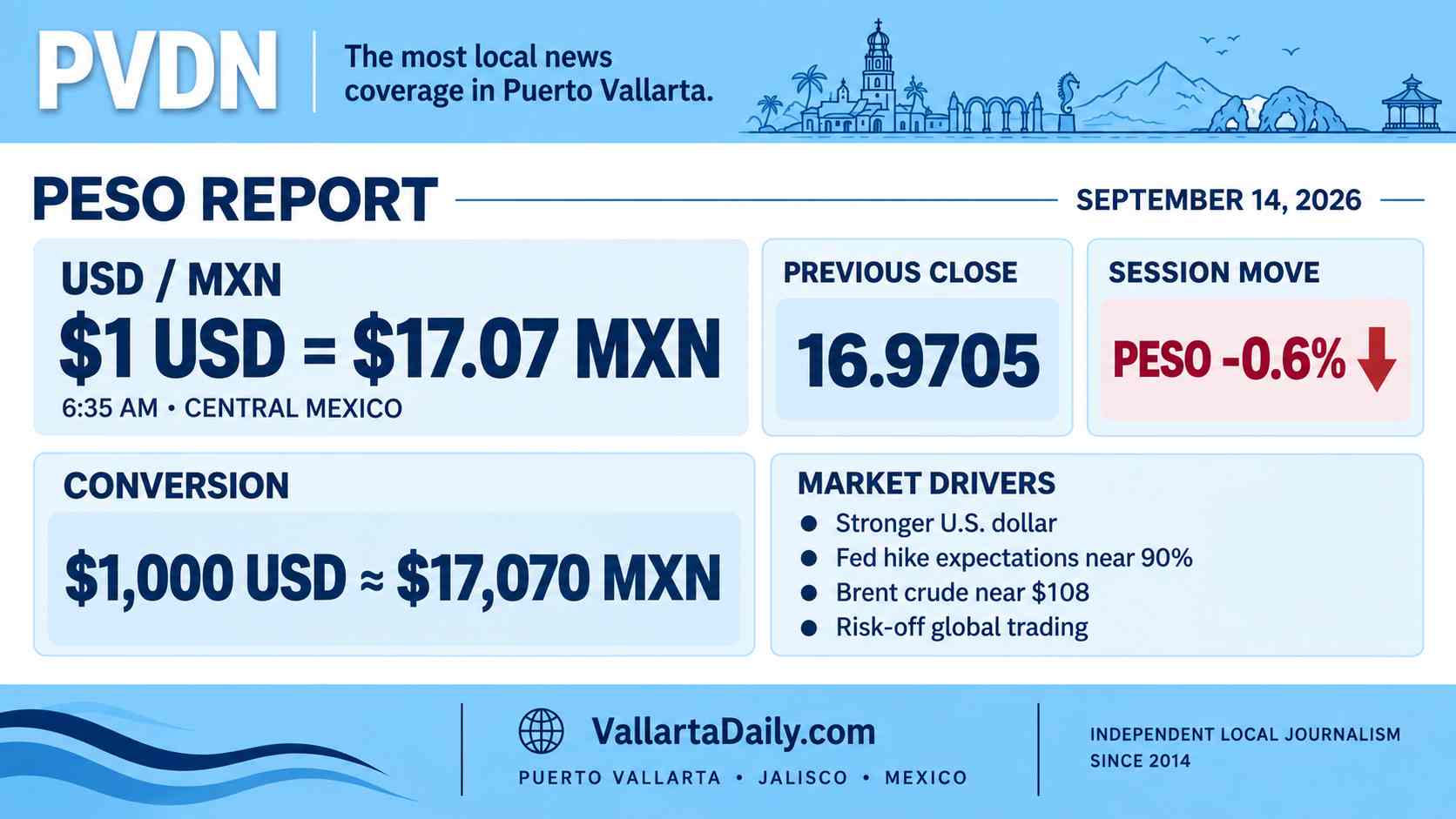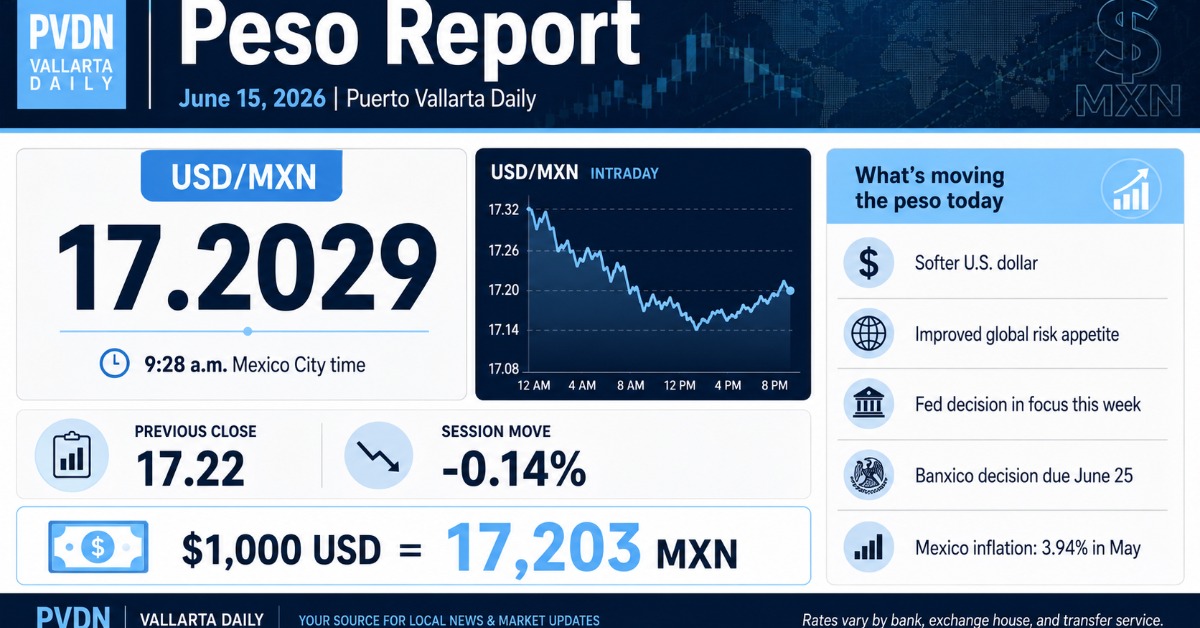
The Mexican peso was trading near 17.20 per U.S. dollar Monday morning, June 15, with Xe’s mid-market rate at 17.2029 pesos per dollar at 9:28 a.m. Mexico City time.
Market data from Trading Economics showed USD/MXN at 17.1994, down 0.14 percent from the previous session. A lower USD/MXN rate means the peso is stronger against the dollar.
The move was modest, but it kept the peso near the stronger side of recent trading. Xe showed the pair moving between 17.2217 and 17.4712 over the past seven days, with live quotes varying across providers, banks, exchange houses, and transfer platforms.
The peso’s support on Monday came mainly from broader global market conditions, not from a single Mexico-only headline. Reuters reported that the U.S. dollar fell broadly after U.S. and Iranian officials said they had reached a preliminary framework to end the war and reopen the Strait of Hormuz. The news pushed oil prices and Treasury yields lower while improving risk appetite.
Mexico’s currency often benefits when investors are more willing to hold emerging-market assets. Lower U.S. yields can also reduce support for the dollar, though currency moves rarely stem from a single factor.
Mexico’s domestic backdrop remains mixed. Annual inflation slowed to 3.94 percent in May, returning to the Bank of Mexico’s target range, but core services inflation remains a concern, according to Reuters’ report on the latest inflation data. Banxico cut its benchmark interest rate to 6.50 percent in May, in a divided decision that signaled caution even as inflation eased.
The next major Mexico-specific event for the exchange rate is Banxico’s monetary policy decision on June 25. The central bank’s published calendar says monetary policy announcements are scheduled for 1:00 p.m. Central Mexico time. A June market calendar from Monex also listed the Federal Reserve decision this week as one of the main catalysts for USD/MXN.
Banxico said last week that Mexico’s financial system remains solid, but it also flagged geopolitical conflict, slower growth, inflation, and sovereign-rating risk as areas to watch. The central bank lowered its 2026 growth forecast to 1.1 percent from 1.6 percent after a weak first quarter.
For Vallarta residents and visitors earning in dollars, a rate near 17.20 means $1,000 converts to about 17,203 pesos at the mid-market rate before fees or spreads. That is less buying power than when the dollar trades closer to 17.50 or 18.00.
For people earning in pesos and paying dollar expenses, the stronger peso helps. For rent, tuition, property payments, or large transfers, the important number is still the rate actually offered by the bank, exchange house, ATM, or remittance service, after fees and margins.
Today’s exchange-rate move is calm by recent standards. The peso is stronger, the dollar is softer, and markets are watching whether this week’s Federal Reserve signals and the June 25 Banxico decision confirm the current tone.