Updated June 13, 2026, 6:43 a.m. Mexico City time
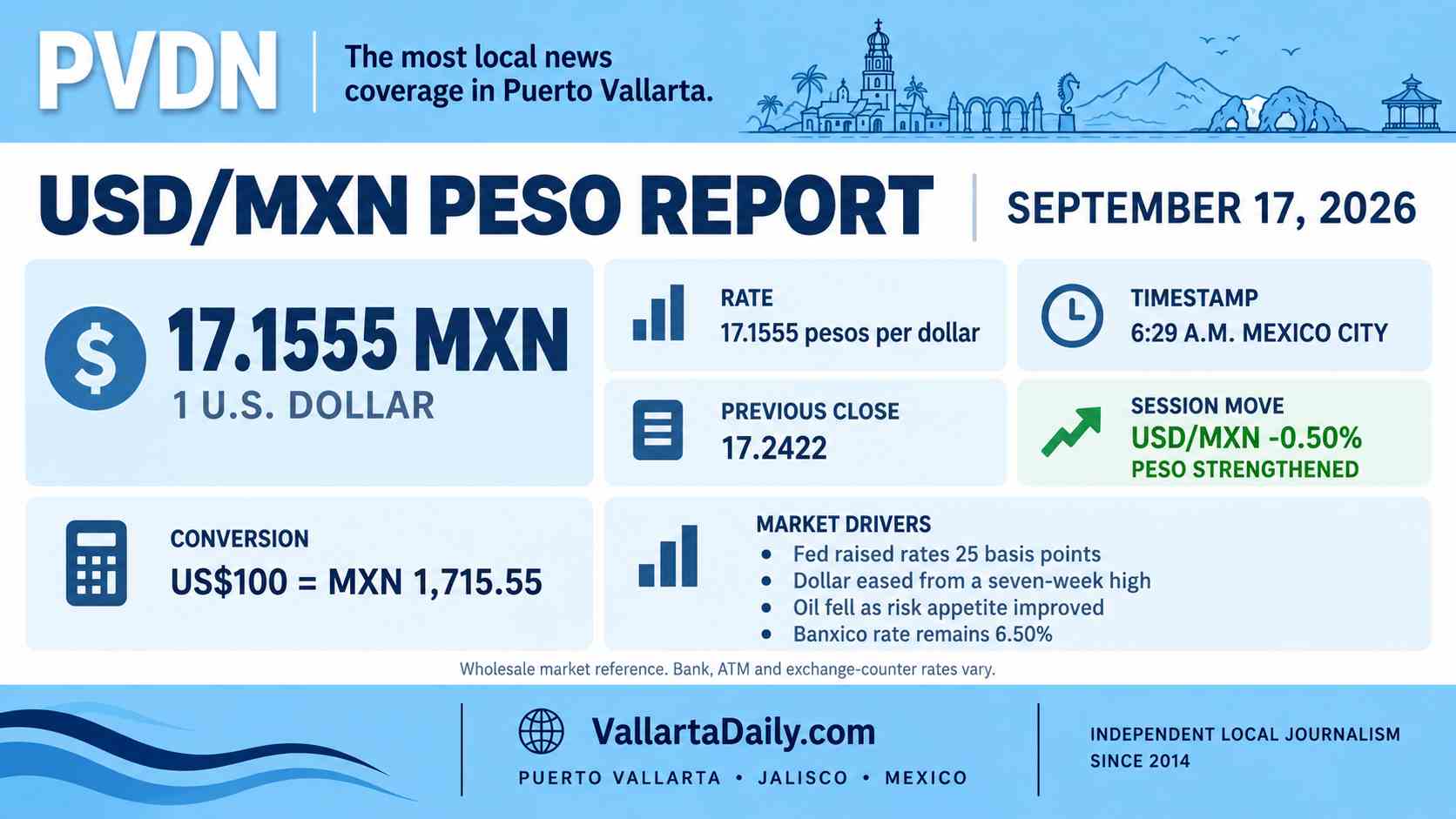
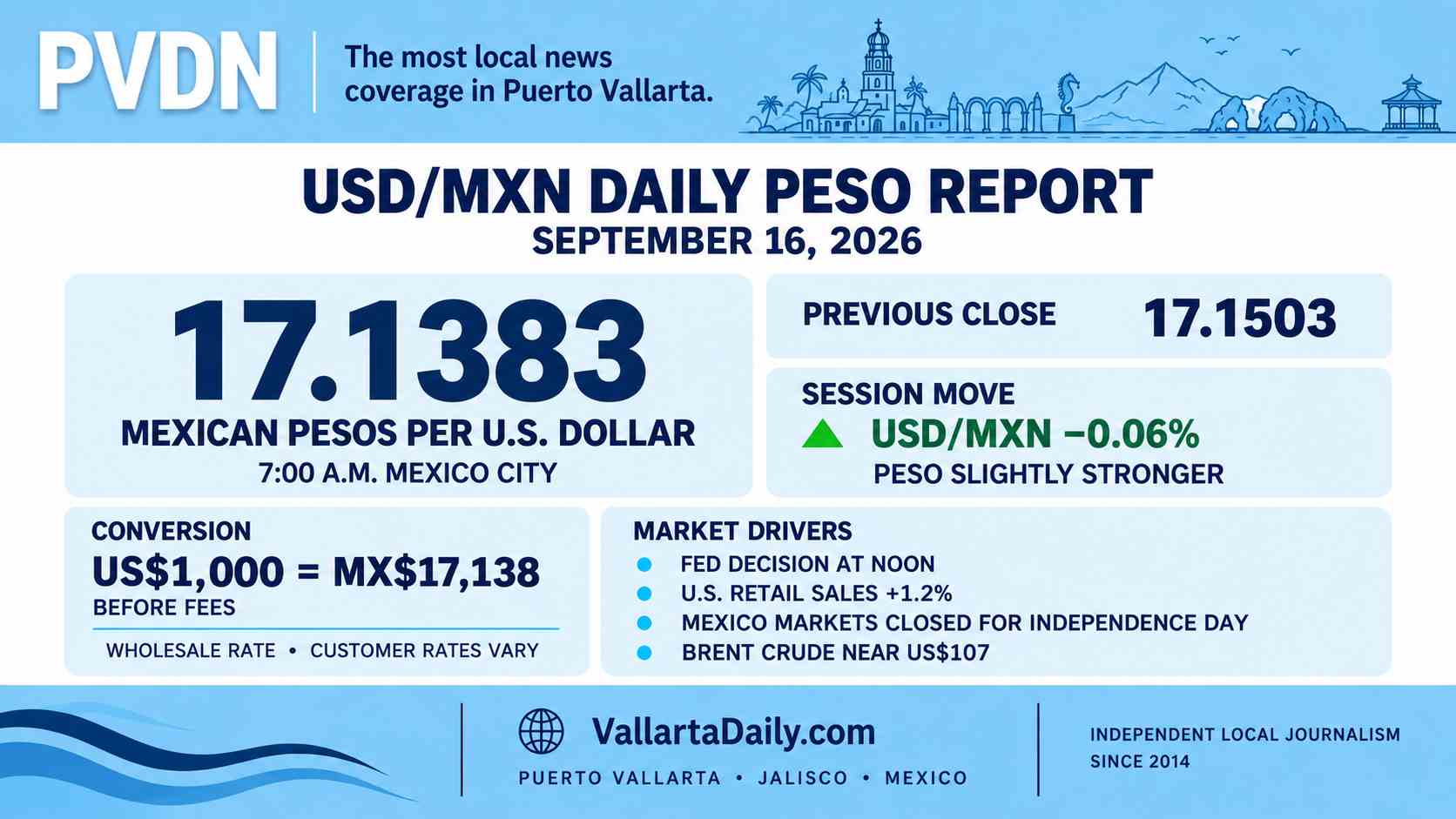
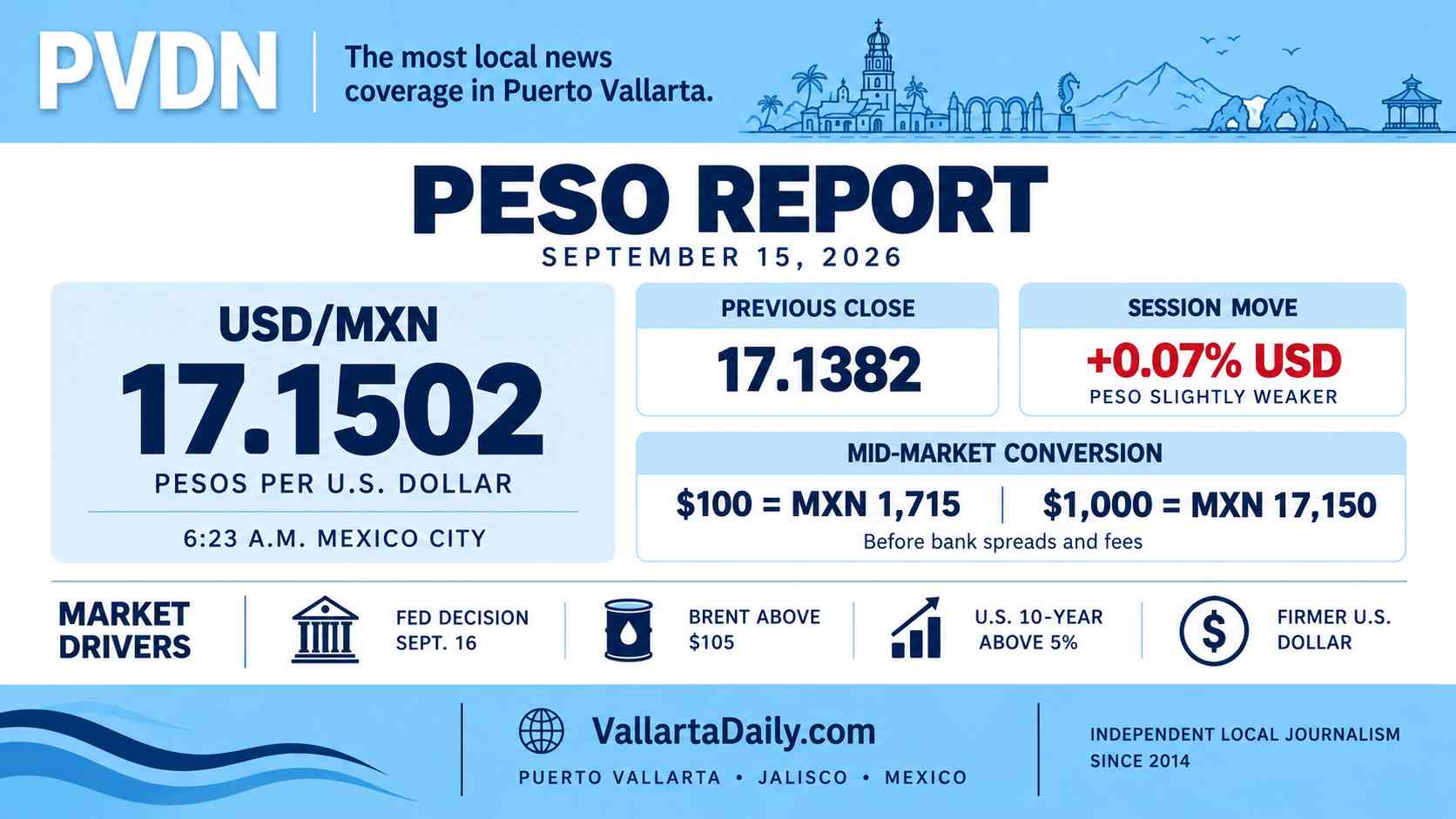
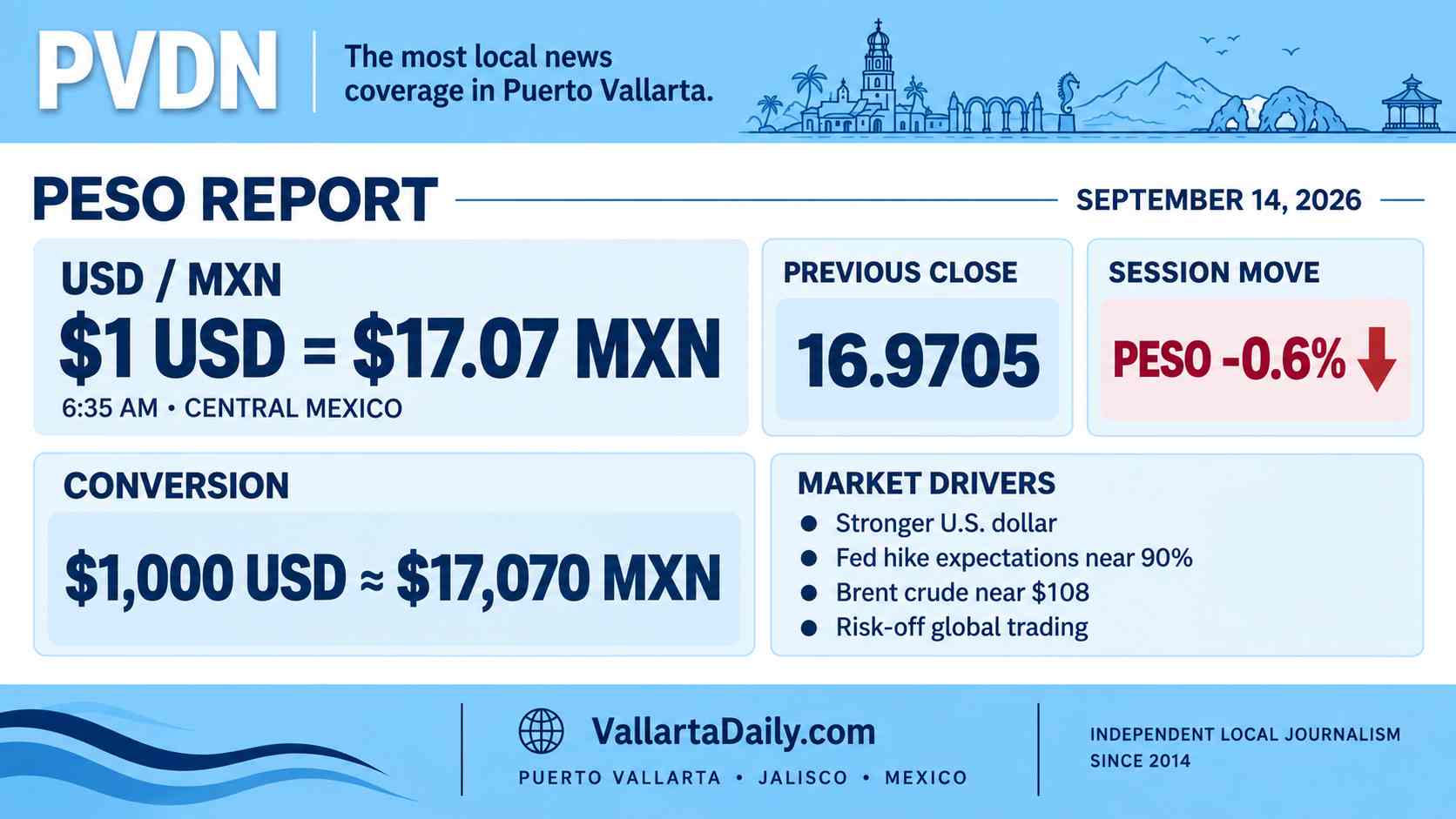
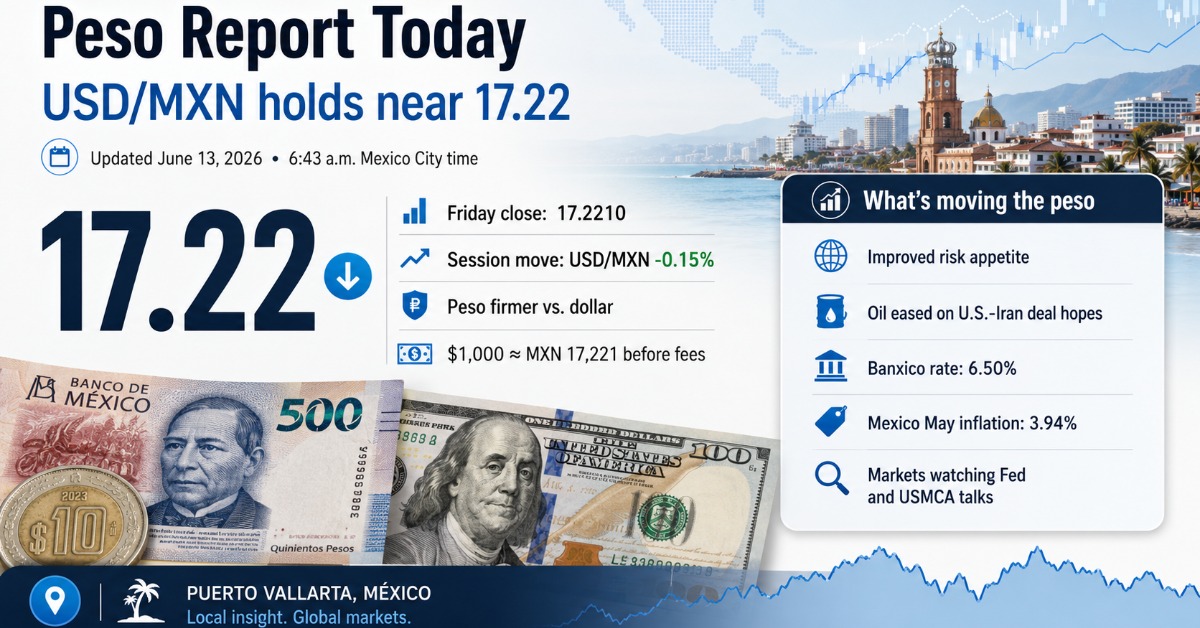
The Mexican peso was near 17.22 per U.S. dollar in the last available market quote Saturday morning, with spot trading effectively paused for the weekend after Friday’s session.
Market data showed USD/MXN closed June 12 at 17.2210, down 0.0265, or 0.15%, with the pair trading between 17.1751 and 17.2765 during the session. A lower USD/MXN rate means the peso strengthened against the dollar.
For readers in Puerto Vallarta who earn or hold dollars, Friday’s level means $1,000 converts to about 17,221 pesos before bank, ATM, card-network, or exchange-house fees. The session move was small in practical terms: roughly 26.5 pesos per $1,000 compared with the prior market level implied by the day’s change.
The peso’s firmer close came during a broader improvement in risk appetite across Latin American assets. A regional market wrap showed Latin American currencies and stocks rising Friday as investors reacted to signs that the United States and Iran could be moving toward a deal to end the conflict that has disrupted energy markets.
Oil was also part of the peso story. Crude prices fell on Friday as expectations grew that a U.S.-Iran agreement could reopen the Strait of Hormuz, easing some pressure from energy-driven inflation fears. Lower oil prices can reduce inflation concerns in the United States and other importing economies, but the situation remains unsettled.
As of Saturday morning, mediators said an initial U.S.-Iran deal could be signed within 24 hours. That has not yet removed the risk for markets. The same report said U.S. forces had shot down Iranian drones near the Strait of Hormuz and that the waterway remained open.
Mexico’s domestic backdrop remains mixed for the peso. Official inflation data showed annual inflation eased to 3.94% in May, back inside Banco de México’s 3% target range plus or minus one percentage point. Core inflation, which excludes some volatile items, was still higher at 4.19%.
Banco de México’s last policy move also remains important. In its May 7 monetary policy statement, the central bank cut the overnight interbank target rate by 25 basis points to 6.50%, effective May 8, and said it would be appropriate to maintain the reference rate at that level. The board also flagged geopolitical conflicts, U.S. policy changes, persistence in core inflation, and possible peso depreciation as risks to the inflation outlook.
In the United States, markets are still watching the Federal Reserve. Recent U.S. data showed consumer sentiment improved in June as gasoline prices eased, but inflation expectations remained elevated. A separate poll of economists found that most expected the Fed to keep rates in the 3.50% to 3.75% range through the rest of 2026. The dollar-peso rate is sensitive to U.S. rate expectations, Treasury yields, and the relative return investors can earn in pesos.
Trade headlines remain another point to watch. The U.S. Trade Representative has said the United States and Mexico will hold a second round of USMCA-related negotiations in Washington on June 16 and 17, with another round planned in Mexico City during the week of July 20. President Donald Trump said this week that the U.S. might not renew the North American trade agreement, while Mexico has said it wants the pact extended for 16 years.
For households and businesses in Puerto Vallarta, the current peso level remains stronger than much of the range seen over the past year. That helps people pay peso expenses with peso income, but it reduces the local buying power of dollars sent from the United States or held in U.S. accounts. The next peso moves will likely depend less on a single local headline and more on whether the Middle East deal is finalized, how oil and the dollar trade after the weekend, and how investors read the upcoming U.S.-Mexico trade talks.