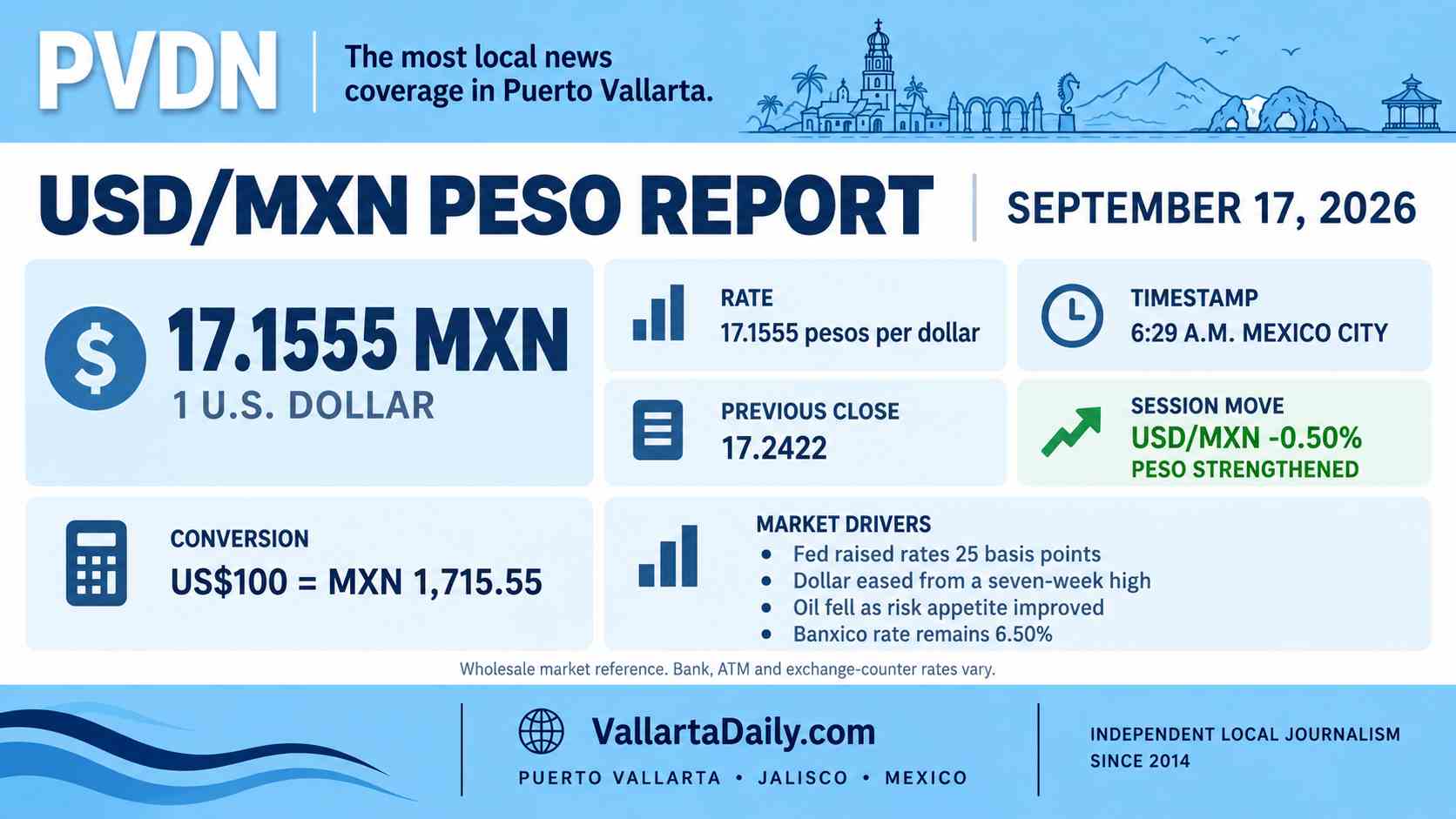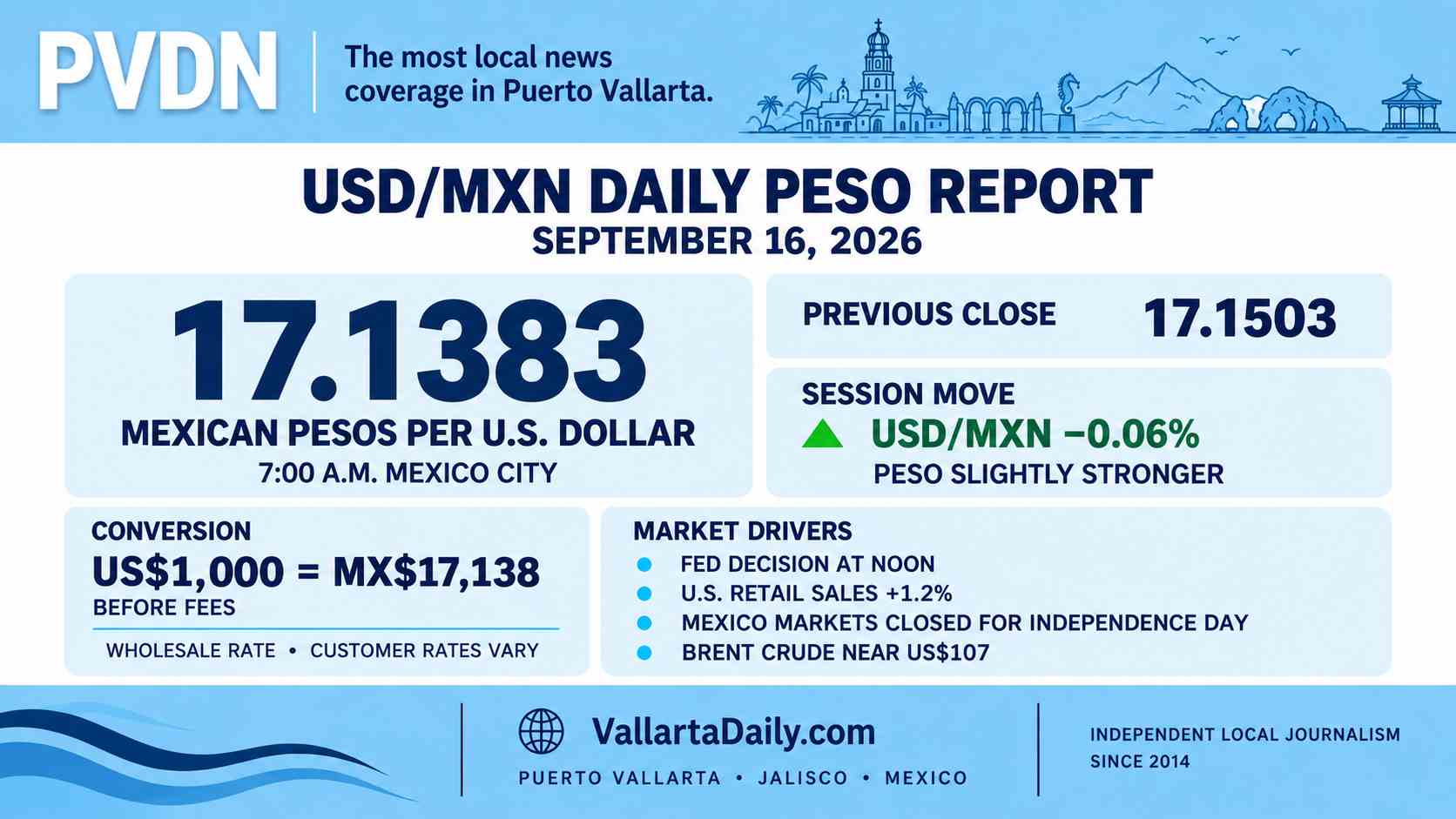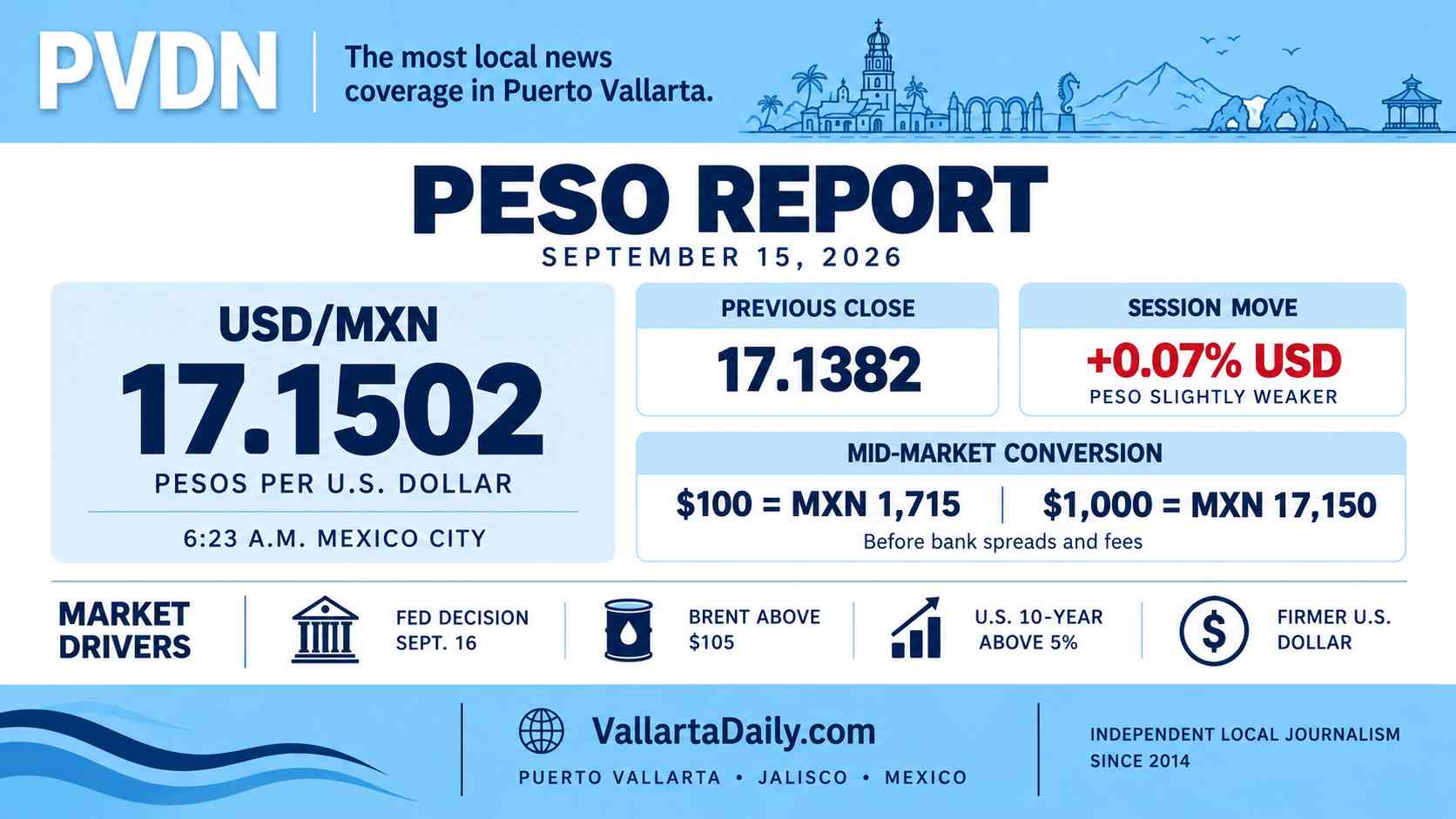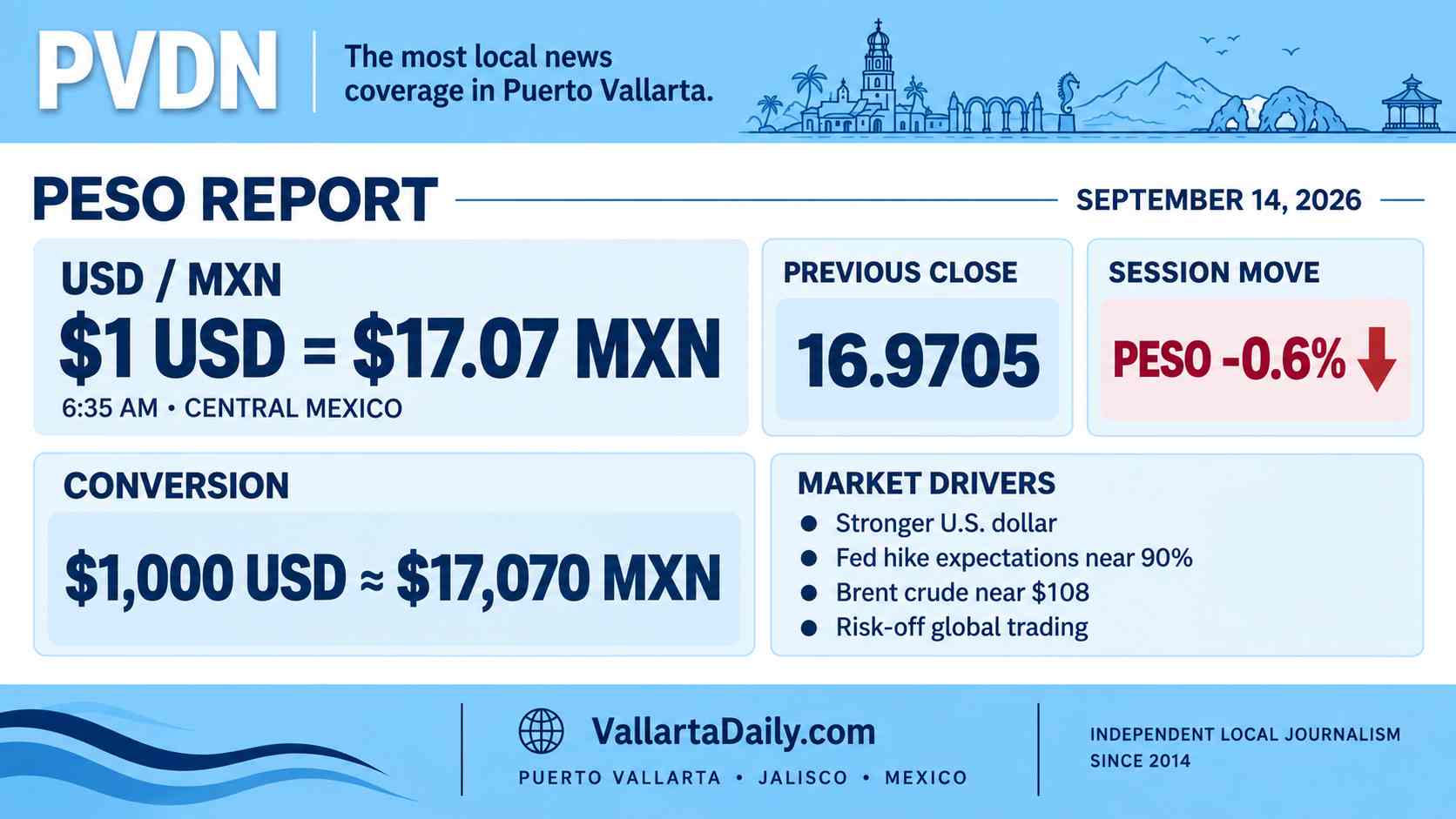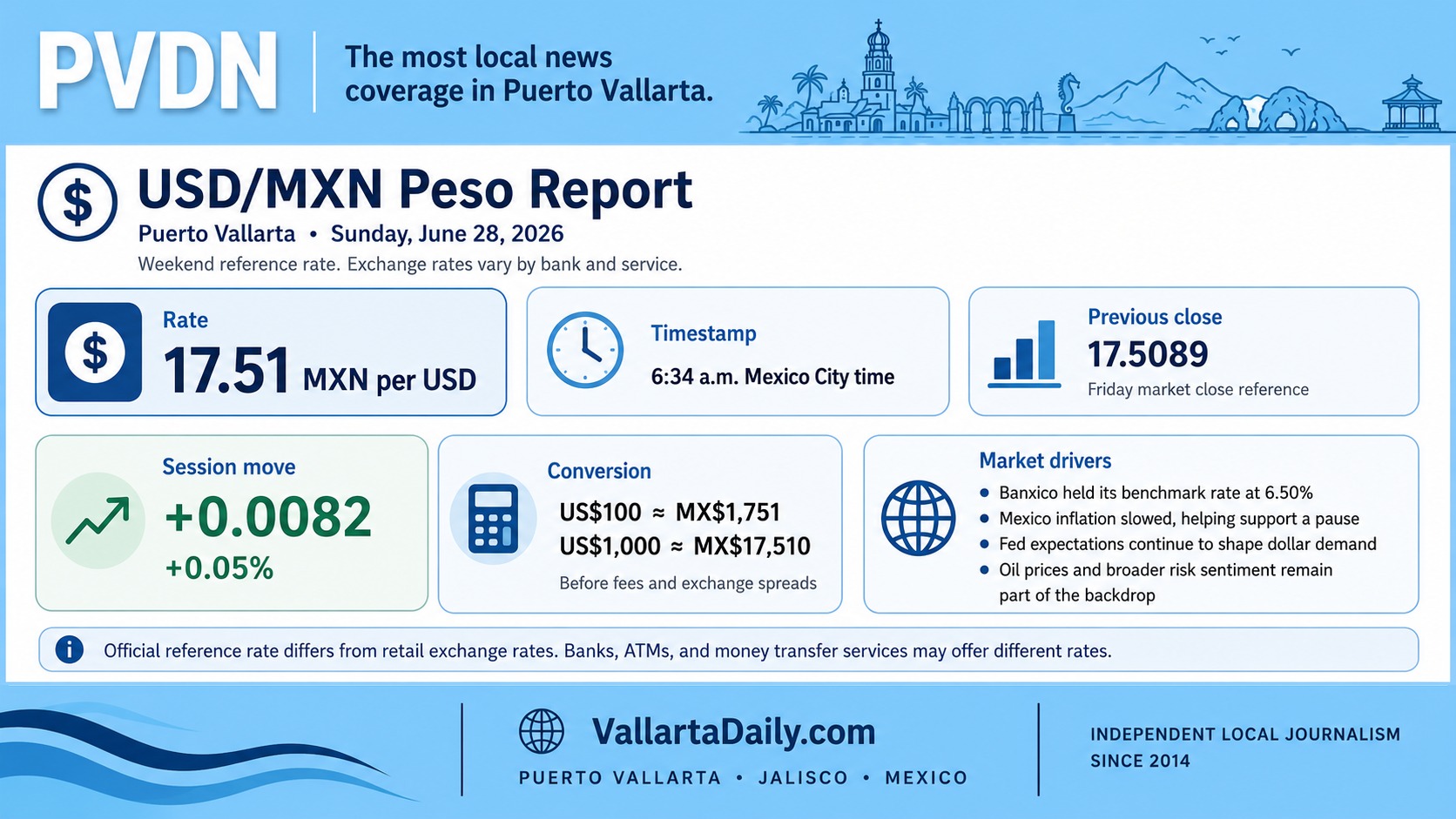
Puerto Vallarta, Jalisco, June 28, 2026 – The U.S. dollar was quoted near 17.51 Mexican pesos early Sunday, giving residents, visitors, retirees, and dollar earners in Puerto Vallarta a mostly steady weekend reference rate before regular currency trading resumes.
As of 6:34 a.m. Mexico City time, the latest available mid-market readings placed USD/MXN around 17.51. MarketWatch’s most recent quote showed 17.5089 pesos per dollar at 4:59 p.m. EDT on Friday, June 26. Wise’s Sunday mid-market rate showed 1 Mexican peso at 0.0571119 U.S. dollars, equal to about 17.5095 pesos per dollar.
That is separate from Banco de México’s official FIX rate. Banxico’s FIX determined on Friday, June 26, was 17.4700 pesos per dollar. The FIX is a reference rate used for certain official and financial purposes, not the same as the rate a customer receives at a bank, ATM, money-transfer service, hotel desk, or airport exchange counter.
Latest rate for Sunday planning
For practical budgeting, a 17.51 exchange rate means US$100 converts to about 1,751 pesos before fees, spreads, or commissions. US$1,000 converts to about 17,510 pesos before those costs.
People who pay in dollars and spend in pesos should still check the rate offered by their bank or transfer service before moving money. Retail rates often differ from market quotes, and airport or tourist-zone exchange counters can be less favorable.
The peso’s movement was limited in the latest available weekend quote. MarketWatch listed the pair up 0.0082 peso, or 0.05%, in its last update. With Sunday trading thin, the next clearer market signal will come when global currency markets reopen.
Banxico pause keeps interest rates in focus
Mexico’s currency remains tied closely to interest-rate expectations on both sides of the border.
Banco de México held its benchmark interest rate at 6.50% on June 25. The central bank’s decision followed a period of lower headline inflation in Mexico, but officials are still watching core prices and external risks.
Mexico’s annual inflation rate slowed to 3.55% in the first half of June, according to INEGI data. Core inflation, which strips out more volatile items, remained higher at 4.12%. That mix gives Banxico room to pause, but not enough to remove inflation from the peso story.
For the peso, the interest-rate gap between Mexico and the United States still matters. Higher Mexican rates can support demand for peso-denominated assets, but that support can weaken if U.S. rates look set to rise or if investors pull back from emerging-market risk.
Dollar, oil, and global risk mood
The Federal Reserve held its target range at 3.50% to 3.75% on June 17 and said inflation remained elevated. U.S. inflation data released later in the month kept traders focused on whether the Fed may need to keep policy tighter for longer.
The dollar eased late last week after recent U.S. data and a drop in oil prices cooled some rate-hike expectations, but it was still on track for a weekly gain. Oil also remained part of the market backdrop after sharp moves tied to Middle East supply concerns.
For Mexico, oil prices can cut both ways. Lower oil can reduce some inflation pressure globally, but broader market stress, trade worries, or a stronger dollar can still weigh on emerging-market currencies, including the peso.
For dollar budgets in Vallarta
For households in Puerto Vallarta that earn in dollars, a peso near 17.51 is stronger than the 18-to-19 peso levels many residents used for budgeting in previous years. That means each dollar buys fewer pesos than it would at those weaker peso levels.
For people earning in pesos and paying dollar-linked costs, such as some rents, travel, imported goods, or savings goals, a dollar near 17.51 is less painful than a move above 18, but still worth watching if U.S. rate expectations rise again.
Today’s rate is a planning reference, not a forecast. Anyone moving large sums should compare the live rate, transfer fee, exchange spread, delivery time, and receiving-bank costs before deciding when or how to exchange money.