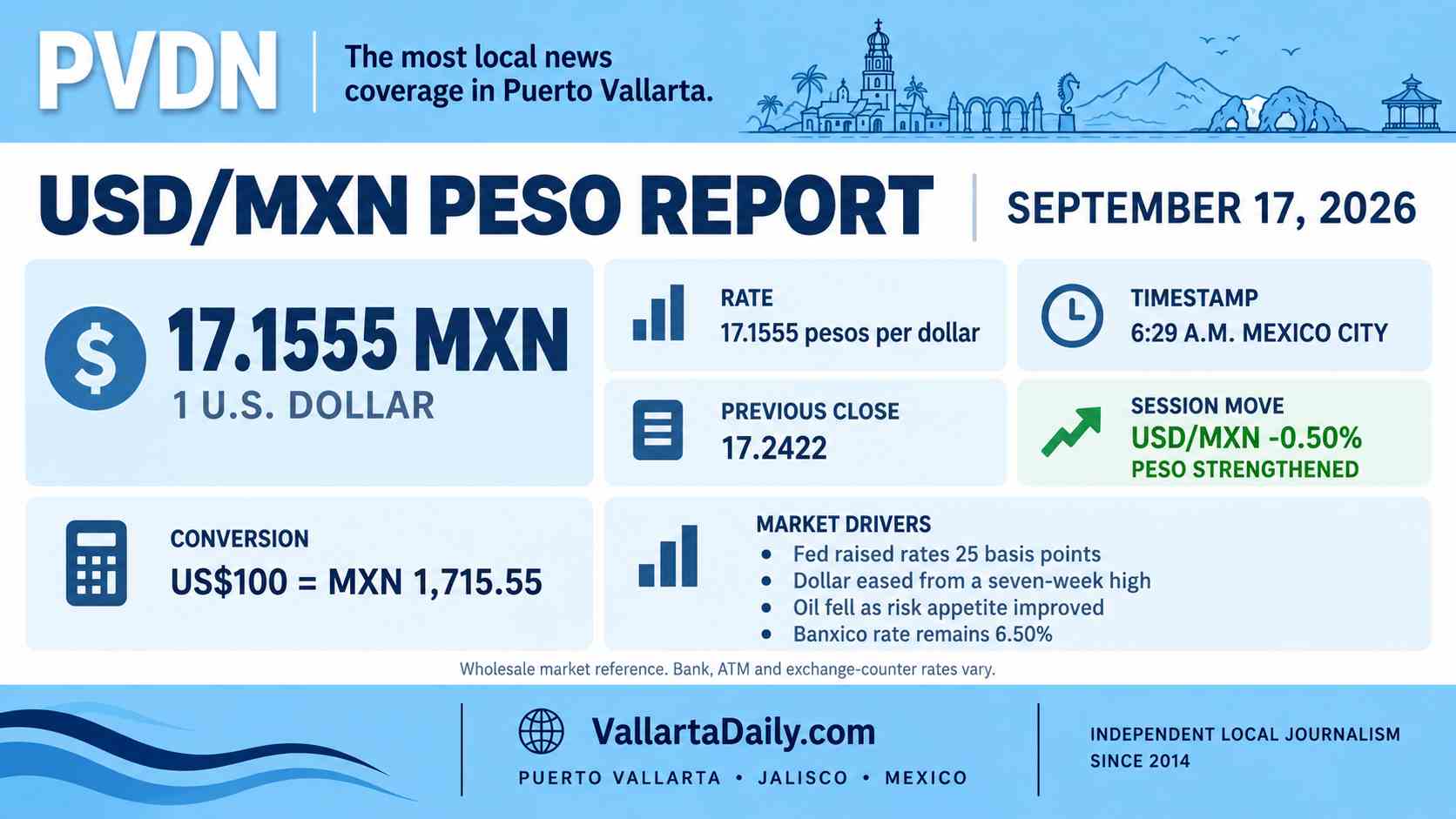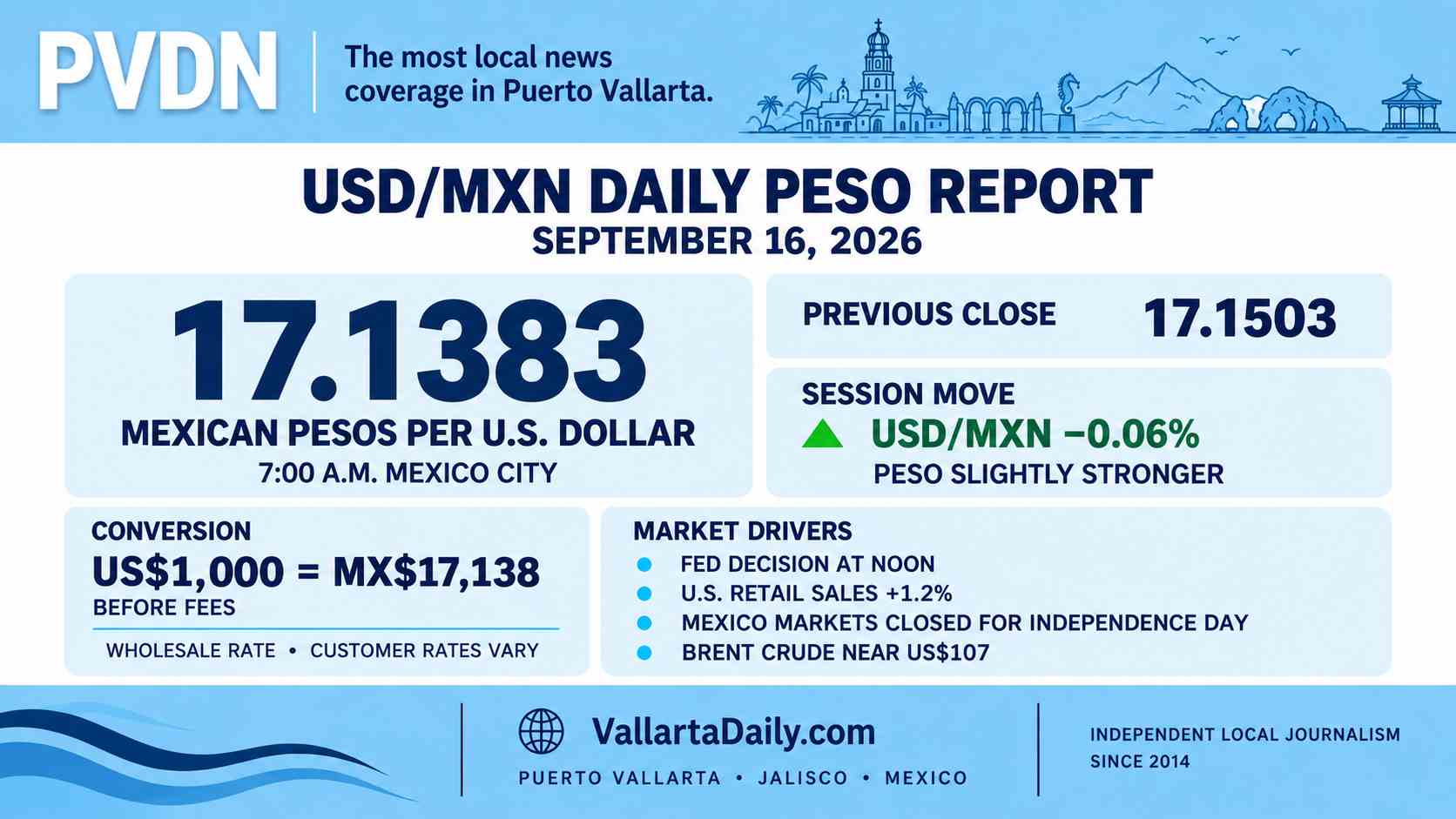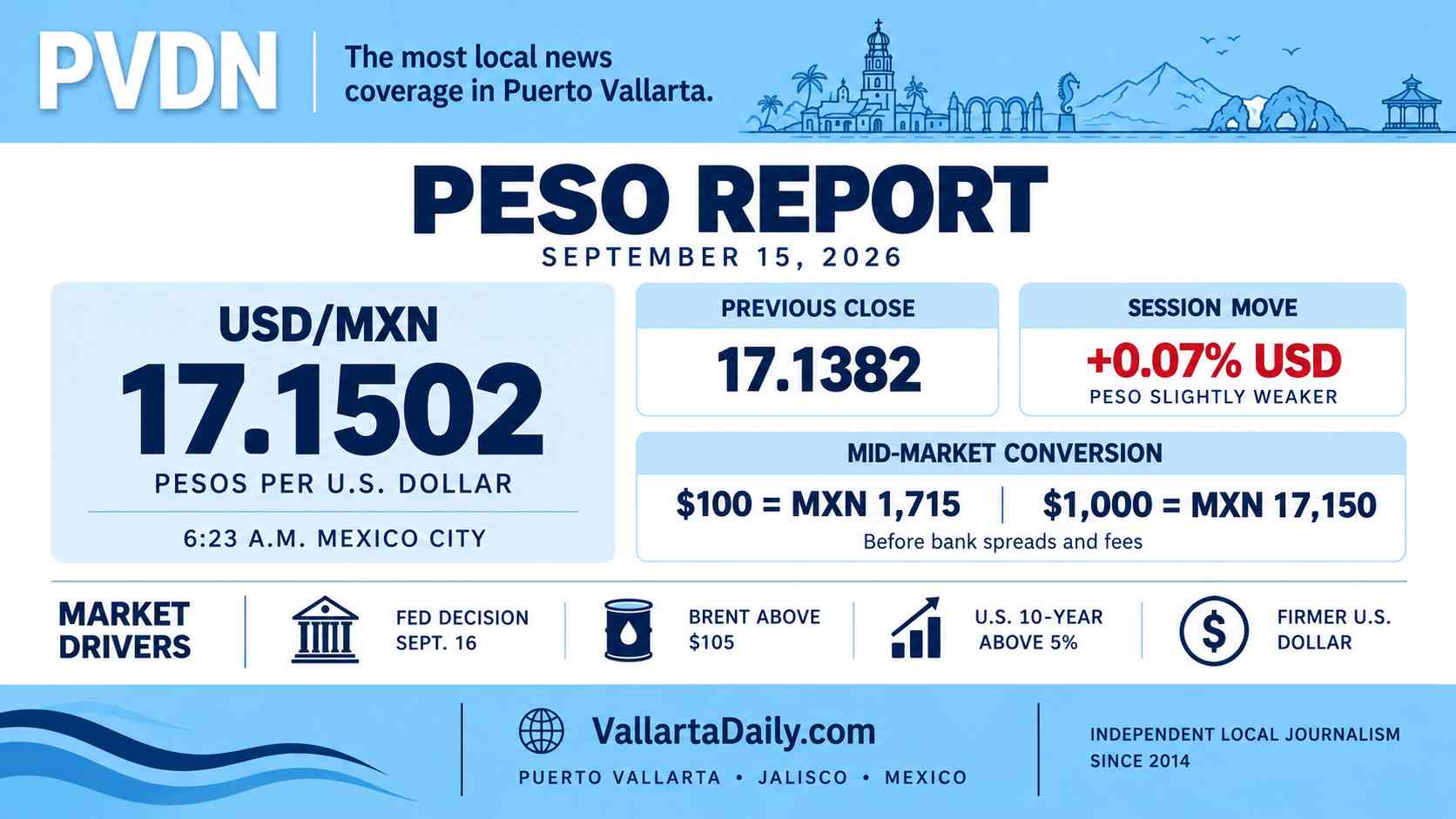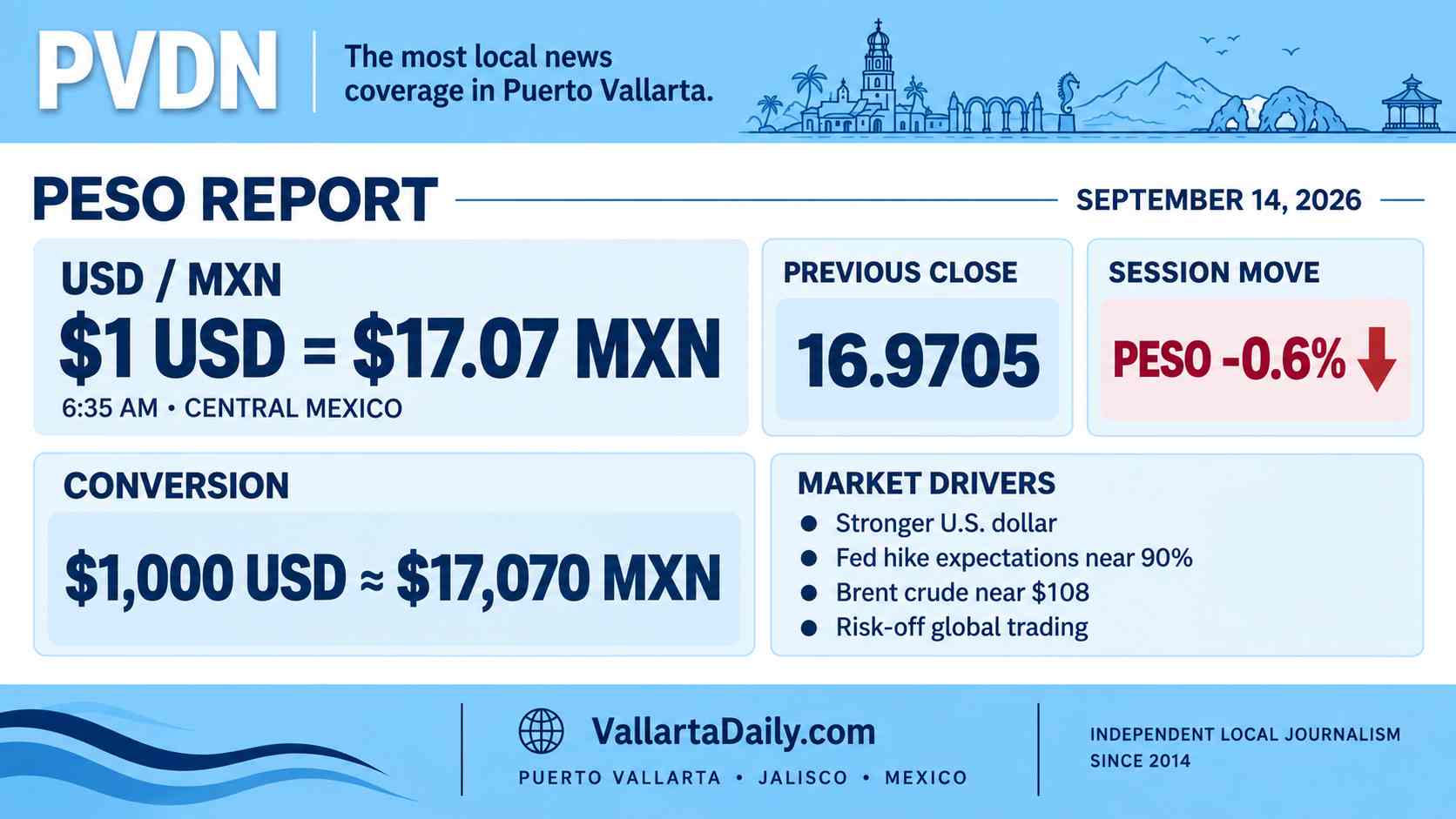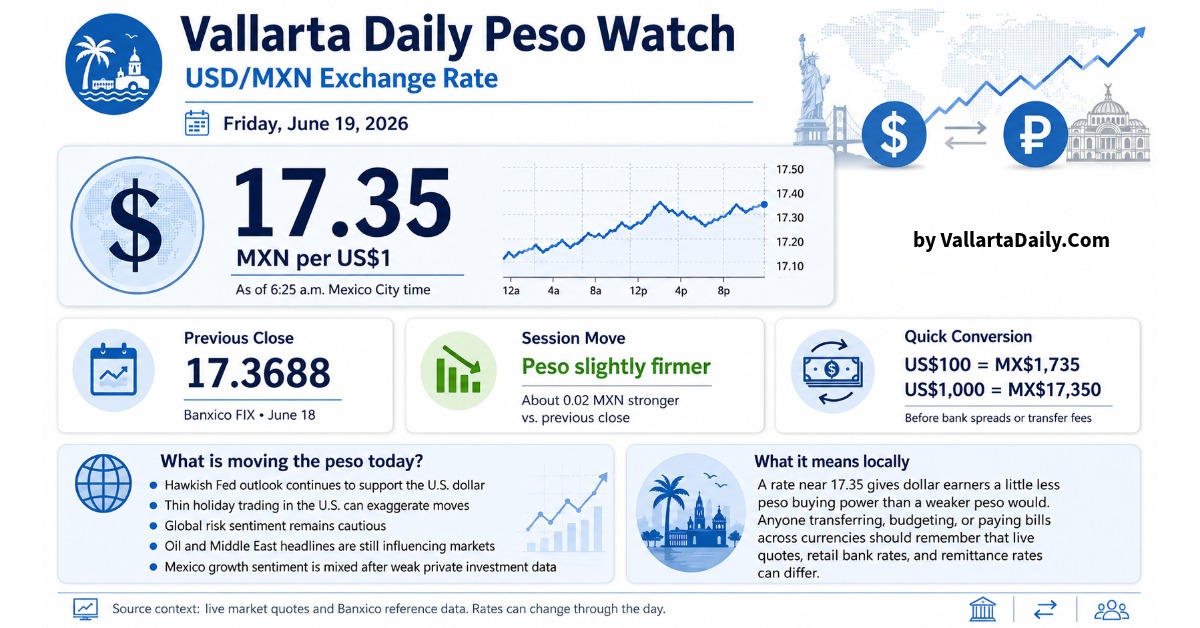
The Mexican peso was trading near 17.35 per U.S. dollar early Friday, June 19, with market quotes showing little distance from the 17.3 range that has defined much of June.
As of about 6:25 a.m. Mexico City time, live market data placed USD/MXN around 17.35. Trading Economics showed the pair near 17.3350 to 17.3508 during the morning, with the dollar fractionally lower from the previous session in one quote, while Wise’s mid-market feed showed 17.349 pesos per dollar. Live rates can shift throughout the day, especially before full North American trading liquidity returns.
The latest official Banco de México FIX available before the morning update was 17.3688 pesos per dollar for June 18. Banxico’s same-day FIX is normally published later in the day, and the official reference is separate from live retail, bank, or remittance rates.
The peso’s early tone came as the dollar remained supported by a more hawkish Federal Reserve. The Fed held its target range at 3.50% to 3.75% on June 17 and said inflation remains elevated relative to its 2% goal. That kept markets focused on the possibility of higher U.S. rates later this year.
Currency markets were also trading with thinner conditions because U.S. markets were closed on Friday for the Juneteenth holiday. Reuters reported that the dollar was near a 13-month high, helped by expectations that the Fed may raise rates this year, while global stocks softened and oil rose modestly after planned U.S.-Iran talks were called off.
For Mexico, the peso is balancing that stronger-dollar backdrop against domestic signals that remain mixed. Banxico cut its benchmark rate to 6.50% in May in a split decision and signaled that it would be appropriate to hold the reference rate at that level, ending the easing cycle for now. That keeps Mexico’s rate advantage in place, but the gap can become less supportive for the peso when markets price in a tougher Fed path.
Recent Mexican data also added caution. Private fixed investment fell 3.5% in the first quarter from the previous quarter and posted its sixth straight quarterly decline, according to figures cited from INEGI’s global supply and demand indicators. The drop matters for the exchange rate because investment trends feed into expectations for growth, business confidence, and future dollar inflows.
For readers in Puerto Vallarta who earn in dollars and spend in pesos, a rate near 17.35 means a $1,000 transfer is roughly $ 17,350 before bank spreads, ATM fees, card conversion charges, or remittance costs. A stronger peso reduces the peso value of dollar income, while a weaker peso gives dollar earners more local purchasing power. For people earning in pesos and paying dollar-linked costs, the opposite is true.
The day’s main watch points are the dollar’s follow-through after the Fed decision, oil moves tied to the Middle East, and any additional Mexico data or political signals that affect confidence before Banxico’s next policy decision. For practical budgeting, residents and visitors should check the rate offered by their bank, card issuer, or transfer service rather than relying only on the market midpoint.