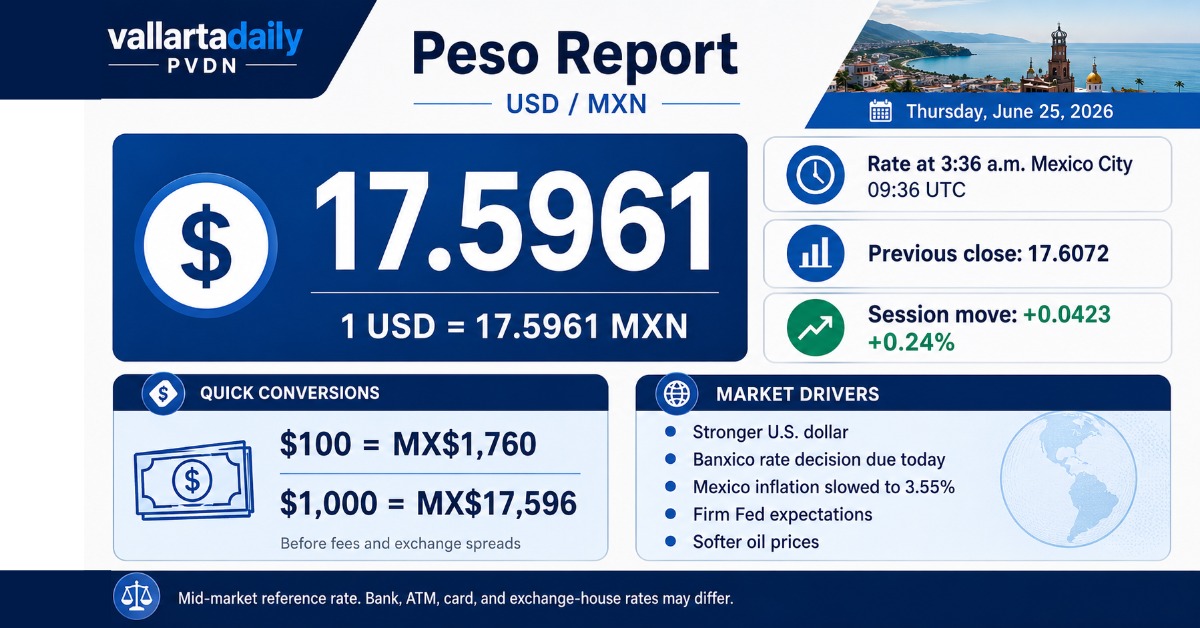
Puerto Vallarta, Jalisco, June 25, 2026 – The U.S. dollar traded near 17.60 pesos early Thursday, keeping the Mexican peso under pressure as global markets weighed a stronger dollar, fresh inflation data from Mexico, and Banco de México’s scheduled monetary policy decision later today.
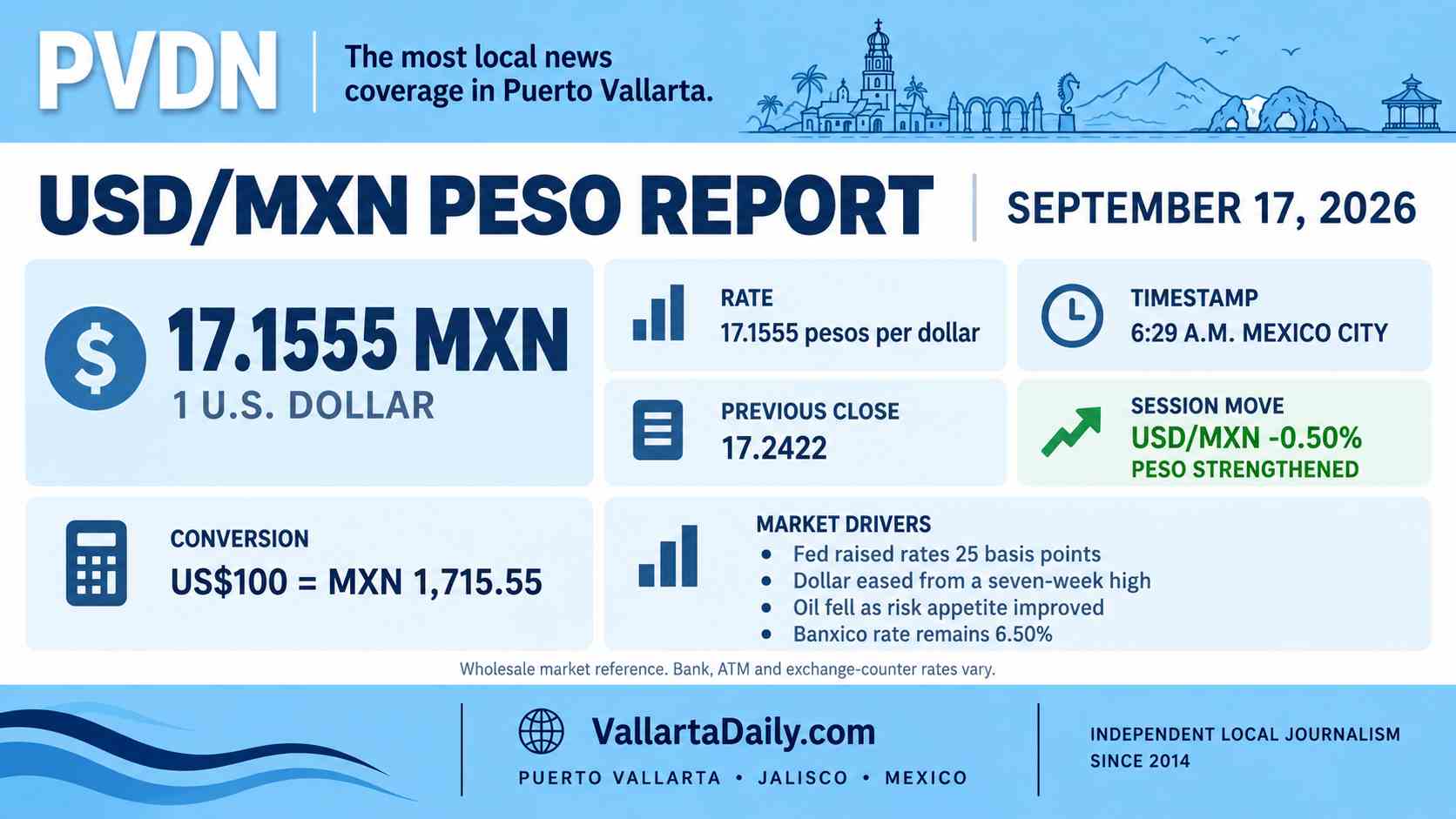
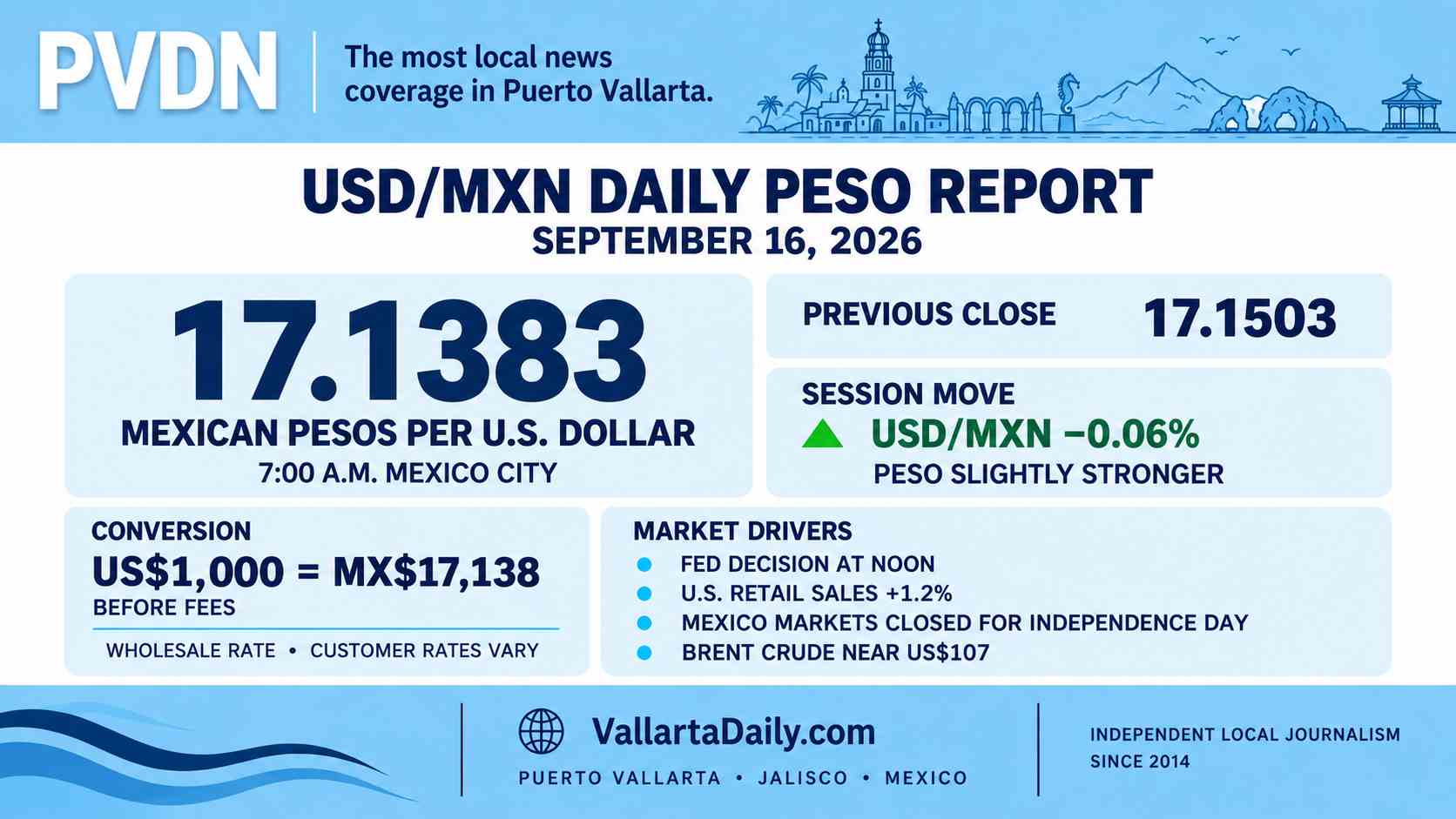
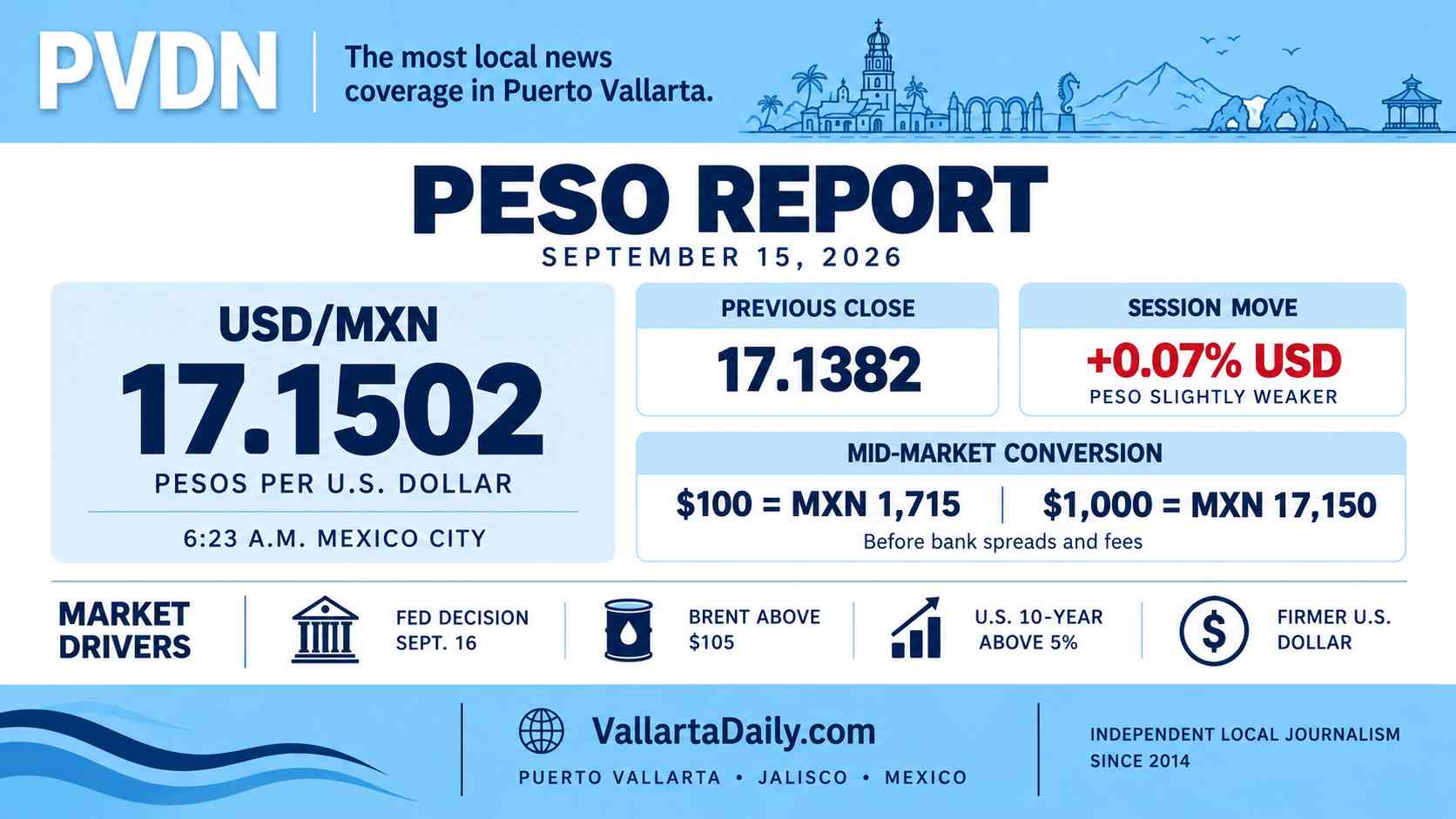
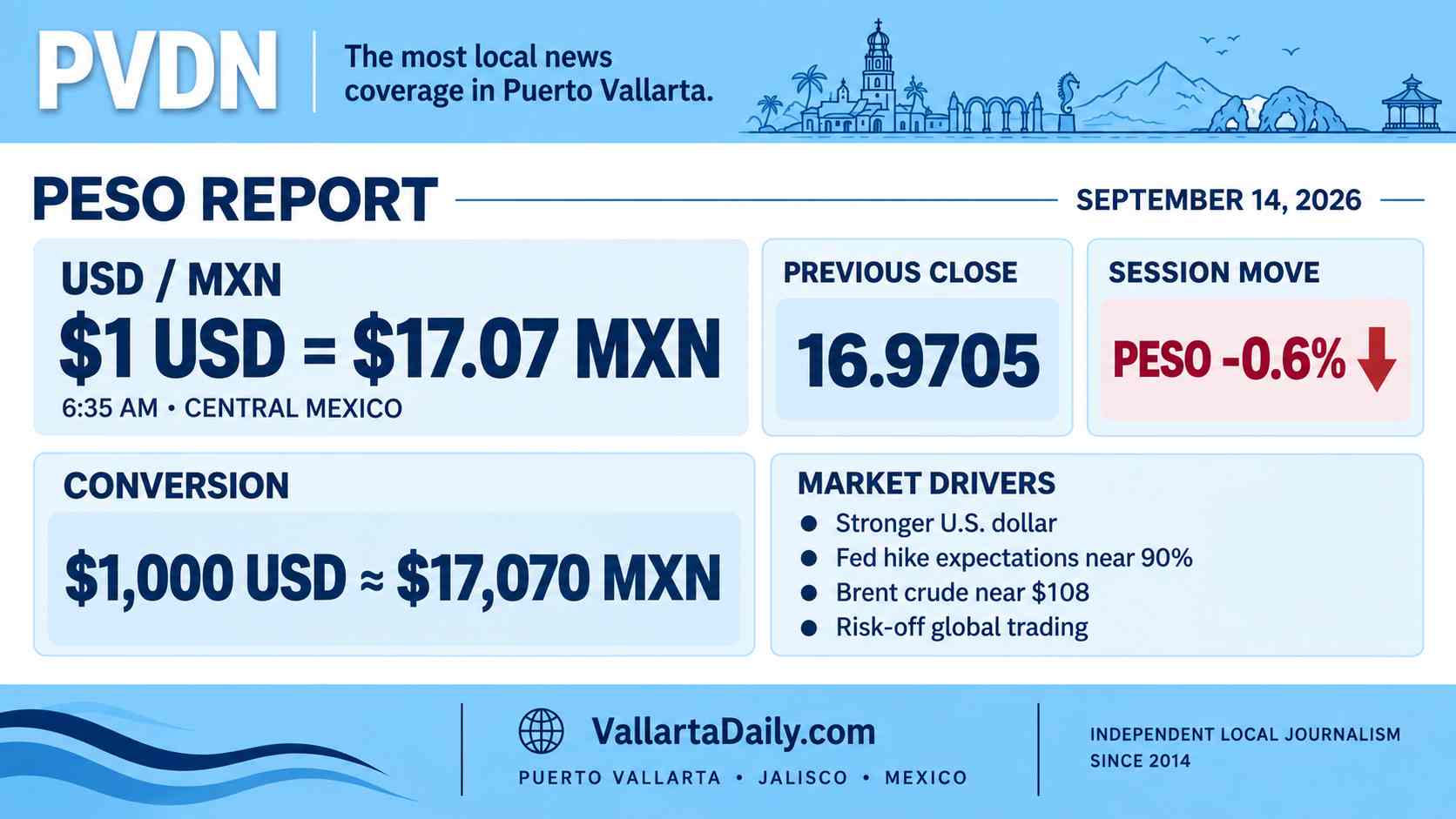
At 09:36 UTC, or 3:36 a.m. in Mexico City, Xe’s mid-market USD/MXN quote showed 1 U.S. dollar at 17.5961 Mexican pesos. Other live market screens later showed the pair moving in the 17.60-17.65 area, with Trading Economics reporting USD/MXN at 17.6495 on June 25, up about 0.24% from the previous session.
Live currency quotes change throughout the trading day. Bank, ATM, credit card, wire-transfer, and casa de cambio rates in Puerto Vallarta will usually differ from the mid-market rate because of spreads and fees.
Dollar strength sets the morning tone
The peso’s move was part of a broader currency-market shift, not only a Mexico story. The dollar has strengthened against several major currencies as traders reassess Federal Reserve expectations and await U.S. inflation data. Global currency markets have been pricing in a firmer dollar after investors moved away from earlier expectations for U.S. rate cuts this year.
The peso often reacts to the spread between U.S. and Mexican interest-rate expectations. When traders see U.S. rates staying higher, or even rising, the dollar can gain support. That can reduce some of the peso’s appeal from Mexico’s still-higher local rates.
The pair remains well below the levels seen during previous stress periods. Still, the dollar has gained ground over the past week, which is enough to affect household budgets, remittances, travel spending, and local business pricing.
Mexico inflation gives Banxico room, but not certainty
Mexico’s main local event today is Banco de México’s policy decision, scheduled for 1:00 p.m. Central time, as part of the central bank’s 2026 monetary policy calendar.
Banxico’s benchmark rate stands at 6.50% after the central bank cut the rate by 25 basis points at its May meeting. The bank’s monetary policy statement page shows that the most recent decision before today lowered the overnight interbank funding target to that level.
The latest Mexico inflation report gave markets a fresh reason to expect caution rather than urgency. INEGI reported that annual inflation slowed to 3.55% in the first half of June, while the consumer price index fell 0.11% from the previous two-week period. Core inflation remained elevated at 4.12%, keeping pressure on Banxico to move carefully.
Lower headline inflation can support the case for holding rates steady, especially with Mexico’s economy showing signs of weakness. But a stronger dollar and sticky core prices limit the comfort markets can take from a single inflation report.
Oil is helping the inflation story, but not lifting the peso
Oil prices also moved lower Thursday, with Brent and U.S. crude falling as Middle East supply concerns eased and traffic through the Strait of Hormuz improved. Oil market reports showed Brent near $73 per barrel and U.S. crude below $70 per barrel.
Lower oil prices can help inflation expectations by easing pressure on fuel and transport costs. For Mexico, that can matter to consumer prices and government fuel policy. But today’s peso trading appears more tied to the dollar, Fed expectations, and Banxico’s rate decision than to oil alone.
Puerto Vallarta budgets still move on the spread
For people in Puerto Vallarta who earn in dollars and spend in pesos, a dollar near 17.60 means US$1,000 converts to about 17,600 pesos before fees and exchange spreads. At a bank, ATM, money-transfer service, or exchange booth, the actual amount received may be lower.
For people earning pesos, a weaker peso can raise the cost of dollar-linked expenses, including some rents, imported goods, international travel, insurance, tuition, and online subscriptions. The effect is not immediate on every bill, but it can show up in budgeting when the exchange rate stays elevated.
For local businesses, suppliers, imported products, tourism pricing, and card-processing settlements, different rates may apply. A calm daily move can still matter when margins are thin.
The Banxico announcement this afternoon is the next domestic market. Until then, the peso is trading mainly on the stronger-dollar backdrop, the latest inflation numbers, and expectations that Mexico’s central bank will remain cautious.