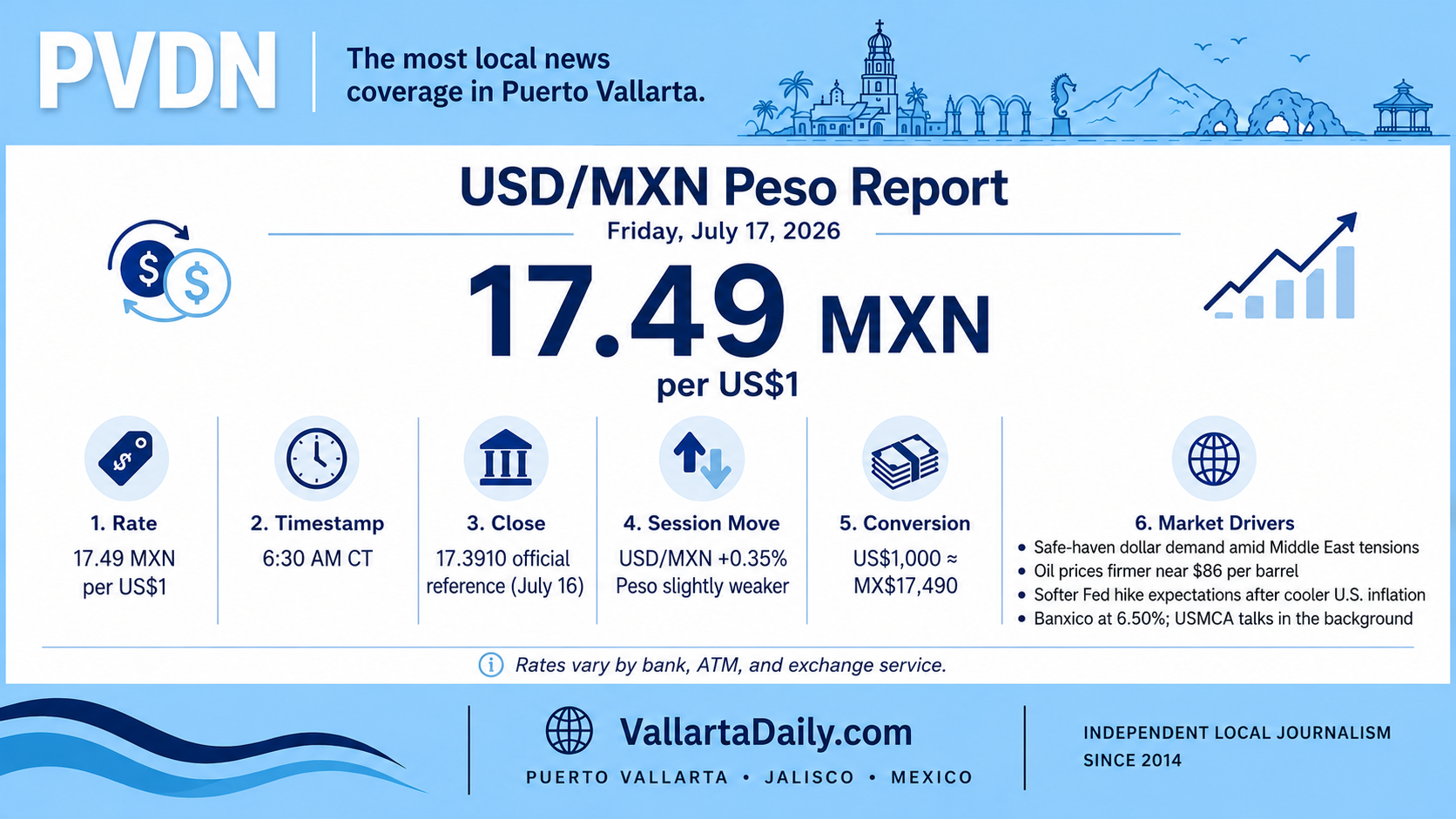
Puerto Vallarta, Jalisco, July 17, 2026 – The Mexican peso weakened in early trading Friday, with the USD/MXN exchange rate near 17.49 pesos per dollar at 6:30 a.m. Central Mexico time.
The dollar was up about 0.35% from the previous session, according to live foreign-exchange market data. A rising USD/MXN quote means it takes more pesos to buy one dollar.
The latest official reference rate listed in the Diario Oficial de la Federación was 17.3910 pesos per dollar, as of July 16. That rate is a government reference and may differ from live interbank prices, bank counters, ATMs and money-transfer services.
Global risk concerns support the dollar
Friday’s move came as investors shifted toward safer assets following renewed military strikes in the Middle East and a sharp decline in global technology stocks.
Brent crude was trading near $86 a barrel, up about 2% for the day and more than 11% for the week, according to the latest global markets update. Higher oil prices and geopolitical uncertainty have raised concerns about inflation and global growth.
Those conditions often support demand for the dollar and pressure currencies tied more closely to emerging-market risk, including the peso. The relationship is not automatic, however, and oil can affect Mexico differently because the country is both a crude producer and an importer of refined fuels.
The U.S. Dollar Index was near 100.79, little changed Friday but down about 0.2% for the week. Safe-haven demand helped offset pressure from changing expectations for Federal Reserve policy.
Federal Reserve expectations remain mixed
U.S. inflation readings released this week were softer than expected, leading traders to reduce bets that the Federal Reserve will raise interest rates at its July meeting.
Market pricing placed the probability of a July increase at about 11%, down from 25% a week earlier, according to a Friday currency-market report .
Lower expectations for U.S. rates can weaken the dollar by reducing the potential return on dollar-denominated assets. That effect was limited Friday by stronger retail sales, a stable labor market and heightened geopolitical risk.
Federal Reserve officials have also indicated that one month of better inflation data may not be enough to establish a lasting trend.
Mexican inflation and Banxico policy
Mexico’s domestic economic picture remains relatively supportive of the peso, although the outlook is not without risks.
Annual inflation slowed to 3.37% in June, its lowest level since December 2020. Core inflation, which excludes some volatile food and energy prices, remained higher at 4.03%, according to the latest national inflation report.
Banco de México unanimously kept its benchmark interest rate at 6.50% on June 25. In its monetary policy statement, the central bank said it considered the current rate appropriate while inflation risks remain tied to trade policy, geopolitical conflicts and currency movements.
Mexico’s interest rate remains above the U.S. federal funds rate, a differential that can help sustain demand for peso-denominated assets. That support can weaken when investors become more cautious about emerging markets or expect Mexican rates to fall.
USMCA negotiations remain in the background
Trade relations with the United States continue to present a separate source of uncertainty.
U.S. and Mexican officials are scheduled to hold a third round of formal USMCA negotiations next week in Mexico City. U.S. Trade Representative Jamieson Greer said talks with Mexico were progressing, while also calling the U.S. trade deficit with Mexico a concern.
Washington is seeking changes to regional content requirements, supply chains, and strategic industries, according to a report on the negotiations.
There was no clear evidence that the negotiations caused Friday morning’s peso movement. Trade headlines can still produce rapid changes in exchange rates when they involve tariffs, quotas, or access to the U.S. market.
Budgeting at Friday’s Rate
At an interbank rate of 17.49 pesos per dollar, US$1,000 converts to approximately 17,490 pesos before commissions, transfer charges or exchange spreads.
For residents earning dollars and paying expenses in pesos, Friday’s weaker peso provides slightly more local currency than Thursday’s rate. The difference is modest: the overnight movement adds roughly 60-70 pesos to a US$1,000 conversion.
People earning pesos while paying dollar-denominated expenses face the opposite effect. A 10,000-peso payment would cost about US$572 at the early Friday rate.
Banks, airport exchange counters, ATMs and transfer companies will generally offer rates different from the market quote. Fees and exchange spreads can have a greater effect on the final amount than a small daily movement in USD/MXN.
The rate may change as Mexican and U.S. markets open and investors respond to developments in the Middle East, oil prices, equity markets and trade negotiations.