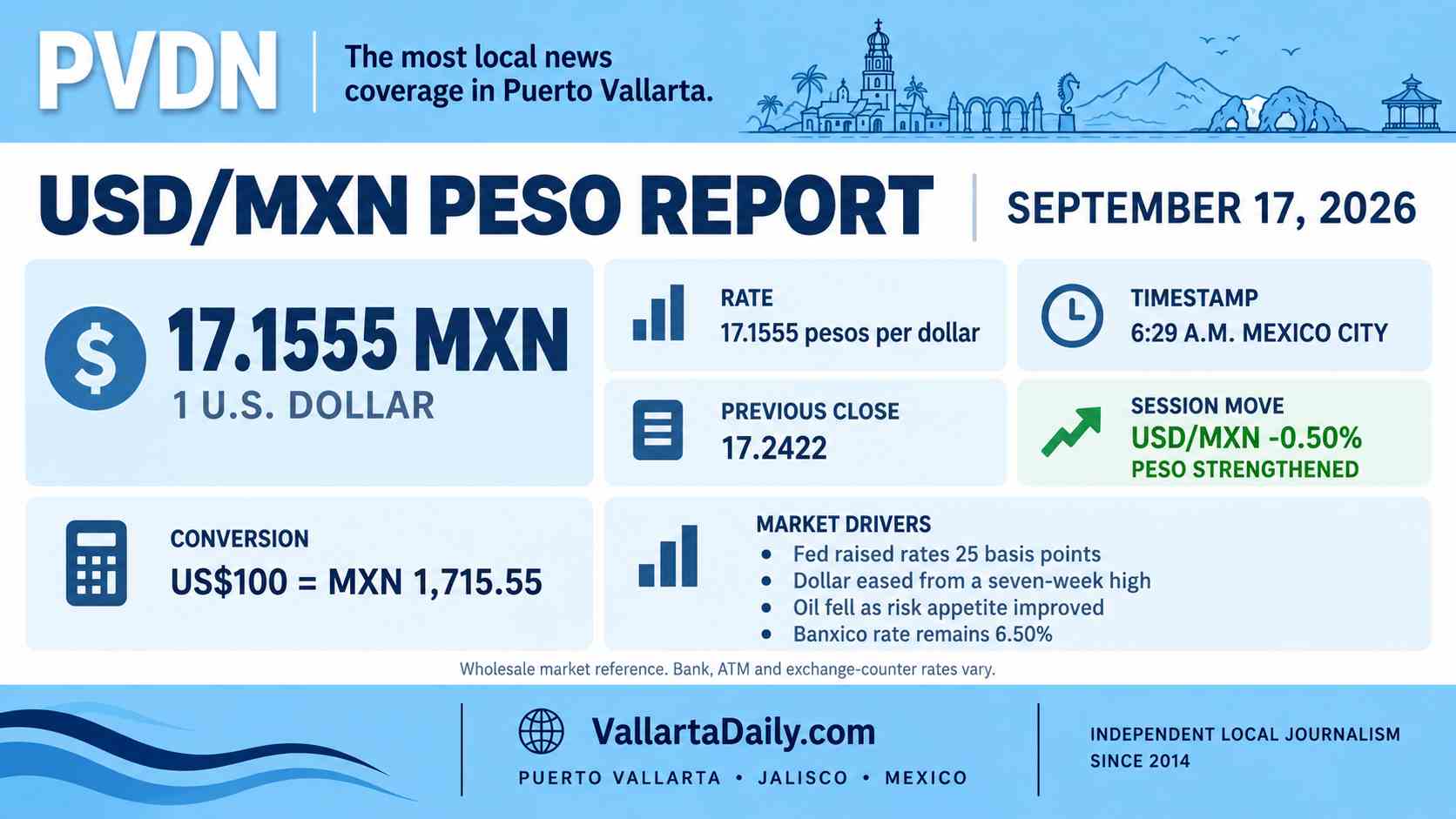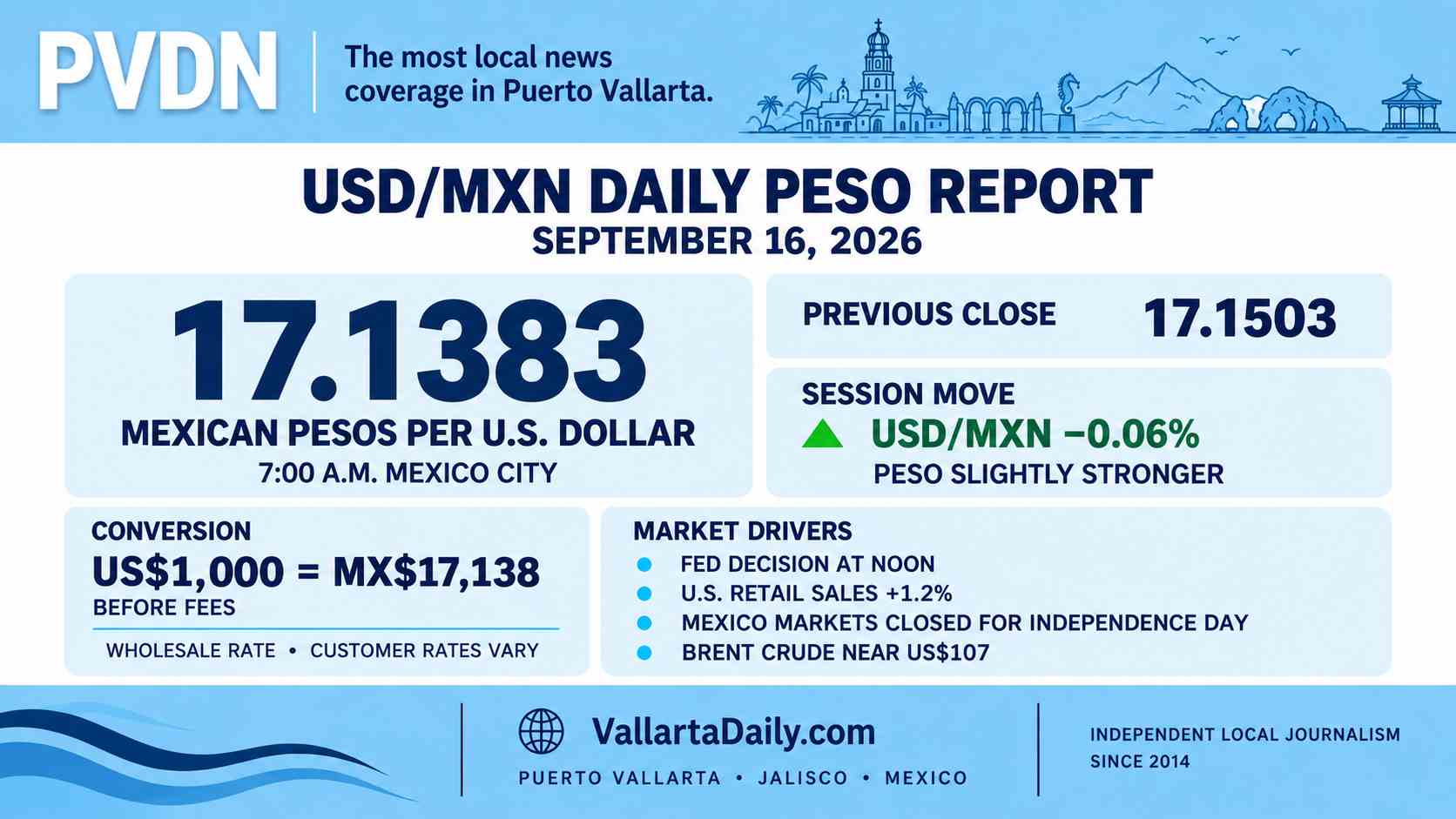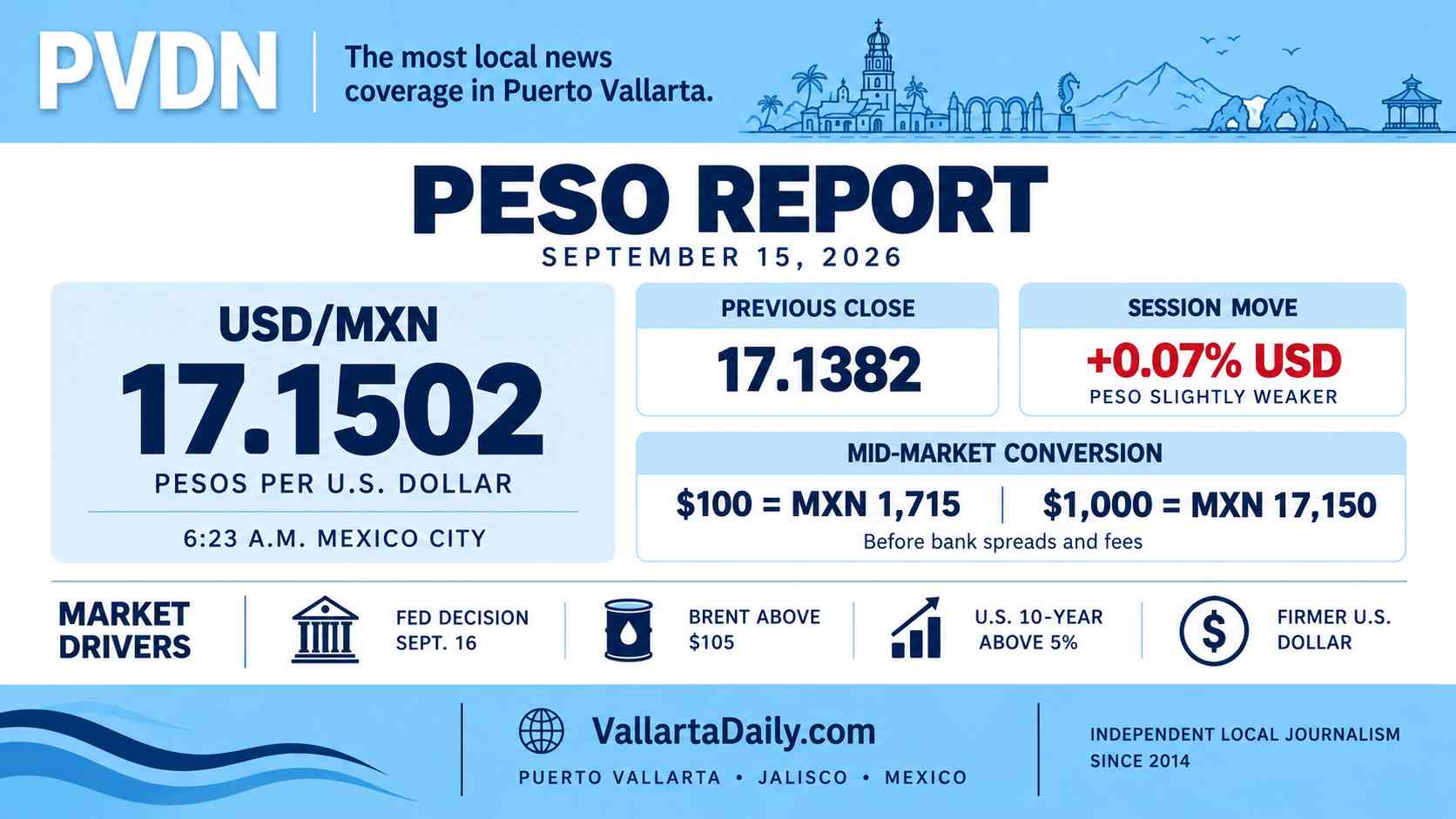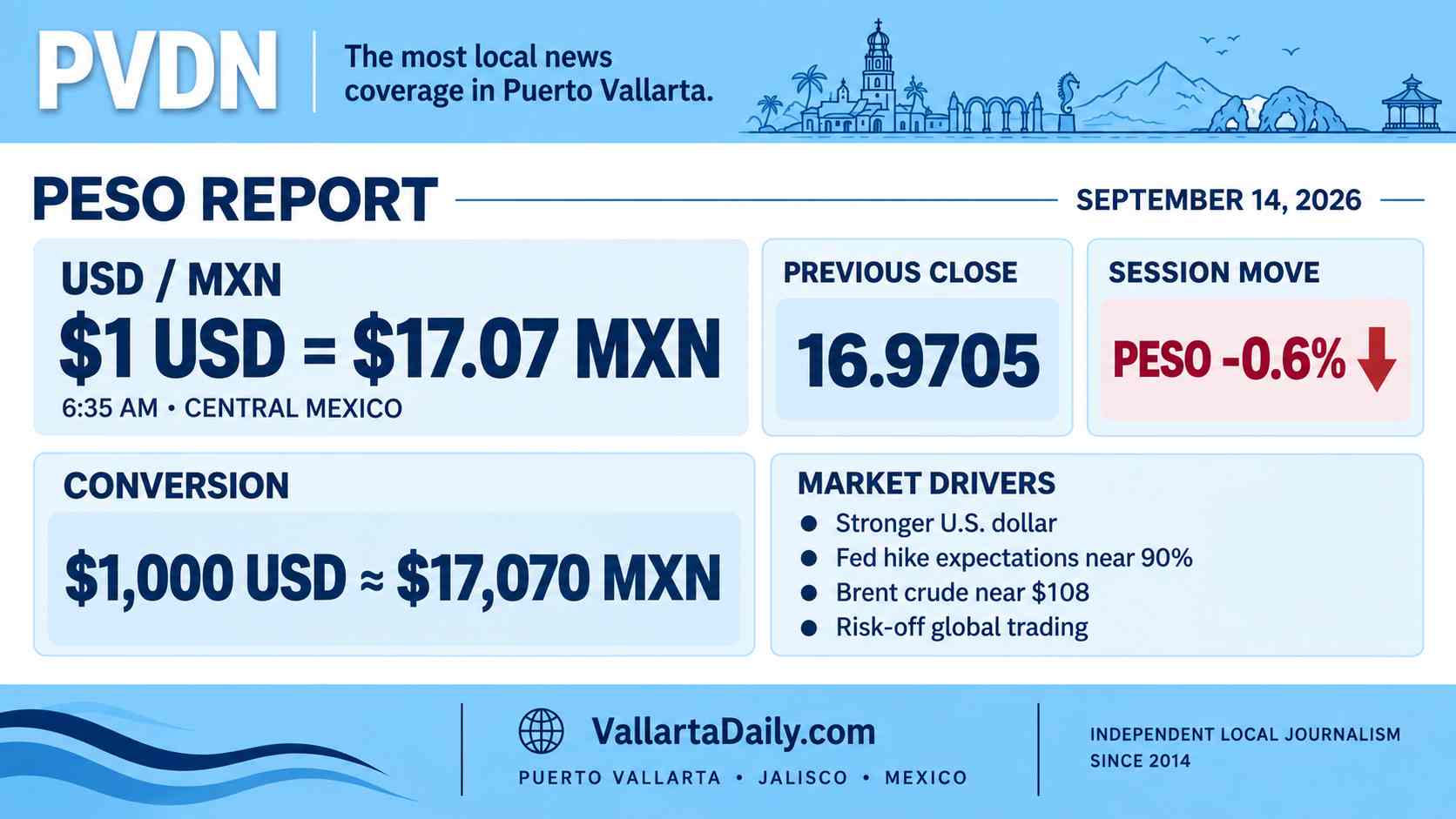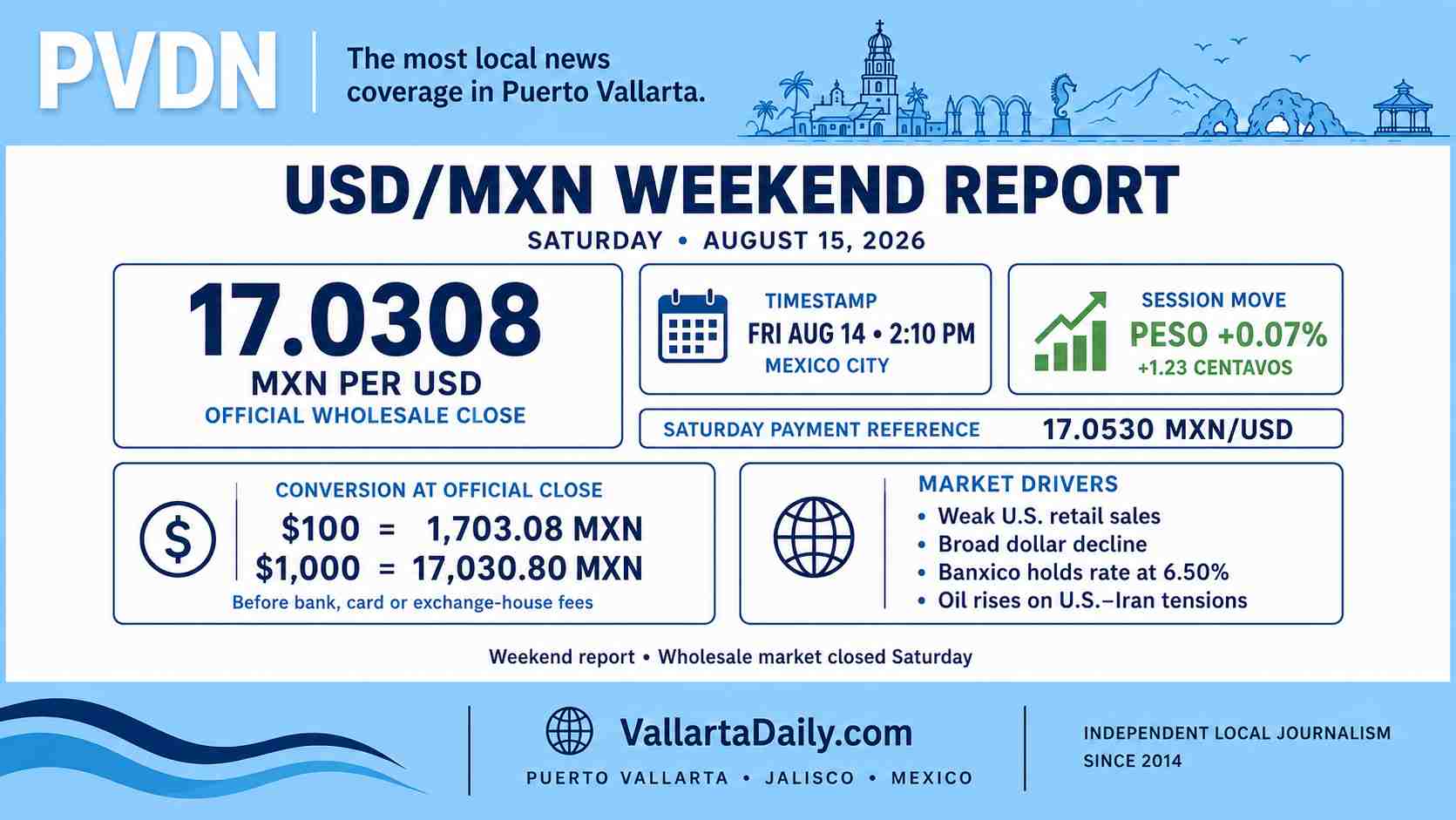
Puerto Vallarta, Jalisco, August 15, 2026 – The Mexican peso entered the weekend at 17.0308 per U.S. dollar, based on Banco de México’s latest wholesale closing rate. The figure was released at 2:10 p.m. Mexico City time on Friday, August 14.
There is no new official interbank close on Saturday. Friday’s rate was 1.23 centavos below Thursday’s 17.0431, representing a peso gain of about 0.07%.
Banco de México set Friday’s FIX rate at 17.0218. For dollar-denominated obligations payable in Mexico on Saturday, the applicable reference was 17.0530 pesos per dollar. These official benchmarks will differ from bank, exchange-house and card-conversion rates.
Peso holds near its strongest level since 2024
The exchange rate moved close to 17 pesos per dollar during Friday’s session. Banco de México’s observed wholesale range between 9 a.m. and 2 p.m. was 17.0020 to 17.0510.
The peso gained about 0.63% over the week, or nearly 11 centavos. A lower USD/MXN rate means the peso is strengthening because fewer pesos are required to buy one dollar.
Friday’s move was small, but it kept the currency near levels last seen in 2024. The peso’s performance has been supported by a weaker U.S. dollar and the interest-rate difference between Mexico and the United States. That rate advantage can attract investors to peso-denominated assets, although those flows can reverse when global risk rises.
Weak U.S. sales weigh on the dollar
The main market development Friday came from the United States. Retail and food-service sales fell 0.6% in July, according to official data released at 8:30 a.m. Eastern time. Economists had expected a small increase.
The weaker report reduced expectations that the Federal Reserve would raise interest rates at its September meeting. A broad measure of the dollar fell about 0.25% to 99.67 during Friday’s trading.
The Federal Reserve held its target range at 3.50% to 3.75% on July 29. Three officials preferred a quarter-point increase, showing that the U.S. policy outlook remains unsettled.
Softer retail sales and recent inflation readings reduced immediate pressure for a rate increase. That weakened the dollar and provided some support for the peso, though one day of economic data does not establish a lasting trend.
Banxico keeps Mexico’s rate at 6.50%
Mexico’s domestic interest-rate setting remains an important part of the peso’s support.
Banco de México held its benchmark rate at 6.50% on August 6. The decision was unanimous, and the central bank said it expected to maintain the rate at its current level.
That leaves Mexico’s policy rate between 2.75 and 3 percentage points above the Federal Reserve’s range. The difference can make peso assets more attractive, but it is only one factor in the exchange rate.
Banxico also reported that Mexico’s economy returned to growth during the second quarter after contracting in the first. Officials cautioned that economic slack and significant downside risks remain. The bank now expects inflation to return to its 3% target in the fourth quarter of 2027, later than previously projected.
Oil and geopolitical tensions remain a counterweight
The peso’s advance came during a mixed session for global risk appetite. U.S. and European stocks closed lower as markets followed tensions between the United States and Iran.
Brent crude settled at $88.52 a barrel, up 1.67%, while U.S. crude finished at $82.40, a gain of 1.42%. Rising oil prices can affect Mexico through export revenue, fuel costs and inflation expectations, so the net effect on the peso is rarely direct.
Further escalation in the Middle East could increase demand for safer assets and pressure currencies such as the peso. A reduction in tensions could have the opposite effect.
Budgeting across dollars and pesos
At Friday’s official closing benchmark, $100 converted to approximately 1,703.08 pesos before fees. A $1,000 conversion produced about 17,030.80 pesos.
People earning in dollars receive fewer pesos when the Mexican currency strengthens. Residents earning or saving in pesos need fewer pesos to cover dollar-denominated purchases, travel or bills.
Actual conversions will vary by bank, card network, transfer service and exchange house. Weekend quotes may include wider spreads because the wholesale market is closed, making the provider’s displayed buy or sell rate more useful than the interbank benchmark for immediate transactions.