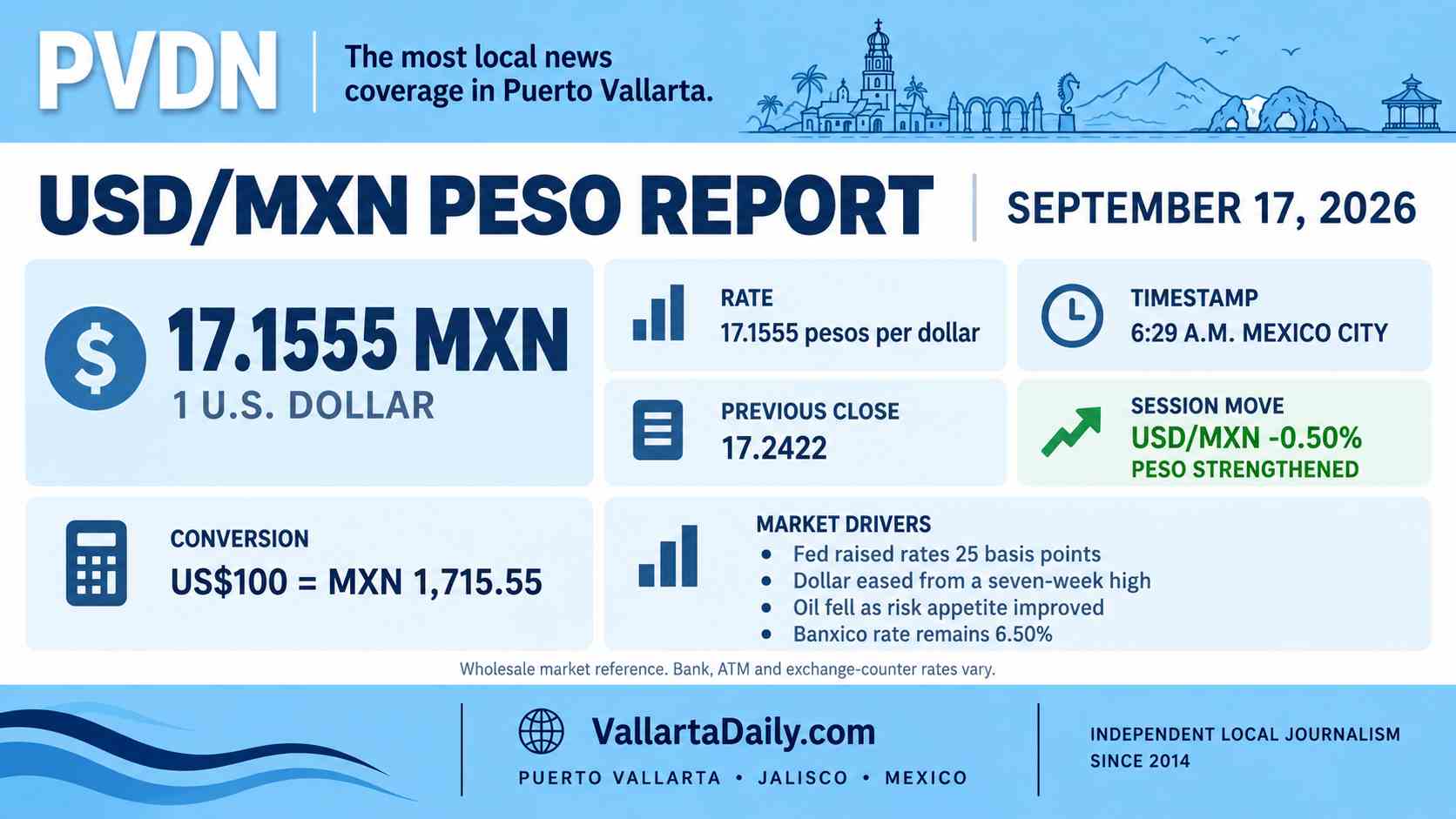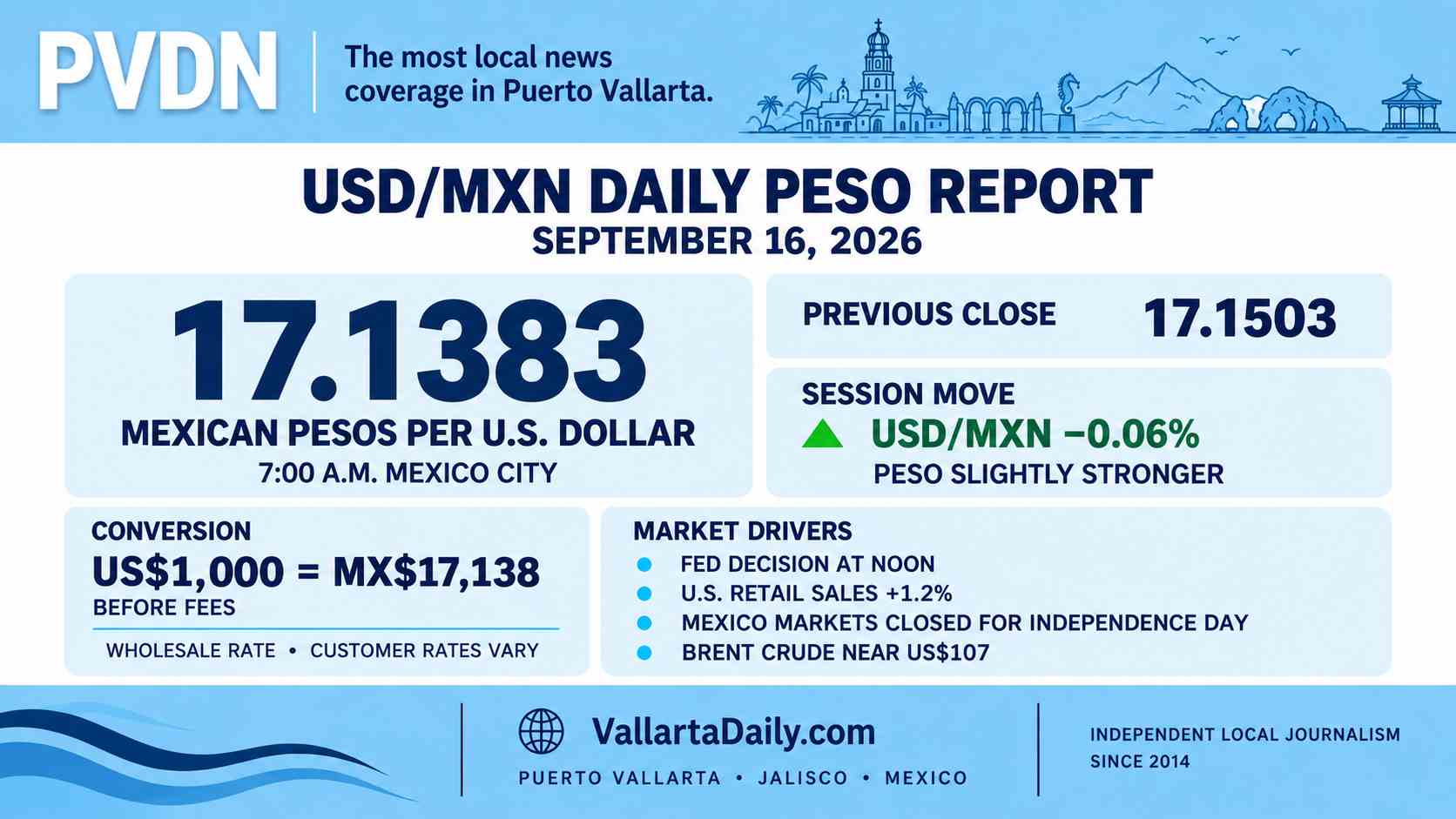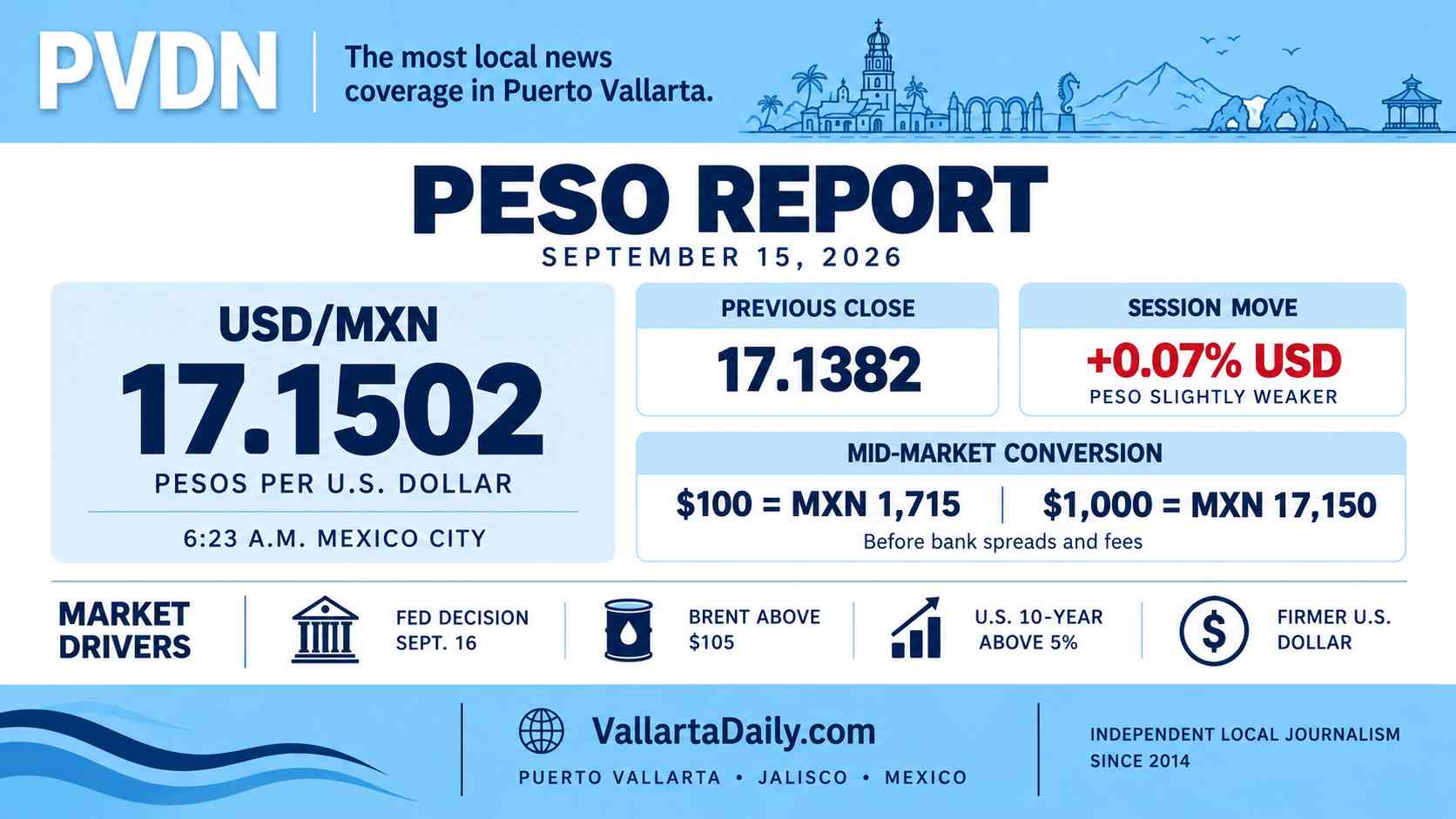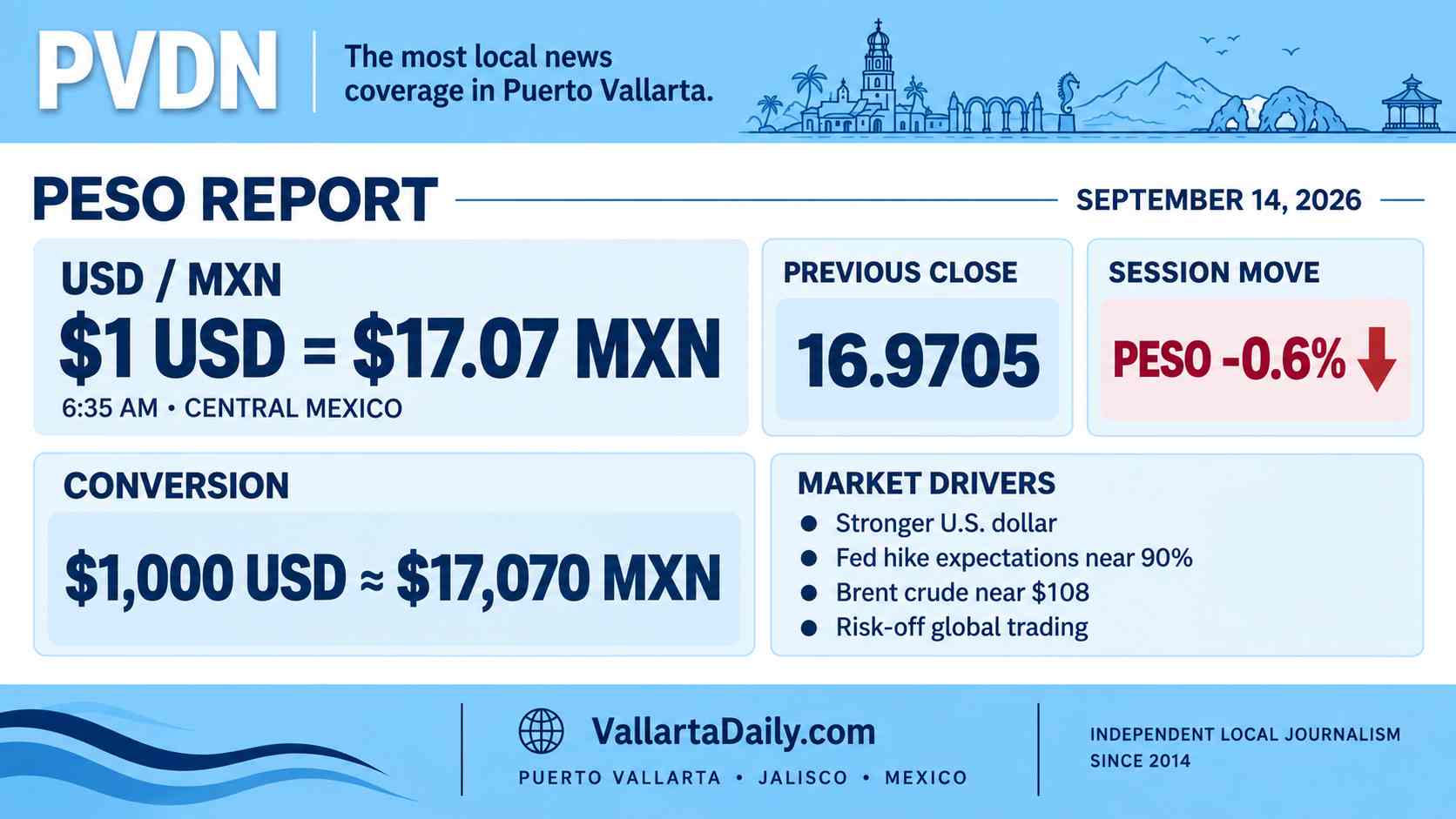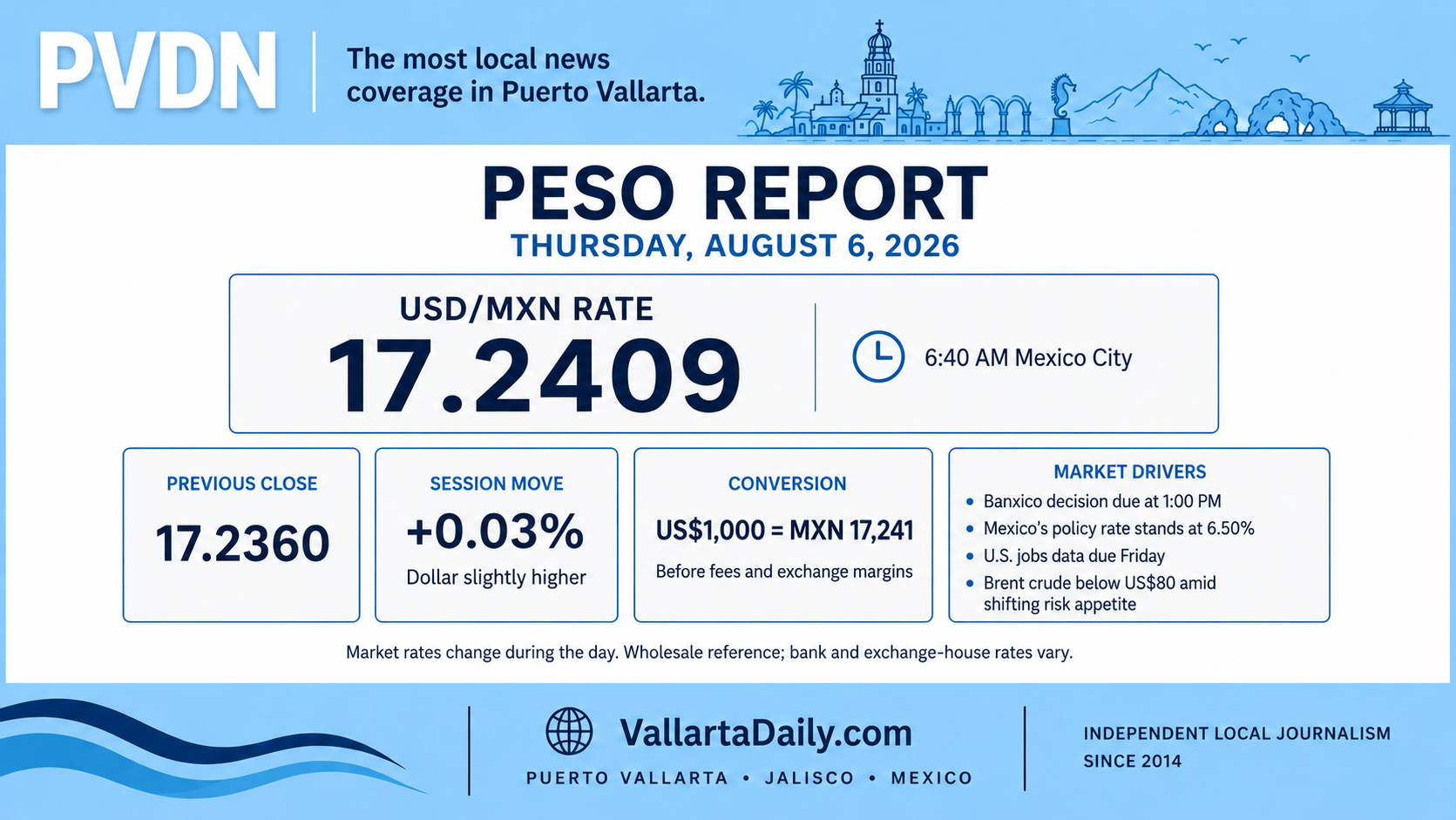
Puerto Vallarta, Jalisco, August 6, 2026 — The U.S. dollar was trading at approximately 17.2409 Mexican pesos at 6:40 a.m. Mexico City time, according to Google Finance market data. The dollar was up about 0.03% from the previous session, indicating a modest early decline for the peso.
The rate is a wholesale-market reference. Banks, exchange houses, card networks and money-transfer services may quote different buying and selling rates after adding their own margins and fees.
Peso remains near recent highs
The peso has strengthened over the past month. Trading Economics reported that the currency had gained roughly 1.5% over the previous month and more than 7% over the past year against the U.S. dollar.
The latest official Banco de México reference available before Thursday’s session was 17.2317 pesos per dollar. Banxico’s FIX rate is calculated from wholesale foreign-exchange quotations and is released on banking days for official reference purposes.
The small morning move reflects a market waiting for new signals rather than a sharp change in sentiment.
Banxico decision due Thursday afternoon
Banco de México is scheduled to announce its monetary-policy decision at 1:00 p.m. Mexico City time Thursday, according to the central bank’s 2026 calendar.
The benchmark interest rate stands at 6.50%. A Reuters survey found that 34 of 35 economists expected Banxico to leave the rate unchanged. The survey also noted that Mexico’s headline inflation had fallen close to the central bank’s 3% target, while core inflation remained a concern.
A hold would preserve Mexico’s relatively high interest-rate advantage over the United States, a factor that can support demand for peso-denominated assets. It does not guarantee that the peso will rise, since currency prices also respond to global risk appetite, trade concerns and expectations for future rate cuts.
U.S. jobs data and oil remain in focus
Markets are also waiting for the U.S. employment report due Friday. The data could influence expectations for the Federal Reserve’s next decisions. MarketWatch reported that traders were assigning roughly a 57% probability to a 25-basis-point U.S. rate hike at the September meeting.
Oil prices have added another source of volatility. Brent crude recently fell below $80 per barrel as markets responded to optimism over Middle East negotiations, though prices later recovered amid ongoing uncertainty. Lower oil prices can ease inflationary pressures and improve risk appetite, while a renewed energy shock could strengthen the dollar as investors seek safer assets. Reuters reported that crude prices had fallen sharply from recent highs but remained sensitive to geopolitical developments.
Mexico’s trade relationship with the United States remains another background risk. Officials said in July that the effective tariff rate on Mexican goods would not change under the latest U.S. trade measures, particularly for products that comply with the USMCA. That position has helped limit an immediate trade shock, although new tariff announcements could still quickly affect the peso.
What the rate means locally
At 17.2409 pesos per dollar, US$1,000 converts to approximately 17,241 pesos before exchange fees or bank margins.
For Puerto Vallarta residents and property owners earning dollars, a stronger peso generally means those dollars buy fewer pesos for rent, groceries, wages, maintenance, utilities, and other local expenses. People receiving pensions or other fixed-dollar income may notice the difference over time, even when the daily move is small.
For residents paid in pesos, a stronger peso lowers the peso cost of dollar-priced expenses such as U.S. subscriptions, international travel, imported goods and some cross-border payments.
Anyone budgeting for a property purchase, annual taxes, construction work or a large transfer should compare the provider’s actual delivered rate rather than relying only on the headline market quote. Exchange rates can change between when a transfer is initiated and when pesos are received.