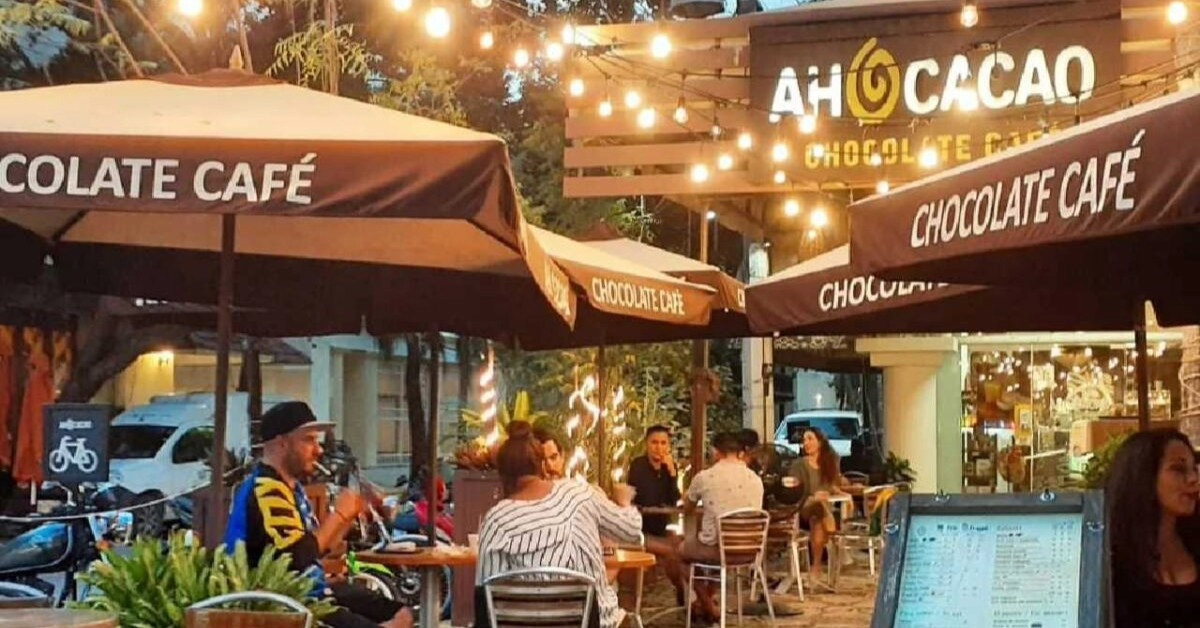
A Playa del Carmen chocolate company is pushing further into the luxury international market after winning a series of medals in major chocolate competitions and expanding its public-facing business. The company says that recognition has helped validate its products outside Mexico, but it is also using that momentum to make a larger argument: that Mexican cacao and Mexican chocolate should hold a stronger position in the premium global trade.
The business, Pasión Cacao, says it has spent the past decade building that reputation. It began by selling products from other Mexican chocolatiers before shifting to its own production. That move appears to have changed the company’s scale. It now says it produces about 36 tons a year and works with domestic cacao suppliers, while also serving hotels, restaurants, and tourism-linked businesses in the Riviera Maya.
That local growth matters because Playa del Carmen is not an obvious center of industrial chocolate production. It is better known for tourism, real estate pressure, and a service economy tied to visitors. But that setting may also give the company an advantage. It can sell chocolate as both a food product and a travel experience, which is an important distinction in a place where visitors are often willing to spend on products that come with a story, a workshop, or a cultural frame.
Why these awards matter beyond one company
The medals matter because the premium chocolate market runs heavily on reputation. In commodity markets, chocolate competes on volume and price. In the fine-chocolate world, buyers care about origin, processing, flavor development, traceability, and branding. Awards can help smaller producers enter conversations that are usually dominated by better-funded brands from Europe, the United States, and parts of Latin America with stronger export visibility.
Pasión Cacao has said it has received multiple medals through the International Chocolate Awards system. Public results from that competition show the company among prize winners in Mexico, including awards for dark chocolate bars. Earlier coverage also documented a silver medal in the Americas competition for one of its flavored bars. That kind of recognition does not guarantee export success, but it can open doors with specialty retailers, hospitality buyers, and consumers who are willing to pay more for craft products.
For readers outside Mexico, the bigger point is this: premium chocolate is not just about taste. It is also about whether a producer can convince buyers that its product belongs in the same category as well-known luxury brands. Awards help build that case because they offer outside validation in a market where shelf space and prestige are both hard to win.
Mexico’s challenge in reclaiming chocolate’s value
Mexico’s relationship with cacao carries obvious historical weight. Cacao has roots in Mesoamerican history, trade, ritual, and cuisine. But modern commercial success does not automatically follow historical origin. That is the gap many Mexican producers are trying to close.
The problem is partly structural. Mexico is strongly associated with chocolate as a cultural product, but it is not one of the world’s largest cacao producers. Domestic output remains modest compared with global leaders, while national demand for chocolate products is much larger. That leaves much of the broader market tied to imported raw material and industrial supply chains rather than a fully homegrown, premium bean-to-bar ecosystem.
For smaller Mexican makers, that means they are competing on two fronts at once. They have to persuade consumers that Mexican chocolate deserves a place in the high-end market, and they also have to build stable sourcing, consistent quality, and enough production scale to support that claim. That is difficult in any country. It is even harder in a market where many consumers still associate chocolate with mass brands rather than craft origin products.
Tourism is becoming part of the business model
The company’s new experience center, Central Cacao, demonstrates how tourism is becoming part of its growth strategy. Instead of only selling finished bars and bonbons, the business is now inviting visitors to learn about cacao, its origins, and the chocolate-making process. That approach reflects a wider trend across Mexico’s tourism zones, where producers are trying to turn food products into experiences with higher margins and stronger brand loyalty.
In Playa del Carmen, that strategy makes practical sense. The city already has the foot traffic, the international audience, and the consumer mix for experiential retail. A traveler may not remember a standard packaged product bought in a shop, but they are more likely to remember making chocolate, hearing the story behind Mexican cacao, and taking home a product tied to that experience.
For expat readers and foreign residents, this is also a useful reminder that some of the most interesting business stories in tourist cities are no longer limited to hotels and restaurants. More companies are trying to use tourism infrastructure to support manufacturing, food branding, and premium local products. In that sense, chocolate is not just a culinary story. It is also a story about how Riviera Maya businesses are trying to move up the value chain.
What to watch next
The next question is whether international recognition can translate into sustained commercial reach. Winning medals is one thing. Building repeat export demand is another. Luxury buyers want consistency, distinct identity, and reliable supply. A small producer can win attention with a great bar, but staying in that market takes more than one strong awards cycle.
Still, the Playa del Carmen company’s push is notable because it reflects a broader ambition shared by many in Mexico’s food sector. Rather than competing only as a source of raw ingredients or low-cost supply, the goal is to capture a greater share of the premium end of the business under a Mexican brand.
If that works, even on a modest scale, it could strengthen the case that Mexican cacao should not be treated only as heritage. It can also be positioned as a modern, export-ready luxury product. That is the larger significance of this story. One company’s medals matter, but the more important test is whether they help prove that Mexico can claim a greater share of the value in a product the country helped give to the world.