A new line is going into the water off Playa del Carmen. It’s not for swimmers. The city has begun deploying an offshore barrier to catch sargassum before it reaches the shore. Officials say the system will eventually cover a long stretch of public land, but it won’t appear overnight. Barriers can slow the problem, not erase it. So where will the five kilometers actually run, and how much relief can beachgoers expect when the next bloom arrives?
A barrier line goes in before peak season
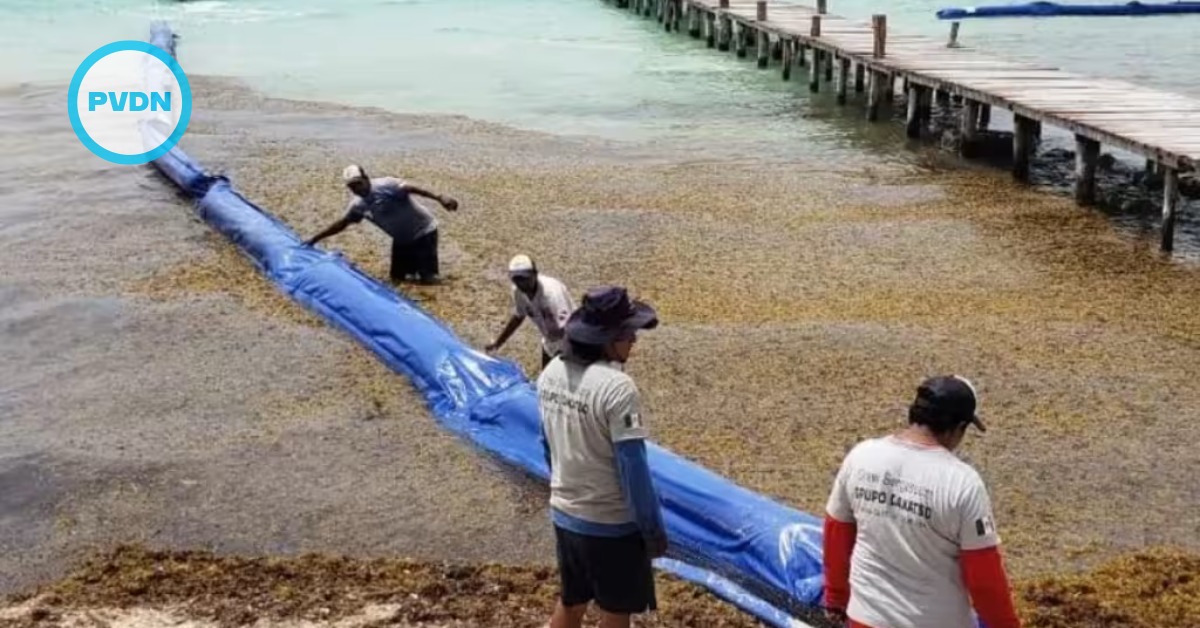
Playa del Carmen has started putting a sargassum barrier in the water, well before the heavy season. On February 11, crews began deploying an offshore floating line designed to slow the seaweed before it reaches shore. Kandy Mendoza, the municipality’s secretary for sustainable environment and climate change, said the modular system will total up to five kilometers. Officials called the rollout one of the biggest containment steps taken here in recent years. The goal is to keep more algae offshore and lift it out before it breaks down. Officials point to shifting currents, warmer water, and nutrient runoff as part of the trend. The first stretch went between Parque Fundadores and the Constituyentes pier, then continued toward Playa Golondrinas. So far, 69 modules, each measuring 15 meters, have been set in place, totaling just over one kilometer. The timing is deliberate. Local teams usually see stronger landings starting in March, and early arrivals have already forced cleanups. The municipality reports removing 1,288 tons of sargassum so far in 2026. Last year, it collected 30,580 tons, a reminder of how quickly the problem can scale.
Where the five kilometers are expected to run
The city’s aim is to cover the public beach strip with the modular boom. Officials say it will run from Playa Cisne to Playa Esmeralda. In practical terms, it follows the coastline from the downtown waterfront northward. Officials say the roll-out will happen in stages, depending on sea conditions. The first modules went in near Parque Fundadores and the Constituyentes pier, then pushed toward Playa Golondrinas. The barrier sits offshore, not on the sand, so beach access stays open. Swimmers may still see sections in the distance, along with work boats tending the line. The placement is not rigid. Winter norte systems can bring rougher seas, and weather can force pauses or adjustments. The idea is to intercept drifting mats early, then guide them toward pickup zones. That matters because sargassum is harder to handle once it reaches the sand and begins to decompose. If the barrier works as intended, residents may notice fewer surprise brown tide days in the busiest public areas.
Funding, manpower, and disposal planning
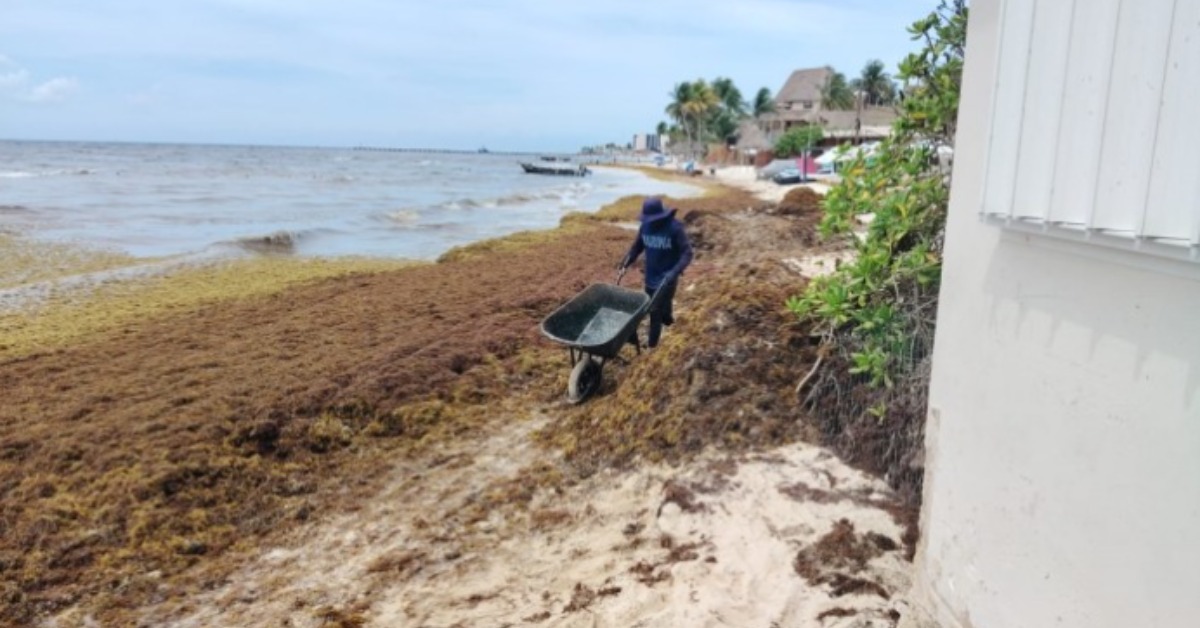
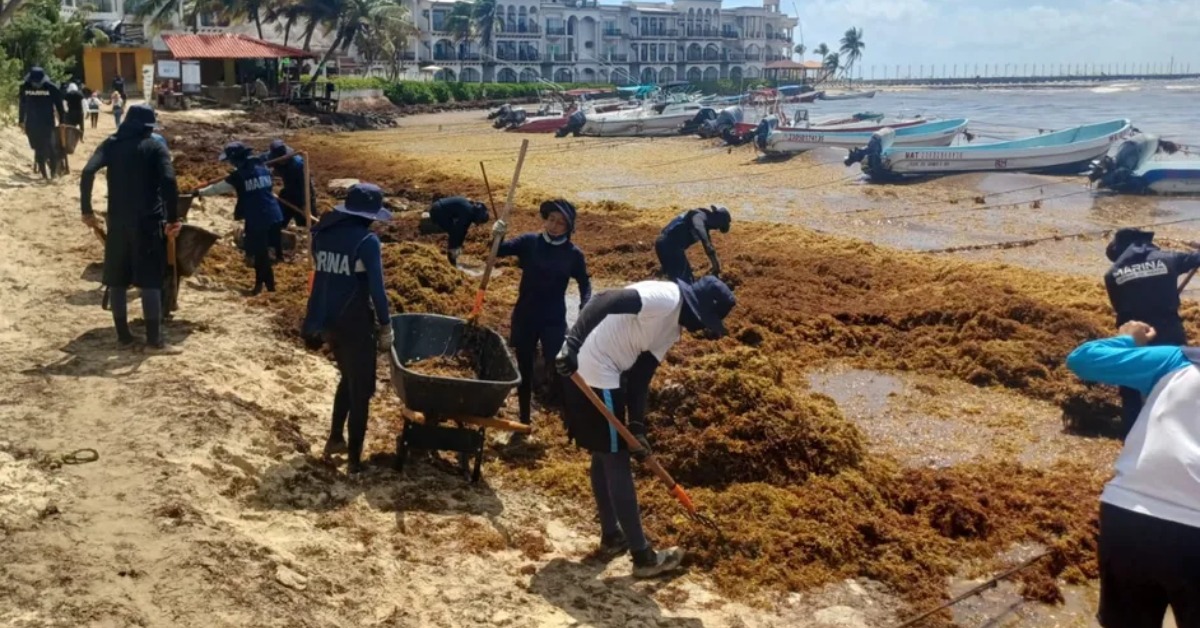
Municipal officials approved about 45 million pesos to expand the response. The money comes from the local environmental sanitation fund, with private-sector participation. On the beach, crews are working from 15 active collection points, with roughly 150 workers assigned to public sands. The city says about 70 Navy personnel are supporting the work. Machinery is also being used to lift and haul the algae. Offshore, the Navy is running a broader state operation that uses specialized vessels and containment lines. Federal figures put statewide collections at about 178 tons so far in 2026. They also reported removing 92,783 tons in 2025. Local officials say three boats are tasked with intercepting the macroalga before it reaches shore. The city has already removed 1,288 tons in 2026, even before March. Last year’s municipal total reached 30,580 tons. The plan looks beyond the shoreline, too. Officials say they will rehabilitate the disposal site, adding 10,000 square meters of geomembrane and geotextile to limit leakage. The goal is tighter control once the seaweed is off the beach.
What residents and expats should expect
Nobody here is promising a sargassum-free year. Even the city notes that offshore barriers reduce landings, but do not stop them. What they can do is buy time. When algae piles up on the water side of a boom, crews can remove it earlier and in larger clumps. That usually means fewer seaweed fragments in the sand. It can also reduce the sharp smell as it starts to decompose. For expats who plan beach time around school runs, remote work, or visiting family, the practical change may be predictability. The city says it checks conditions daily. It also updates a local semaforo to flag affected beaches. Norte winds can still clear or worsen conditions overnight, so a clean morning can turn fast. The barrier is being installed in stages, so coverage will build over time. If you live near the coast, expect more activity offshore. You may also see more trucks at collection points as spring warms up.