In late January, El Recodo woke up to a shoreline that looked like peak sargassum season. An estimated 1,000 tons of seaweed pushed into central Playa del Carmen, forcing crews to work by hand where machines can’t reach. The timing is what’s unnerving. This is the second unusual landing of 2026, weeks before the season typically ramps up. What does an early hit mean for residents, visitors, and the months ahead on the Riviera Maya?
An all-hands cleanup on the downtown shoreline
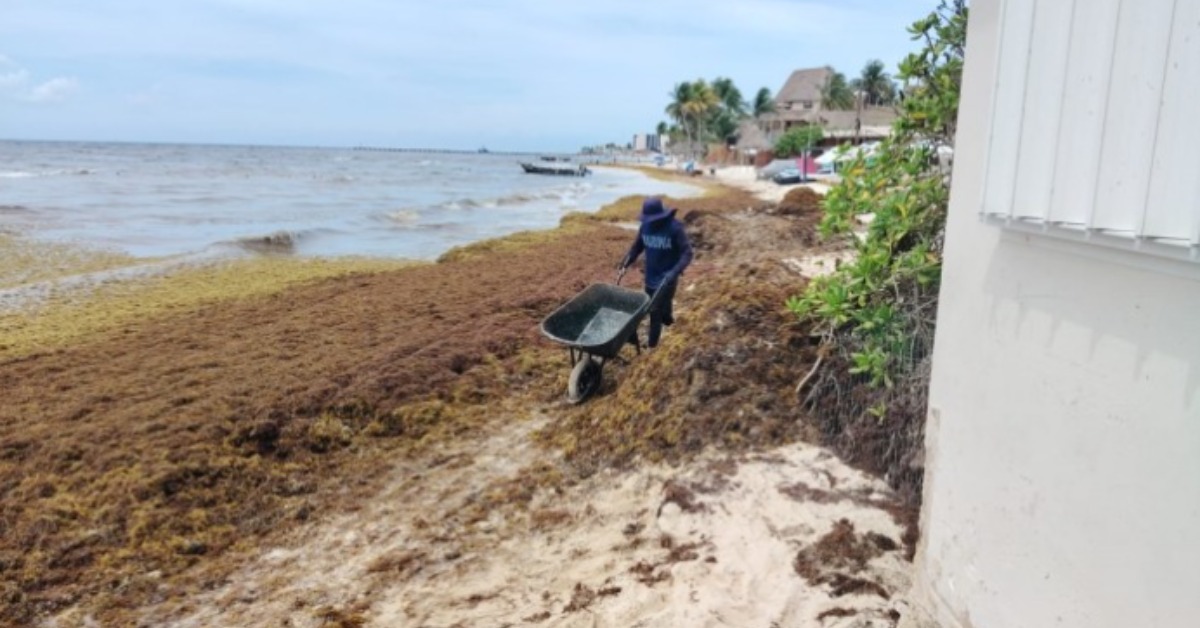
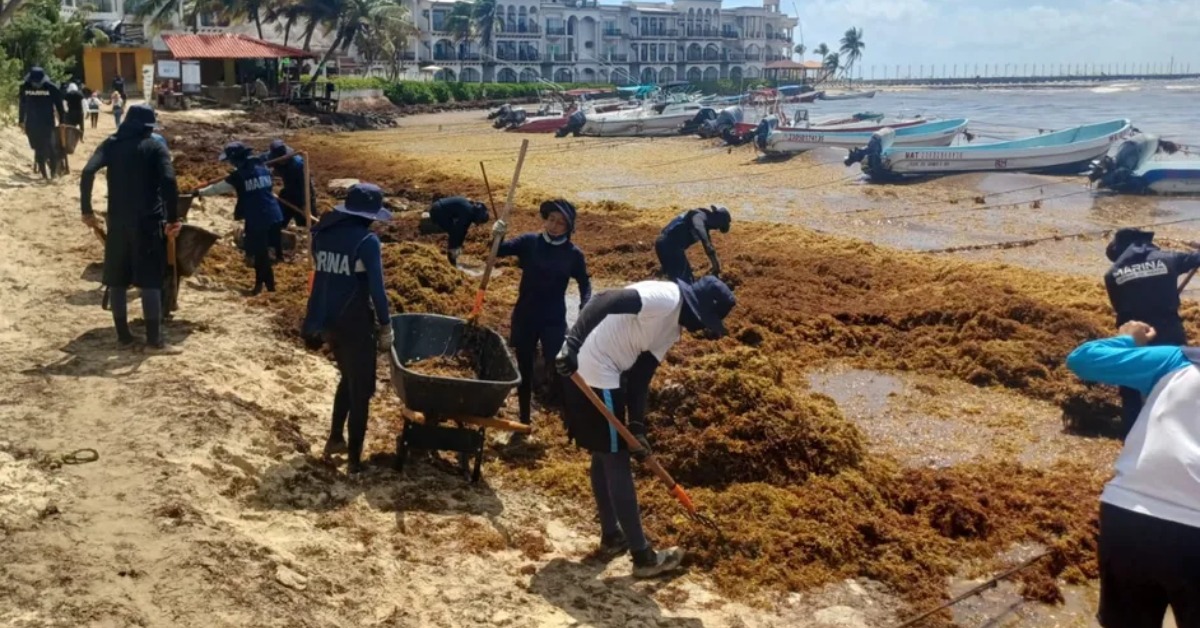
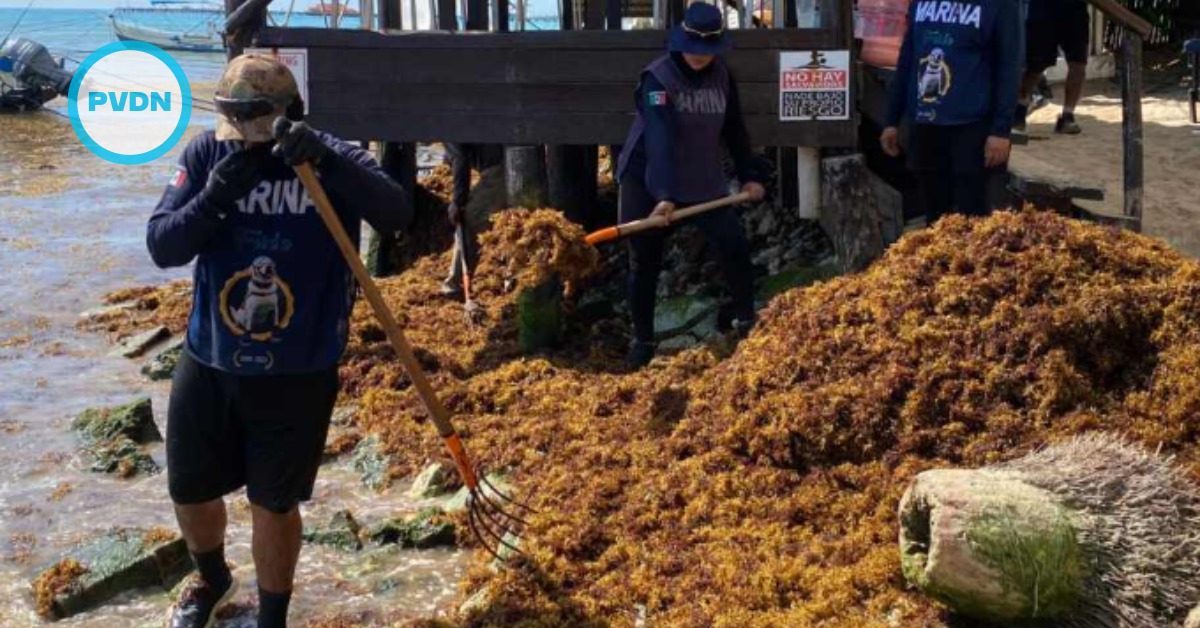
On Monday morning, an unusual sargassum landing hit central Playa del Carmen. The heaviest buildup was reported at El Recodo. Officials estimated the volume at about 1,000 metric tons. That is a huge amount for January, right in the middle of winter. Seaweed showed up along several stretches of the urban waterfront. It was seen near 12th, 14th, and 16th streets, and around Constituyentes Avenue. More than 30 Navy personnel joined federal beach-zone crews and local boat operators to clear the shoreline. They moved quickly to keep the mats from spreading and decomposing. The timing is what made it stand out. The region’s heaviest months usually arrive later in the year. When sargassum appears this early, it can catch cities off guard. It also creates pressure on staff and budgets. Residents in the center saw the cleanup up close. Tour operators watched it with the same urgency. Sargassum can shift with each tide and each wind change. For locals, the scene landed like a warning. The seaweed season is no longer confined to one predictable window.
A beach that forces crews to work by hand
El Recodo is not an easy place to clean. The shoreline there has been eroded. That erosion limits what equipment can safely enter the beach. In this stretch, light machinery struggles on the slope and soft sand. Even wheelbarrows can become impractical. So most of the removal was manual. Workers lifted the seaweed from the waterline and packed it into black bags. They then carried the bags to a point with street access. That access was reported near 14th Street. From there, heavy equipment could load it for transport to the final disposal site. It is slow, punishing work. It also protects the remaining beach, because machines can tear up fragile areas. Manual removal can reduce sand loss when crews work carefully. Speed matters, too. Once piles start to break down, the smell can turn sharp. Runoff can also darken the shallows and stain sand. Crews were trying to beat that clock.
A January warning sign for the Riviera Maya
In most years, the heaviest sargassum months arrive later. The season often ramps up in spring and runs through late summer. But 2026 has already delivered two out-of-season landings in Playa del Carmen. On January 8, a smaller but unusual event brought an estimated 25 metric tons into the Playa Mamitas area. Now El Recodo has seen a far larger surge. Coastal monitors have tracked large sargassum masses out in the Atlantic. Meteorologists also point to shifting currents and changing ocean conditions. Those factors can push seaweed into the western Caribbean earlier than expected. Authorities have kept anti-sargassum operations active at the start of the year. Across Quintana Roo, the Navy reports ongoing collection in multiple coastal towns. The fleet includes specialized vessels designed to scoop sargassum before it reaches shore. Officials also rely on floating barriers when winds and seas allow deployment. In recent briefings, the same strategy has been framed as a year-round effort. The message is not that every day will be like this. It is that January is no longer a guaranteed quiet month. Early landings can become a preview, not a fluke, if the pulses keep coming.
What residents and visitors should do now
For expats and long-term visitors, the practical takeaway is simple. Beach conditions can change overnight. If you have guests coming, check the waterline before you plan your day. Fresh sargassum is mostly an eyesore. Old piles can become unpleasant. They may also irritate sensitive people, especially those with asthma. That risk rises as the seaweed decomposes and releases gases. Public health agencies have linked heavy accumulations to exposure to hydrogen sulfide and ammonia. Give crews space to work on the shoreline. Keep pets away from decaying patches. Avoid wading through thick mats near the surf. Fast response makes a visible difference. Quick removal limits odors, reduces burial in the sand, and protects swimmable water near the beach. If you start to feel eye or throat irritation near dense piles, step away and get fresh air. El Recodo’s cleanup is also a signal to watch the next few weeks closely. Early landings tend to test local capacity long before the calendar says they should.
With information from Noticaribe, Por Esto!, La Jornada, El Economista, US EPA, University of South Florida Optical Oceanography Lab