Residents in Torres de la Paz and nearby communities in Playa del Carmen are warning that the lack of drainage service could be allowing wastewater to seep into the area’s groundwater.
The concern affects an estimated 4,000 residents in Torres de la Paz and nine surrounding communities. The settlements have relied on septic pits because they lack formal drainage infrastructure.
Community representatives say some septic pits fill as expected, while others do not. That has raised fears that wastewater may be escaping into the porous ground below.
The concern has not been presented as a confirmed laboratory finding. It is a warning based on local observations, the lack of basic infrastructure, and the known vulnerability of the region’s karst groundwater system.
Why this matters in Playa del Carmen
The issue is larger than one neighborhood. Playa del Carmen sits on a landscape where water moves through limestone, caves, fractures, cenotes, and underground channels.
That type of ground is known as karst terrain. It does not filter waste in the same way as deeper, denser soils might. In many parts of the Yucatán Peninsula, what enters the ground can move quickly through the aquifer.
That is why sewage concerns in Playa del Carmen often become groundwater concerns. The same underground system is tied to cenotes, caves, coastal ecosystems, and local water quality.
For residents, the concern is immediate. Without drainage, homes must depend on septic systems, improvised pits, or other local solutions. Over time, those systems can fail, overflow, leak, or become impossible to manage safely.
For the wider community, the concern is environmental. Wastewater can carry bacteria, nutrients, household chemicals, and other contaminants. If those reach cenotes or groundwater, the problem becomes harder to detect and harder to reverse.
A housing and infrastructure problem
Torres de la Paz is described as an irregular settlement, meaning residents live there without the full legal and planning framework that normally allows public services to be installed.
That legal uncertainty matters. Without regularization, communities can remain outside the normal process for drainage, paving, lighting, water service, and other basic infrastructure.
Residents say some families have lived in the area for about 15 years. They have sought dialogue on land regularization, but say there have been no concrete results.
This creates a familiar problem in fast-growing parts of Mexico. People need housing before infrastructure arrives. Once the community grows, the cost and complexity of bringing services into the area increase.
In Playa del Carmen, that problem carries a specific environmental risk. A missing drainage network does not only mean inconvenience. It can mean more untreated wastewater entering the ground.
Cenotes are part of the concern
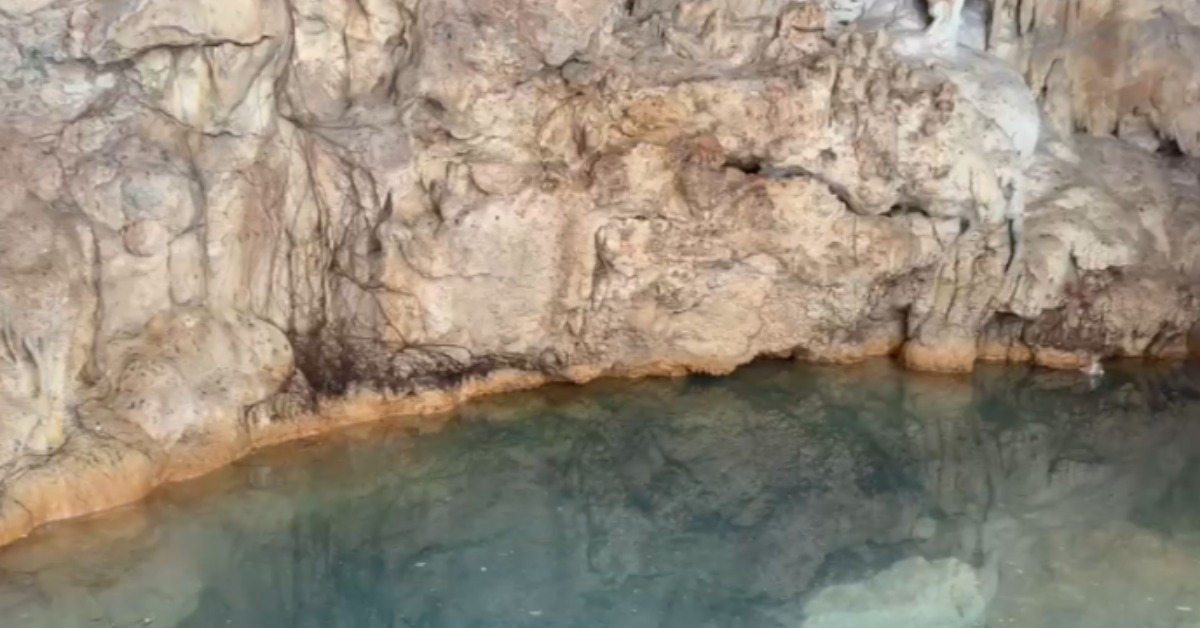
Residents also point to nearby cenotes that have long been protected by communities. Some say each settlement has its own cenote and cares for it locally.
These cenotes are not only natural swimming holes or landscape features. In the Riviera Maya, cenotes are visible openings into a larger underground water system.
That makes them both beautiful and vulnerable. A clean-looking cenote can still be affected by changes underground. Contamination may not be obvious until testing is done.
This is one reason environmental groups in the region have pushed for stronger protection of cenotes, caves, and underground rivers. The region’s growth has outpaced infrastructure in several places.
In Playa del Carmen, past warnings have already linked lack of drainage, irregular settlements, and direct wastewater discharge to risks for cenotes and the aquifer.
Public health risks are not abstract
Wastewater problems are not only environmental. They can become public-health problems when sewage reaches water used by people, animals, or local ecosystems.
Untreated or poorly managed wastewater can carry pathogens linked to diarrheal disease and other infections. It can also carry nutrients that change the balance of water systems.
For expats and long-term foreign residents, this is not just a local planning dispute. It affects the quality of life in communities across the Riviera Maya.
It also affects the region’s reputation. Playa del Carmen depends on clean beaches, cenotes, reefs, and outdoor recreation. Water-quality problems can eventually touch tourism, real estate, and public confidence.
The risk is not that every household is unsafe today. The risk is that communities can normalize improvised wastewater systems until damage is already underway.
What would need to happen next
The first step is verification. Authorities would need to test nearby cenotes, wells, or groundwater points to determine whether contamination is present.
Testing should look beyond visible signs. Water can appear clear yet still contain bacteria, nutrients, or chemical indicators associated with wastewater.
The second step is infrastructure planning. If communities are to remain where they are, they need legal and technical pathways to drainage, wastewater treatment, and safe disposal.
The third step is land regularization. Without legal certainty, residents remain stuck between public need and administrative limits. That makes long-term infrastructure harder to deliver.
The fourth step is public communication. Residents need clear information about risks, testing results, and safe handling of septic systems. Rumor and uncertainty can create fear, but silence can create a larger problem.
A warning sign for fast-growing coastal cities
Playa del Carmen’s growth has brought jobs, housing demand, and international attention. It has also put pressure on land, water, and public services.
The sewage issue in Torres de la Paz shows what happens when a city’s basic systems do not grow evenly. Roads, housing, and population can expand faster than drainage networks.
That gap can stay hidden for years. Then residents begin to notice septic problems, odors, flooding, water changes, or concerns about cenotes.
The issue now is whether officials treat the warning as an isolated complaint or as part of a larger infrastructure pattern.
For communities living without drainage, the question is basic. They need a safe way to dispose of wastewater. For Playa del Carmen, the question is larger. The city’s future depends on protecting the water beneath it.