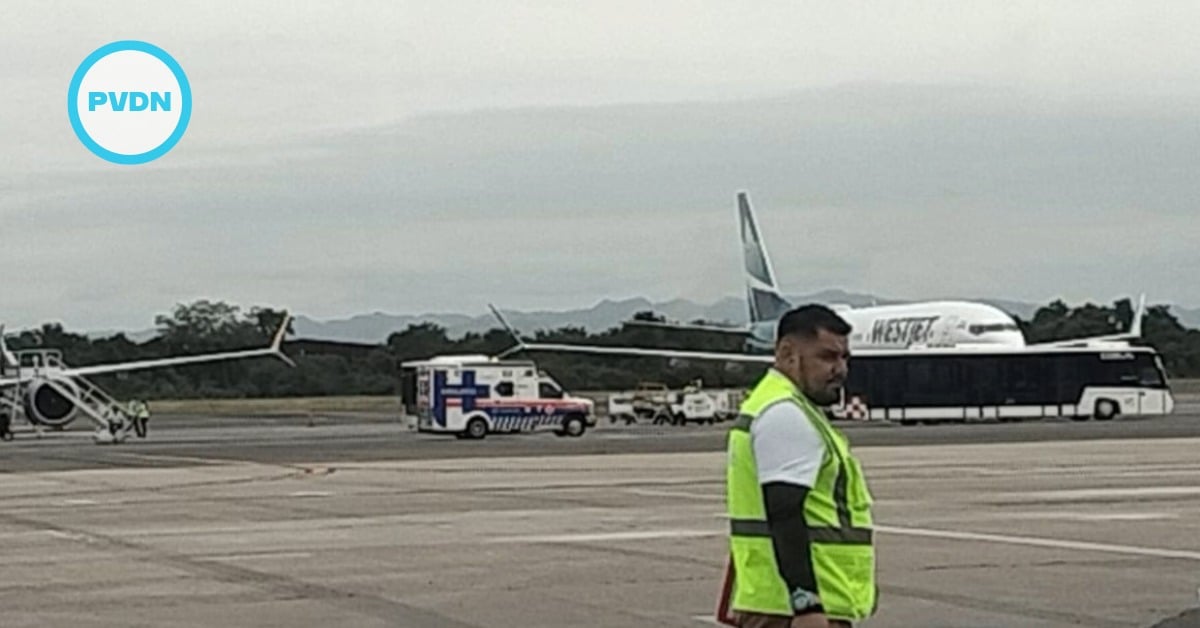
Puerto Vallarta’s year is ending on an upswing. Airport chief Omar Gildardo Torres Grajeda told the Airport Advisory Council that airlines have asked for additional winter flights, putting the airfield on track for roughly 14 percent growth in overall operations through the season. Seats are set to climb at a double-digit pace in November—above 14 percent—and remain higher in December, up about 9 percent. The U.S. market has softened slightly, he said, but Canada is stepping in with vigor, and domestic Mexico demand keeps building.
Puerto Vallarta airport growth
Recent traffic data backs up that picture. In October, Puerto Vallarta’s domestic passengers rose 5.2 percent year-over-year, while international traffic dipped 2.3 percent; overall traffic still edged up 1.7 percent for the month. Through the first ten months of 2025, the airport is up 1.6 percent in total passengers, with domestic travel jumping 10.4 percent and international down 4.9 percent—evidence that home-market flyers are carrying the load as some foreign segments cool.
The Canadian pivot is real. Canadian carriers are trimming some U.S. “sun” flying and redeploying capacity to Latin America and the Caribbean this winter. Industry schedules point to double-digit capacity growth southbound from Canada, including new service by Porter Airlines to Puerto Vallarta and more frequency from incumbents.
Air Canada’s own winter plan tells the same story. The airline is lifting seats to Latin America by 16 percent and specifically taking Vancouver–Puerto Vallarta up to daily at peak. That’s the kind of steady lift that fills hotel rooms and restaurants even if the U.S. side pauses.
Domestic travel is the other stabilizer. Across Grupo Aeroportuario del Pacífico’s (GAP) Mexican airports, domestic growth has been the main driver in 2025 while international has flattened, a pattern that shows up in Puerto Vallarta’s year-to-date numbers. When airlines add frequencies from Mexico City, Guadalajara, Monterrey, and other large cities, Vallarta’s visitor flow becomes less dependent on a single foreign market.
Behind the scenes, the airport says tighter coordination between authorities, the tourism sector, and tour operators has helped keep loads resilient despite headwinds in some international markets. Winter schedules underscore that coordination. Local officials expect the high season to reach roughly 54 routes and more than a thousand weekly operations at peak—a signal that carriers see the demand and the infrastructure to support it.
A bigger terminal for a bigger market
Capacity is the long game. The new terminal building—now past the halfway mark—has been one of the region’s most watched projects. GAP reported 54 percent completion in late August and confirmed a MX$9.2-billion budget, with plans to add gates, remote stands, and sustainability features that cut energy use. The project is targeting LEED standards with solar power and water reuse systems, not just square footage.
GAP’s broader five-year plan is to boost capacity across its network by roughly 50 percent, and in Puerto Vallarta, that includes a terminal designed to effectively double the airport’s throughput. That matters for winter peaks and for the shoulder months that rely on domestic and Canadian demand.
The timeline is in phases. GAP has guided toward initial operations in the second half of 2027, with the full build aimed at relieving the strain that accompanied a record 6.8 million passengers in 2024. While the airport has squeezed efficiency out of the existing footprint, more gates and smarter processing are the only way to unlock the next wave of growth without long lines.
That growth looks diverse by design. Canada’s airlines are leaning in this winter, and domestic Mexico demand continues to expand. If the U.S. market lags for a stretch, it won’t stall the season. With extra seats in November and December and a bigger terminal on the horizon, Puerto Vallarta enters the holidays with something airlines love: clear demand and room to grow.