PUERTO VALLARTA, Jalisco, Sept. 10, 2026 — Mexico’s Tourism Ministry plans talks with airlines over promotion support to restore reduced seat capacity serving Puerto Vallarta, Los Cabos and Cancún.
Tourism Secretary Josefina Rodríguez Zamora said Sept. 8 that federal funding would come from more than 100 million pesos added this year for tourism promotion. The amount assigned to the route program has not been set.
I reviewed the airport operator’s August traffic report. Puerto Vallarta handled 426,900 passengers, down 10.3% from August 2025. International traffic fell 26.3%, while domestic traffic declined 2%.
International travel drives Puerto Vallarta’s decline
Puerto Vallarta International Airport recorded 119,200 international passengers in August. That was down from 161,800 during the same month last year.
Domestic traffic declined from 314,000 to 307,700 passengers.
My calculation from those figures shows international travelers accounted for about 87% of the airport’s year-over-year passenger loss in August.
The airport, located along Federal Highway 200 near Marina Vallarta, serves Puerto Vallarta and communities across Río Ameca in Riviera Nayarit. Reduced capacity means fewer seats on affected services for residents, property owners, and visitors traveling through Banderas Bay.
The data do not show whether airlines raised fares or ended entire routes. They measure terminal passengers rather than ticket prices or individual flight schedules.
Local hotels, vacation rentals, restaurants and transportation providers also receive fewer potential customers when international passenger counts fall. However, airport data alone cannot measure the effect on business revenue.
The decline extends beyond one month. Puerto Vallarta handled 4.23 million passengers from January through August, 12.4% fewer than during the same period in 2025.
International traffic fell 19.7% during those eight months. Domestic traffic declined 3%.
The local results differ from the airport operator’s broader network. Passenger traffic across its 12 Mexican airports increased 2.6% in August. Guadalajara grew 10.5%, while Los Cabos declined 6.2%.
Federal and state money would promote selected routes
Rodríguez said the proposed support would fund one year of promotion for routes selected through negotiations with airlines.
“Promotion will run for one year on the corresponding route,” Rodríguez said in Spanish. “Before, the state did it; now we will work together.”
The federal government would participate alongside state tourism authorities. Public money would promote selected air services rather than operate the flights.
Rodríguez said she would meet with representatives of airlines that reduced seat capacity, primarily foreign carriers. She attributed the reductions to higher fuel costs.
The secretary said some routes could return in January. She did not identify those routes or confirm whether they include Puerto Vallarta.
The federal promotion effort could be combined with lower airport service costs. Rodríguez said those negotiations would remain between individual airports and airlines.
The proposal follows earlier flight reductions affecting Puerto Vallarta as airlines adjusted schedules in response to fuel expenses and route performance.
National tourism growth masks an uneven air market
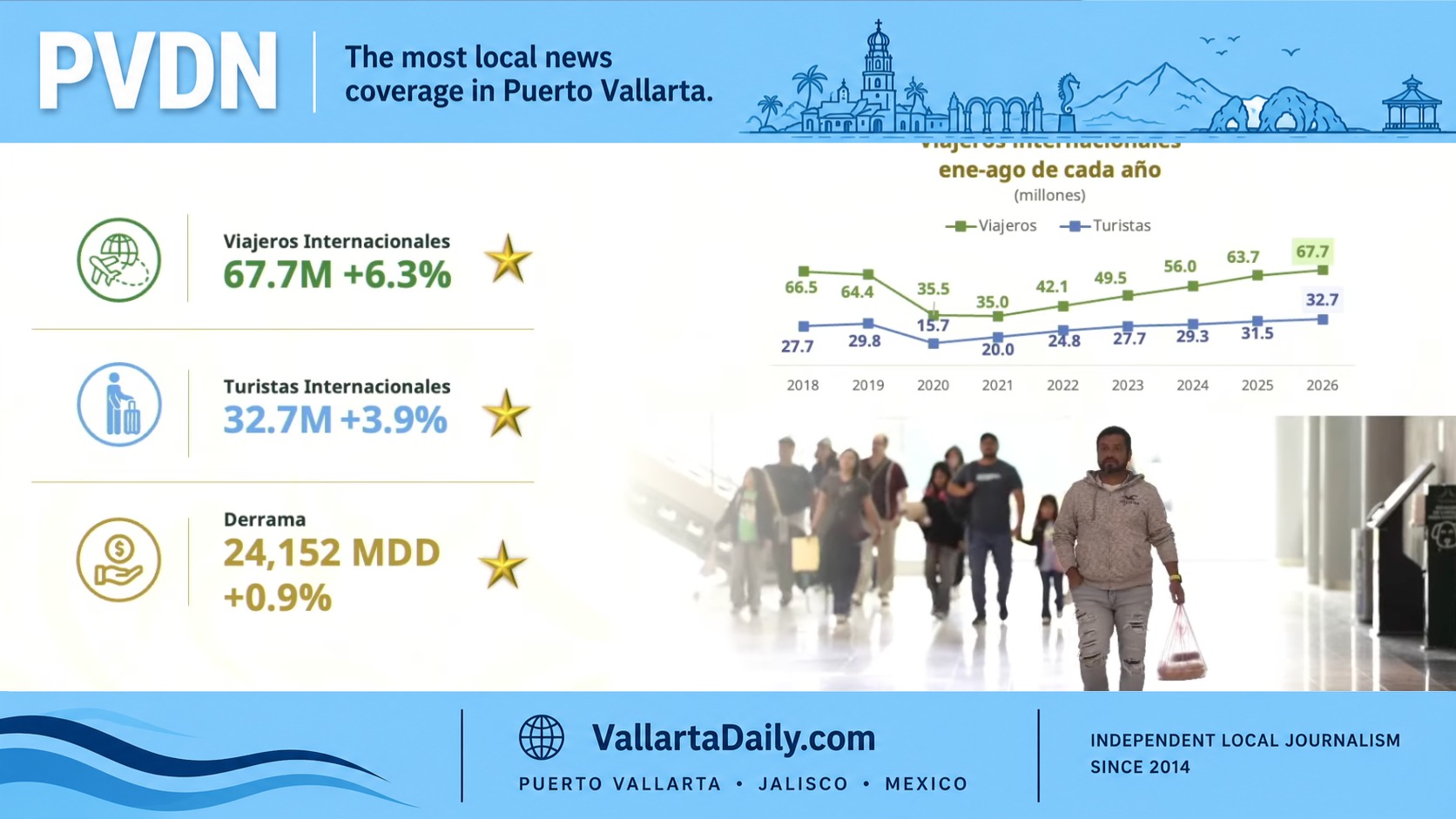
Mexico received 24.5 million international tourists during the first half of 2026, according to the federal tourism data dashboard. That represented a 4.6% increase from the same period in 2025.
Those national figures and Puerto Vallarta’s airport totals measure different periods and types of travel. National tourism data include international arrivals across Mexico, while the airport report counts domestic and international terminal passengers.
The figures still show an uneven market. National tourism can grow while international passenger traffic declines at individual resort airports.
Puerto Vallarta’s August results were reported in greater detail in PVDN’s review of the airport’s international traffic decline.
The proposed federal assistance is a route-marketing program, not direct support for travelers. Airlines will retain control of their schedules, while any airport fee reductions would require separate negotiations.