Puerto Vallarta is ending October with summer still clinging to the air. Forecasts show highs near 31–32°C and sultry nights, while a broad anticyclone keeps skies mostly clear and the heat in place. Mexico’s weather service expects fewer cold fronts than average this season and warmer minimums across much of the country. Global signals point the same way. Greenhouse gases are at record levels, and sea surfaces remain abnormally warm. Together, they tilt the odds toward a softer winter and a hotter start to 2026 for the bay.
Puerto Vallarta heat
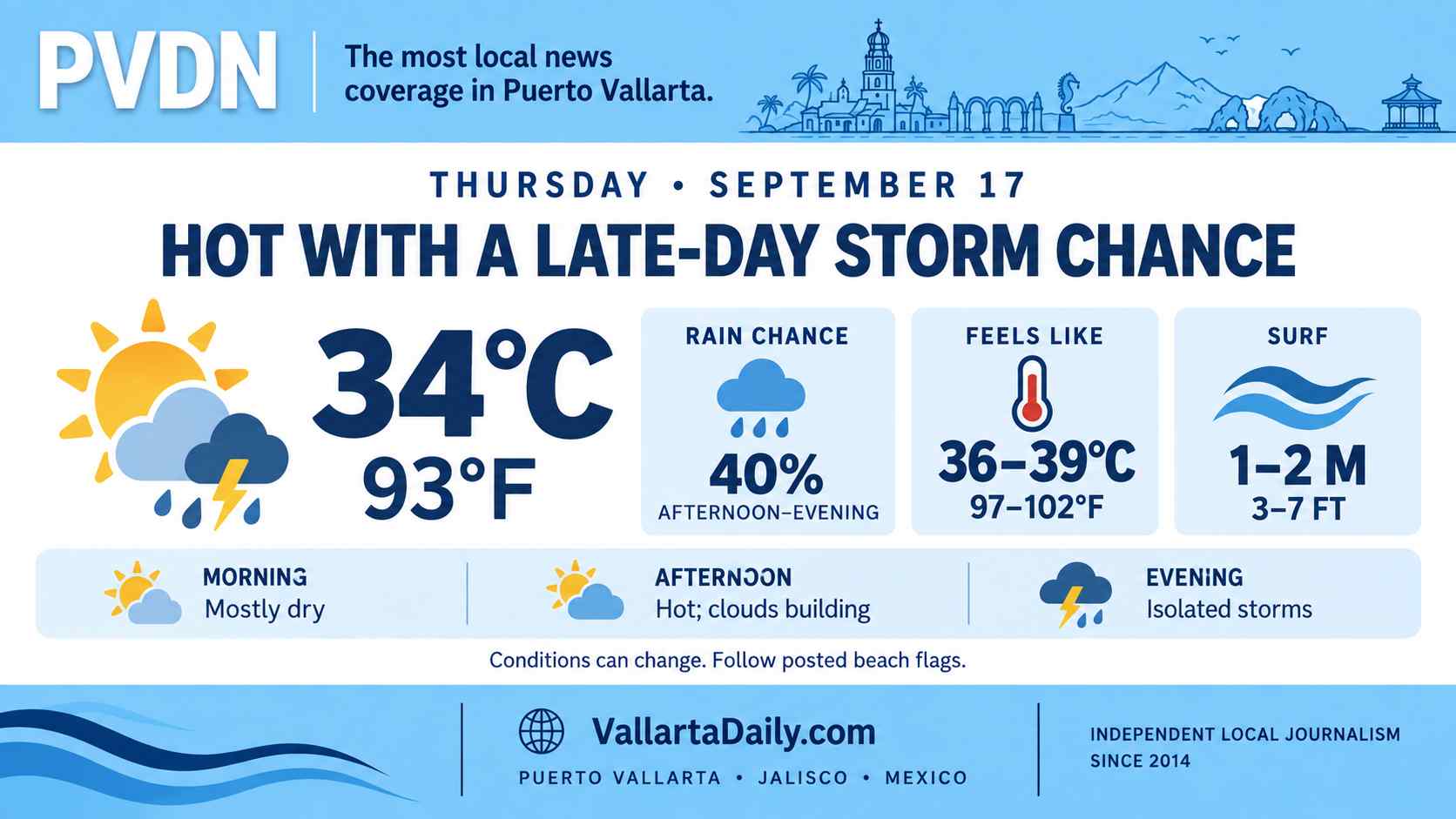
Puerto Vallarta is still sweating through late October. Daily forecasts around the bay have hovered near 31–32°C, a profile more like mid-summer than shoulder season.
A big piece of the pattern is a mid-autumn anticyclone sprawled over large parts of Mexico. High pressure suppresses clouds, traps daytime heat, and limits cooling at night. That setup has been flagging in national weather briefs this month, even as cold fronts clip the north and Gulf.
Mexico’s own outlook suggests the warmth will not fade quickly. The Servicio Meteorológico Nacional expects 48 cold fronts this 2025–2026 season, a touch below the historical average, and projects winter minimum temperatures trending warmer than usual in many regions. The agency’s breakdown points to fewer truly cold nights, especially outside the high country.
Warmer winter, fewer fronts
Context from outside Mexico points in the same direction. The UK Met Office projects 2025 will likely rank among the three warmest years on record, with a global average 1.29–1.53°C above the pre-industrial baseline. The office also notes that El Niño nudged recent global spikes, but the underlying driver is the steady build-up of greenhouse gases.
Those gases are still rising fast. The World Meteorological Organization reports atmospheric CO₂ jumped by about 3.5 ppm from 2023 to 2024, the most significant annual increase in the modern record, with methane and nitrous oxide also at record highs.
The oceans are carrying that heat too. Copernicus data show that global sea-surface temperatures remained well above average this year, with September 2025 ranking as the third-warmest on record. Persistently warm water helps keep nights muggy along Mexico’s Pacific coast and can blunt the bite of early-season cold fronts inland.
For Puerto Vallarta, that adds up to a familiar feeling as October closes: sticky afternoons, slow-to-cool evenings, and only brief relief when a front reaches the Gulf. The local signal matches the national guidance and the global backdrop. Barring a sharp pattern change, Puerto Vallarta heat will remain a storyline into early winter—and likely into 2026—just as regional meteorologists have warned.