June is when Puerto Vallarta starts to feel like a different town.
The first real rains are close. The hills begin to green up. The air gets heavier. Restaurants shift into a slower summer rhythm. Those of us who live here start checking drains, watching the sky in the late afternoon, and wondering whether the power will hold when the first big storm rolls through.
Vallarta is still Vallarta. But June brings several stories worth paying attention to: water pressure, storm season, public safety concerns, World Cup travel pressure in Jalisco, airport traffic, inflation, and the peso’s continued bite on dollar-based budgets.
Here’s what matters, and what I would keep an eye on next.
The rainy season is arriving, and this is the month to prepare before things get messy
Puerto Vallarta’s rainy season rarely eases in politely. One week, everyone is complaining about the heat and dust. Then suddenly the streets are rivers, the mountains are wrapped in clouds, and everyone remembers which parts of town flood first.
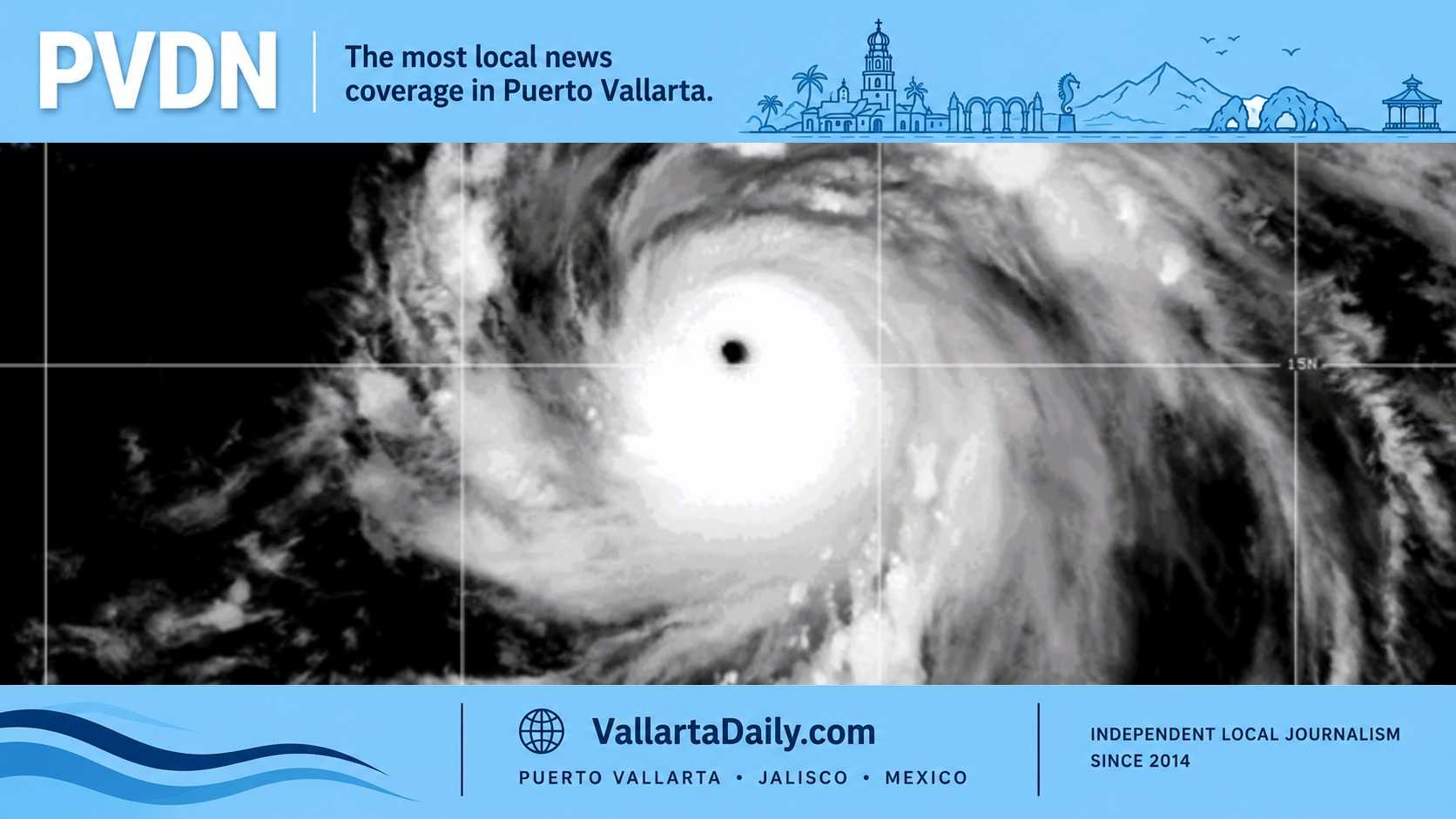
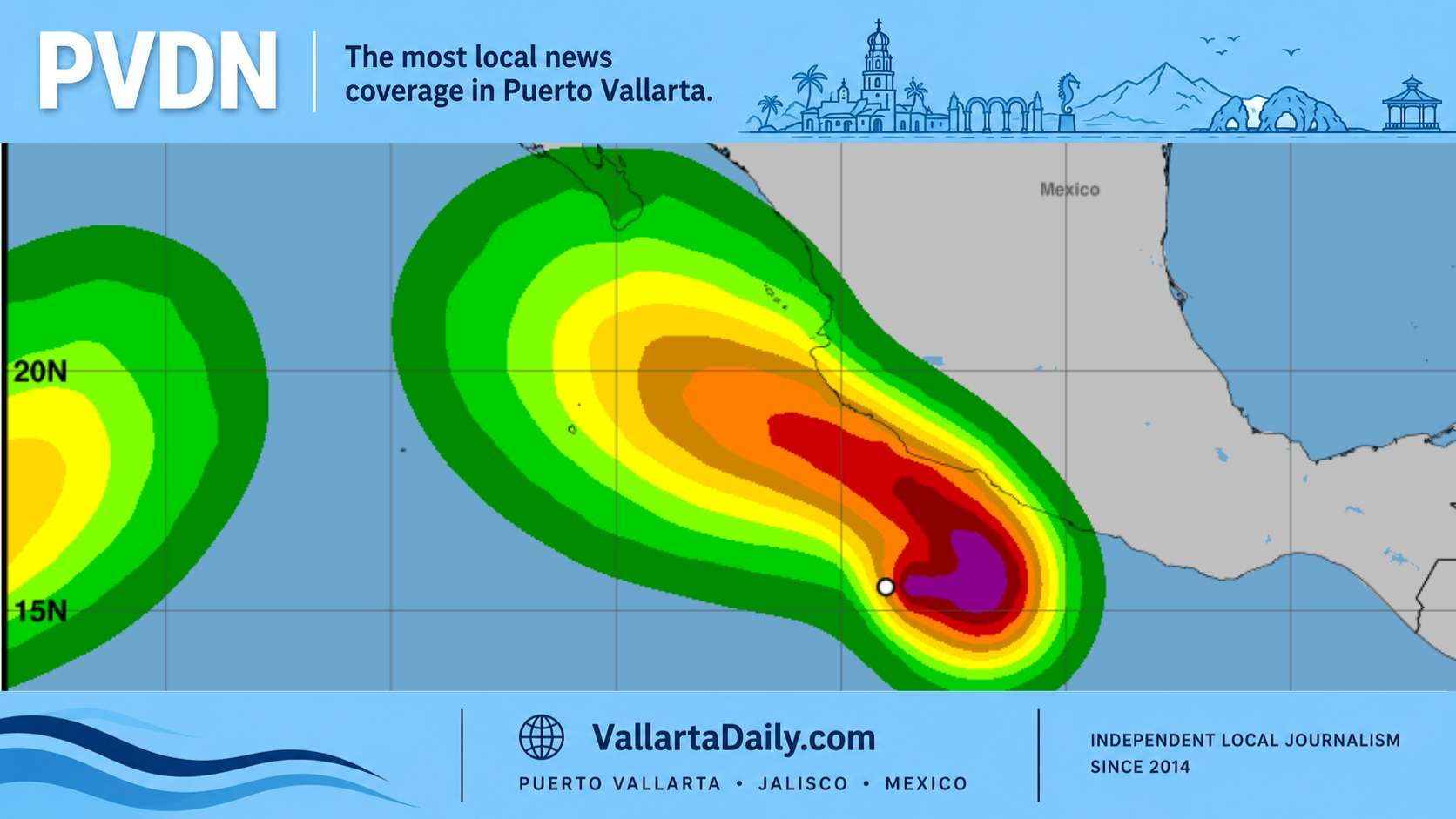
The Eastern Pacific season is already active. The National Hurricane Center was issuing advisories on Tropical Storm Amanda as of June 5, while also watching another area off southern and southwestern Mexico with a high chance of development over the next seven days. Amanda itself was well away from land, but the larger message is clear: the Pacific basin is awake.
For Vallarta residents, the first concern is usually not a direct hit from a hurricane. It is the ordinary chaos of heavy tropical rain: flooded intersections, clogged drains, falling branches, roof leaks, brief power cuts, internet outages, and the joy of discovering which window seal failed sometime during the dry season.
This is the week to do the boring things that save you trouble later. Clear your roof drains. Check your terrace. Charge the battery packs. Keep drinking water on hand. If you live in a condo building, ask about pumps and backup power before the first serious storm, not during it.
Water service had a good May, but the long-term problem has not gone away
SEAPAL reported what it called a historic May, with 98 percent potable-water coverage. That is good news, especially after the dry-season anxiety many neighborhoods have lived with in recent years.
But this is where we need to hold two ideas at once. A better month matters. It means fewer homes waiting for pressure, fewer emergency calls, and fewer people rearranging daily life around water. But one strong month does not erase the deeper issue: Vallarta has grown faster than its infrastructure.
SEAPAL also reported more than 6 million pesos in May spending on pumps, emergency plants, and preventive drainage work ahead of the rainy season. That kind of maintenance is not glamorous, but it is exactly the work people notice only when it fails.
The bigger item remains SEAPAL’s proposed 900-million-peso water intake project at the Mascota and Ameca rivers. The agency says current production is around 1,342 liters per second, while demand can reach 1,480 liters per second. That gap explains why water should remain near the top of the local watchlist for homeowners, renters, property managers, and anyone thinking about buying here.
My practical advice: when looking at a rental, condo, or home, stop treating water as a minor question. Ask about cistern capacity, pump maintenance, past outages, drainage, and whether the building has a plan when both water and electricity become unreliable during storms.
The safety story people are talking about needs calm, not silence
The local story that has understandably unsettled many people is the investigation into the deaths of three women found in Puerto Vallarta in May.
Jalisco prosecutors have said they are investigating the cases, which were registered on May 10, May 15, and May 21. They have also said they do not have objective or scientific evidence pointing to a serial killer, despite speculation circulating in local and international media. According to the prosecutor’s information reported by People, the women died in different ways, and the investigations remain open.
This is one of those stories where two things can be true.
First, the public should not run with unverified claims. Rumor moves faster than fact here, especially when a case touches tourism, women’s safety, and violent crime.
Second, people are not wrong to feel uneasy. When three women are found dead in a short period, residents deserve careful answers, timely updates, and visible follow-through from authorities.
For now, I would not treat the “serial killer” theory as established. I also would not dismiss the concern behind it. The useful thing for readers is to watch for official investigative updates: arrests, forensic links, case separations, cause-of-death clarifications, or any change in public-safety posture from Jalisco authorities.
For daily life, the advice remains practical: use regulated taxis or app-based transportation at night, avoid isolated areas after dark, let someone know where you are going, and be careful about repeating claims that have not been confirmed.
Tourism is shifting into summer mode, but World Cup traffic could complicate regional travel
Restaurant Week continues through June 10, which gives residents and frequent visitors one of the better excuses to get out before the full summer slowdown sets in. The event runs from May 15 to June 10 in Puerto Vallarta and Riviera Nayarit, with participating restaurants offering three-course menus.
The bigger travel variable this month is not actually in Vallarta. It is Guadalajara.
Guadalajara is hosting four World Cup matches this month, on June 11, 18, 23, and 26, including Mexico vs. South Korea on June 18. Jalisco tourism officials are openly promoting side trips to Puerto Vallarta and the coast as part of the World Cup travel experience.
That does not mean Vallarta will suddenly feel like a host city. It is not. But it could mean some spillover in hotel searches, airfares, private transfers, buses, and regional travel patterns, especially around match dates.
The latest available GAP airport report showed Puerto Vallarta passenger traffic down 17 percent in April compared with April 2025, with international traffic down more sharply than domestic. That is worth watching because a town can feel busy in restaurants and still have softer air numbers underneath.
If you are flying through Guadalajara or Mexico City this month, leave yourself more breathing room than usual. World Cup visitors, protests, weather, and normal summer disruptions can all pile up quickly.
Travel advisories: the fine print matters more than the headline
The U.S. State Department reissued its Mexico advisory on May 29. Mexico remains Level 2 overall, “Exercise increased caution.” Jalisco is listed as “Reconsider travel” due to terrorism, crime, and kidnapping risks, but the advisory also states there are no U.S. government employee travel restrictions for Puerto Vallarta, the neighboring Riviera Nayarit, the Guadalajara Metropolitan Area, Chapala, or Ajijic.
That distinction matters. It is the difference between a broad state-level warning and the specific places where official employee travel is still permitted.
Canada continues to advise a high degree of caution in Mexico, with avoid-nonessential-travel warnings for Jalisco within 50 kilometers of the Michoacán border and for parts of Nayarit near the Sinaloa and Durango borders. Canada also has specific World Cup travel guidance for Canadians heading to Mexico during the tournament.
Do not drive between cities after dark. Use app-based or regulated taxis. Avoid remote roads alone. Keep your passport, residency card, insurance information, and emergency contacts easily accessible. And if you are headed inland, check the route, not just the destination.
The peso is still changing the math for foreign residents
Inflation has cooled from the worst of the post-pandemic period, but daily life still does not feel cheap. INEGI reported annual inflation of 4.11 percent in the first half of May, with core inflation at 4.22 percent. Items pushing prices higher included tomatoes, detergents, and LP gas, while electricity, tomatillos, and eggs helped pull prices in the other direction.
For many foreign residents, though, the larger issue is still the exchange rate.
The peso has been trading around the low 17s per U.S. dollar in early June. That is great if you earn in pesos and buy imported goods. It is less pleasant if your pension, savings, or freelance income is in U.S. or Canadian dollars. Banxico data showed the dollar-peso rate in the 17.3 range at the start of June, and Reuters reported a similar level this week.
This is the part that sneaks up on people. Your rent may not change. Your grocery habits may not change. Your restaurant choices may not change. But if the exchange rate moves against you, your real monthly budget changes anyway.
El País reported a similar squeeze in remittances: money sent to Mexico rose in dollar terms in April, but lost purchasing power once inflation and peso strength were accounted for. That same math applies to many retirees and remote workers here.
My advice: build your household budget using a less favorable exchange rate than today’s. If your Vallarta life only works at 18.5 or 19 pesos to the dollar, you are more exposed than you may feel right now.
National protests may not be local, but they can still affect your travel
The CNTE teachers’ protests are one of the national stories to keep on your radar this month.
The conflict is centered on pensions, education policy, and labor demands, but the timing makes it especially important. The World Cup begins June 11, and teachers have been under increasing pressure in Mexico City. El País reported rising tensions, protest camps, and pressure on the government ahead of the tournament.
The federal government has proposed strengthening PENSIONISSSTE and creating a public insurer to manage monthly pension payments for retirees, but negotiations had not resolved the conflict as of June 4. Protesters also expanded actions to toll booths in Mexico City and other strategic points.
If you have a consular appointment, medical procedure, residency appointment, connecting flight, or family travel through Mexico City, give yourself extra time and check conditions before moving around the capital.
Practical takeaways for June
For residents, this is the month to get your house in order before the storms become routine. Water, drainage, electricity, medications, documents, and emergency contacts are not dramatic topics, but they are the things that matter when the rain starts coming down sideways.
For frequent visitors, June can be a lovely month if you are flexible. Eat early, do outdoor plans in the morning, expect heavy rain in the afternoon or evening, and do not build tight travel plans around stormy days.
For homeowners and condo boards, water and drainage should be treated as property-value issues. A nice view does not help much if the cistern runs dry or the parking garage floods.
For retirees and dollar-income households, review your budget now. The peso does not have to move much to make Vallarta feel more expensive.
For anyone traveling around Jalisco, do not let familiarity make you careless. The main tourist zones are one thing; rural roads and late-night intercity drives are another.
What to pay attention to:
The women’s death investigations. We need official answers, not rumors. Watch for case updates from Jalisco prosecutors.
First major rains in Vallarta. The first heavy storms will tell us a lot about drainage, pumps, road flooding, and neighborhood-level weak spots.
SEAPAL’s rainy-season performance. May’s water coverage was encouraging. June and July will test a different side of the system.
Airport traffic. May and June passenger numbers will show whether Vallarta’s air market is softening or whether summer and World Cup spillover are helping.
World Cup pressure in Guadalajara. Match days may affect airfares, hotel rates, bus schedules, private transfers, and road traffic.
The CNTE conflict. If protests continue, travel in Mexico City could remain unpredictable.
The exchange rate. A peso near 17 feels very different from 18.5 or 19 for foreign residents.
Pacific storm development. The important storm is not always the one that makes the headlines. Sometimes it is the slow system that brings days of rain.
June checklist for Vallarta residents
- Clear roof drains, patios, gutters, and terrace scuppers.
- Keep drinking water stored for several days.
- Charge battery packs and flashlights.
- Keep some cash at home in case ATMs or card systems are down.
- Refill essential prescriptions before a storm week.
- Photograph passports, residency cards, insurance policies, prescriptions, and pet vaccination records.
- Ask your building administrator about pumps, cisterns, backup power, and elevator procedures.
- Check your car tires and wipers before the first major storm.
- Avoid walking through floodwater. Open drains and hidden debris are real hazards.
- Watch for mosquito breeding spots after standing water appears.
Closing thought
Thank you for being a VallartaDaily Supporter.
This briefing is meant to give you the kind of local read we all need but rarely get from headline feeds: what changed, what matters, what is noise, and what deserves a closer look.
As June moves toward July, we will keep watching the rains, the water system, safety investigations, airport traffic, the peso, and the practical stories that affect life here.
Stay dry, stay prepared, and check your roof drains before the first big storm does it for you.