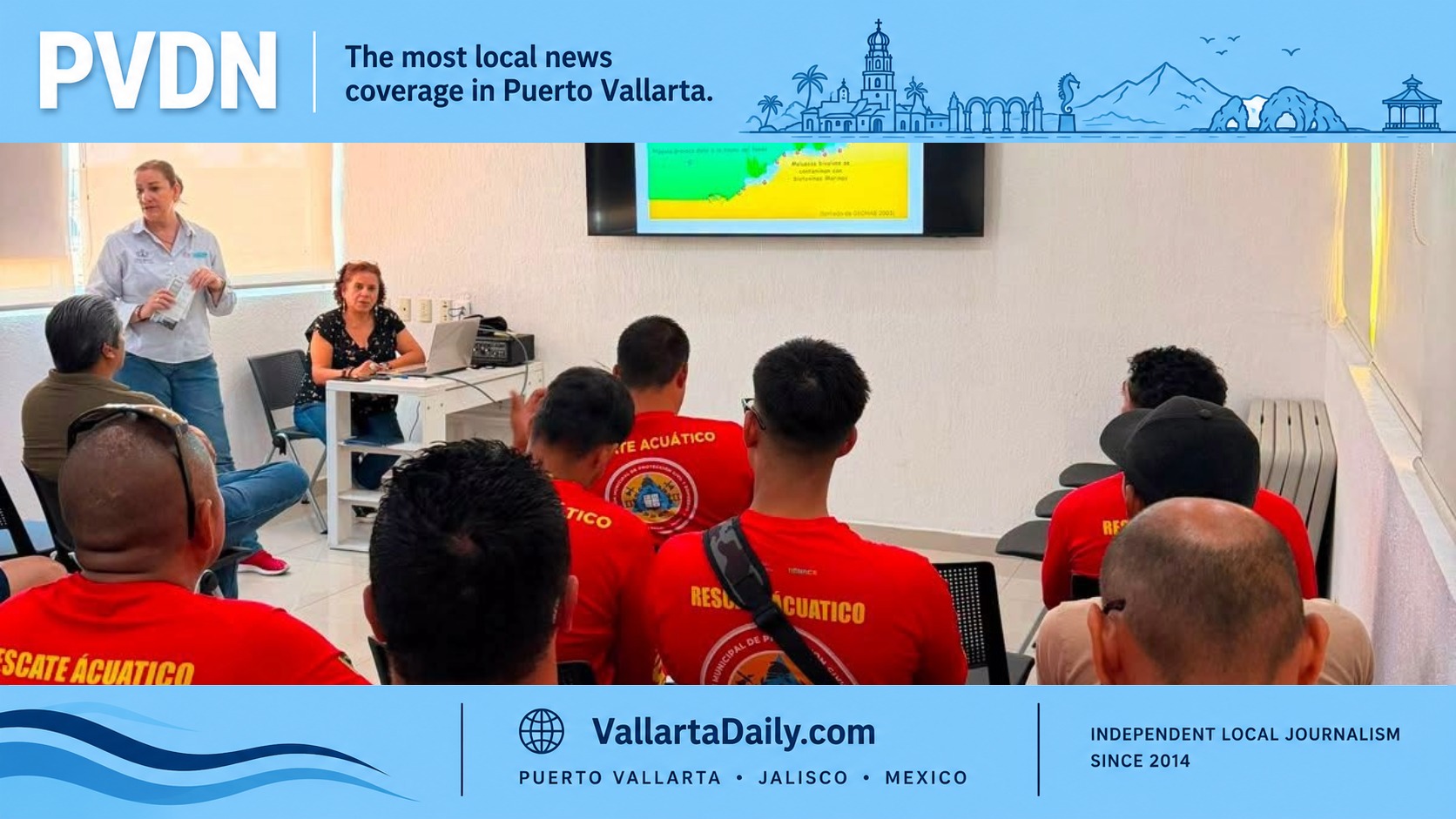
Puerto Vallarta, Jalisco, July 24, 2026 – Puerto Vallarta lifeguards have received specialized training to identify possible harmful algal blooms along the city’s coastline, adding daily beach patrols to the early-warning network used by state health authorities.
The city’s lifeguards participated in a workshop led by Dr. Alina Quintero Ramírez, coordinator of the Eighth Health Region within the Jalisco Commission on Health Risk Protection, known as COPRISJAL. The municipal government said the instruction covered surveillance and recognition of conditions associated with red tide.
Lifeguards are positioned to notice changes that may otherwise go unreported between formal sampling visits. Those signs can include unusual water coloration, concentrated algae, dead fish, or irritation reported by swimmers. A suspected bloom still requires evaluation by health authorities.
The distinction between observation and confirmation is important. Water does not always turn red during a harmful algal bloom, and visible discoloration does not automatically mean toxins are present. The federal COFEPRIS surveillance program relies on seawater sampling, identification of phytoplankton, and testing of marine biotoxins when sanitary risks are suspected.
Some bloom-producing organisms can release toxins that accumulate in oysters, clams, mussels and other bivalve shellfish. Dense blooms can also reduce oxygen in the water or damage fish and other marine life even when the organisms involved are not toxic to people.
Puerto Vallarta has dealt with recent warnings. Purple flags were raised at Los Muertos, Burros, Malecón and Camarones beaches on April 16 after authorities reported harmful algae along parts of the coastline. Swimmers were advised to avoid contact with the water in those zones.
The new training could shorten the time between a visible change at a beach and a report reaching COPRISJAL. Any official response would depend on the location, laboratory findings, and potential exposure risk.
Beach conditions can differ along the city’s shoreline and change during the day. A posted purple flag or direct instruction from a lifeguard should be treated as a beach-specific warning, while the training announcement alone should not be interpreted as evidence that red tide is currently affecting Puerto Vallarta.