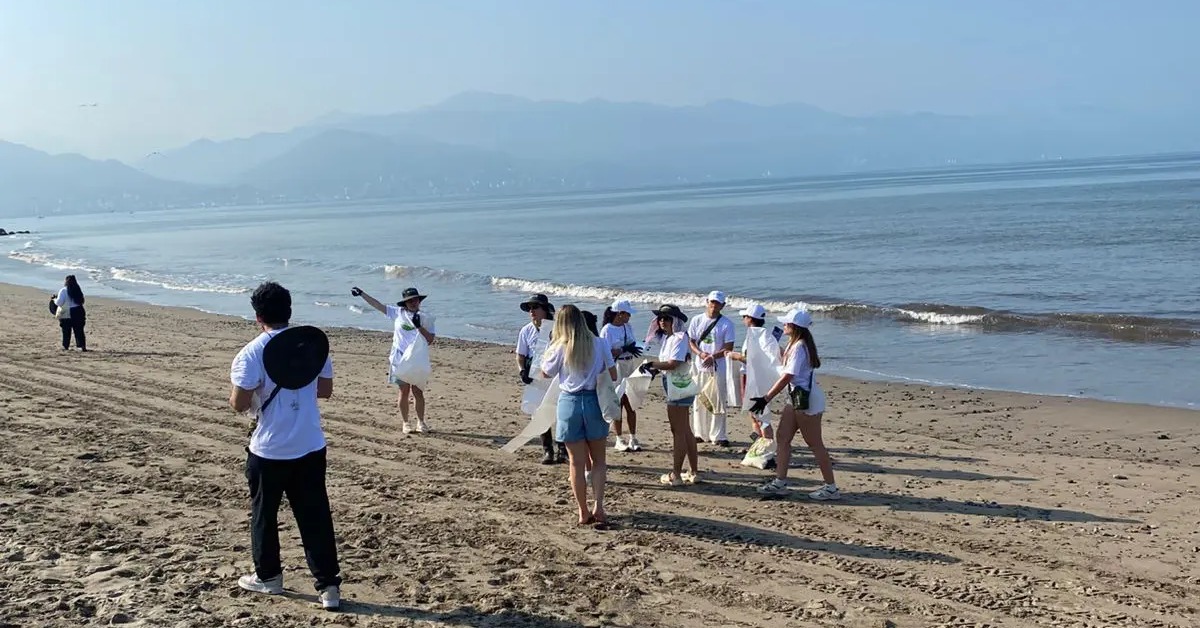
A cleanup at Boca de Tomates beach in Puerto Vallarta removed 300 kilos of waste from roughly 1.5 kilometers of coastline, according to information shared around International Mother Earth Day activities.
The effort brought together local authorities, environmental groups, volunteers, and private organizations. The cleanup was coordinated with the municipal government, the Boca de Tomates Turtle Camp, and federal environmental authorities.
Groups and organizations involved included WRI México, WWF México, and Garnier México, along with citizens who joined the beach cleanup.
The collected waste included plastics, containers, and larger discarded items. These materials can harm coastal wildlife and marine ecosystems, especially in areas where beaches connect to wetlands, estuaries, and nesting habitats.
Why this beach matters in Puerto Vallarta
Boca de Tomates is not one of Puerto Vallarta’s polished tourist beaches. It sits on the northern side of the municipality, near the airport area and close to coastal wetlands.
For many locals and repeat visitors, the area is known for seafood ramadas, a quieter beach setting, and nature rather than resort-style swimming. It is also known for wildlife, including birds, crocodiles, and sea turtles.
That setting is why a cleanup there carries more weight than the number alone suggests. Trash left on a beach can be carried by wind, rain, runoff, tides, and human activity. A plastic bottle or bag may not stay where it was dropped.
In a place like Boca de Tomates, waste can affect sand, water, nesting areas, and nearby habitat. It can also reach the wider Bay of Banderas, where marine life and tourism both depend on cleaner coastal conditions.
A local cleanup with a larger message
The cleanup was carried out in connection with International Mother Earth Day, observed each year on April 22. The date is often used by governments, schools, civic groups, and environmental organizations to promote conservation work.
In Puerto Vallarta, beach cleanups are not symbolic only. They address a visible, recurring problem in a city whose economy is closely tied to its coastline.
Beaches are part of daily life here. Residents walk them, tourists visit them, restaurants depend on them, and wildlife uses them. When waste accumulates along the shore, the impact affects all those groups.
For foreign residents, the issue is also practical. Clean beaches affect quality of life, property values, tourism confidence, and the city’s public image. They also shape how visitors understand Puerto Vallarta beyond the hotel zone.
Why 300 kilos is still significant
The figure of 300 kilos may seem modest compared to larger cleanup drives. But spread across 1.5 kilometers, it works out to about 200 kilos of waste per kilometer of beach.
That is not a small amount for a single local effort. It also does not include trash that may already have washed away, been buried, or broken into smaller pieces.
Plastic waste is especially difficult because it does not simply disappear. It breaks into smaller fragments, which can be harder to collect and easier for animals to ingest.
Marine debris can harm wildlife through entanglement, ingestion, or habitat damage. For sea turtles, birds, and marine mammals, plastic and fishing-related debris can be mistaken for food or become a physical trap.
The role of the Boca de Tomates Turtle Camp
The participation of the Boca de Tomates Turtle Camp is important because the area is linked to sea turtle protection work.
Mexico has long treated sea turtle conservation as a national environmental priority. Sea turtles are protected under federal rules, and the country has maintained a ban on their capture since 1990.
Turtle camps help protect nests, monitor beaches, and educate the public. Their work depends on safe beach conditions. Trash, lights, vehicles, dogs, poaching, and human disturbance can all complicate conservation work.
A cleaner beach does not solve every threat to turtles. But it reduces one avoidable risk in an area already under pressure from tourism, urban growth, and coastal activity.
Shared responsibility on the coast
The cleanup also points to the limits of one-day campaigns. Removing waste is necessary, but prevention matters more.
Some beach trash comes from visitors who leave items behind. More comes from streets, streams, and drainage routes after rain. Then, some can arrive by tide from elsewhere along the coast.
That means the solution cannot fall only on volunteers. It also depends on waste collection, enforcement, public education, business practices, and individual behavior.
For residents and visitors, the basic steps are simple. Carry trash out, avoid single-use plastics when possible, use proper containers, and never leave food packaging, bottles, cigarette butts, or fishing line on the beach.
For businesses and authorities, the issue is larger. Public bins, regular collection, cleanup coordination, and clear rules all matter in coastal areas that receive steady local and visitor traffic.
A reminder for residents and visitors
Boca de Tomates is a reminder that Puerto Vallarta’s environment extends beyond the Malecon and the most photographed beaches.
The city’s northern coastline includes working, living, and natural spaces that do not always receive the same attention as central tourist areas. Yet those places still support the wider bay.
The latest cleanup shows that local groups are willing to organize and respond. It also shows that waste remains a persistent pressure on the coast.
For a city built around beaches, restaurants, marine life, and outdoor living, keeping trash out of coastal ecosystems is not a side issue. It is part of protecting the place that residents and visitors share.