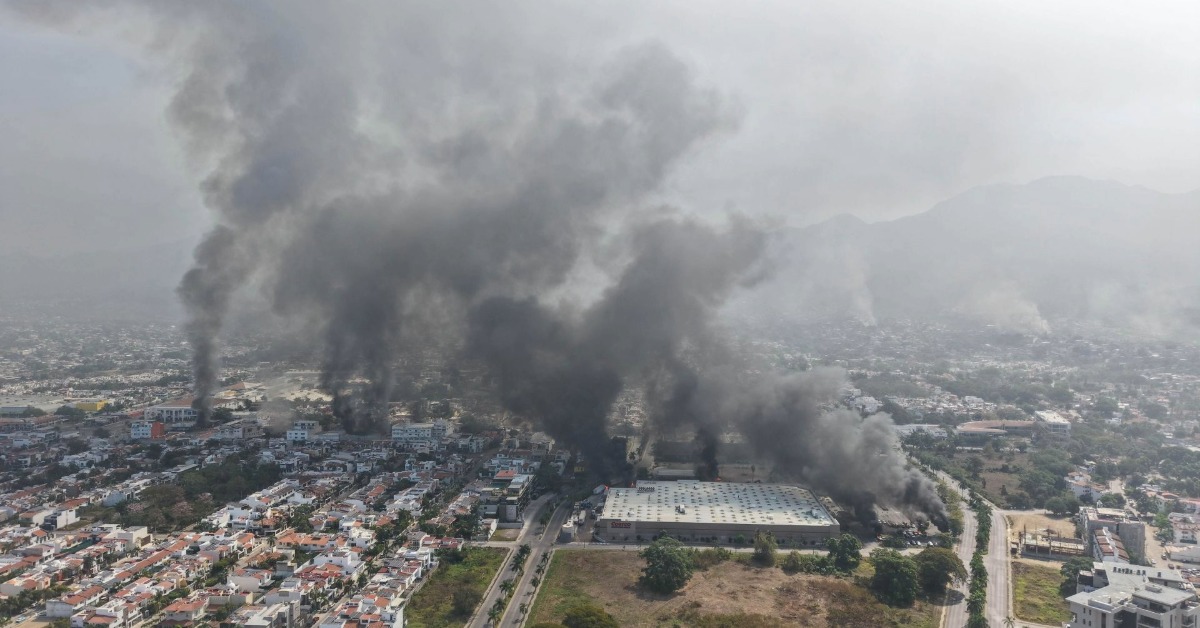
Puerto Vallarta woke up on Monday, February 23, to a city still processing what happened the day before. The most visible signs were practical and jarring at the same time: burned-out vehicles awaiting tow trucks, the smell of smoke lingering near key avenues, and an unusually heavy security presence at intersections, commercial corridors, and neighborhoods that saw incidents on Sunday.
The unrest began on February 22 after a federal operation in Jalisco targeting the CJNG’s leader, Nemesio Oseguera Cervantes, known as “El Mencho,” and quickly rippled along the coast. Overnight, the mood shifted from shock to caution. In some areas, residents ventured out early to check on relatives and property, while others stayed home, waiting to see which rumors would prove true and which would fade with daylight.
What authorities say happened in Puerto Vallarta
Municipal authorities issued a preliminary summary of the first wave of reports on Sunday, describing vehicle fires on multiple roads and incidents affecting commercial areas, including shopping zones and convenience stores. The same initial bulletin cited reports of ponchallantas thrown onto a main route near the Ameca bridge, damage at the Municipal Market in the 5 de Diciembre neighborhood, and fires at several businesses across the city.
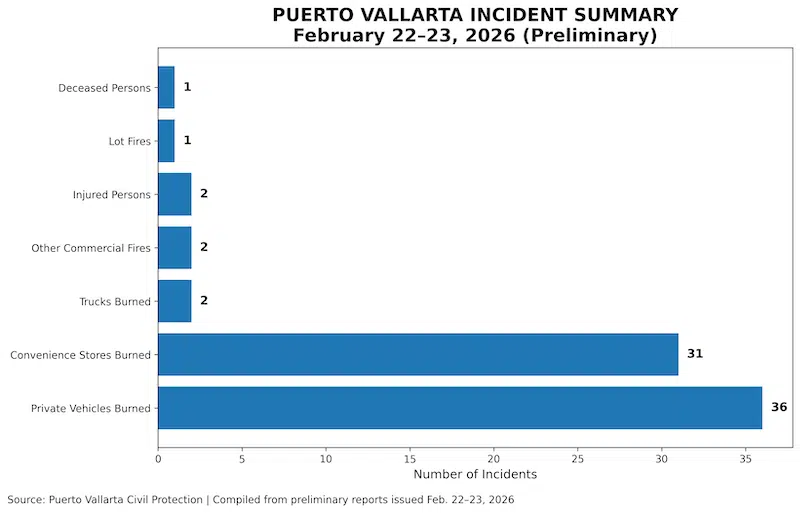
By Monday morning, Civil Protection’s preliminary tallies reflected a long, grinding workday for firefighters and emergency crews. Those figures counted dozens of separate fire-related responses across the city, including burned vehicles and attacks on convenience stores, as well as a smaller number of incidents involving other commercial properties and homes. Officials described the numbers as preliminary and subject to change as reports were confirmed and duplicate calls were sorted out.
Looting became a second, more chaotic layer of the crisis. Municipal police said they detained 12 people accused of looting convenience stores across different neighborhoods, adding that some of those detained were minors. Authorities said the arrests followed coordinated patrols and emergency response efforts conducted overnight.
One point that remained especially sensitive on Monday was the situation linked to the Ixtapa penitentiary. Reporting tied to the broader unrest indicated a correctional officer died amid incidents connected to the facility. Beyond that, local officials had not issued a single, comprehensive casualty accounting for Puerto Vallarta by Monday morning, and the overall picture was still developing.
What to expect in Puerto Vallarta today
For most residents, Monday is likely to feel like a day of partial reopening rather than a clean return to normal. City crews are expected to continue removing burned vehicles that blocked roadways and slowed traffic, and that work can create temporary lane closures and bottlenecks even when there is no active security incident.
Security forces are also expected to maintain a visible posture, particularly around commercial areas that were hit and along major arteries where fires and blockades were reported. Residents should anticipate more checkpoints, more patrol units, and a quicker police response to reports of suspicious activity, especially near convenience stores and pharmacies that were targeted during the unrest.
Some services are already formally disrupted. Local authorities said classes were suspended Monday in Puerto Vallarta and across Jalisco. In the financial sector, multiple banks announced preventive branch closures in Jalisco for Monday, and customers were advised to rely on digital banking and ATMs where available. That matters on the ground, because even when ATMs function normally, lines and cash availability can change quickly in a tense situation.
Travel may also remain uneven. Viva Aerobus said access issues and staffing shortages affected operations to and from Puerto Vallarta and Guadalajara, and the airline offered passengers options to change flights without penalty or to request refunds. If you’re flying today, expect last-minute updates and longer-than-usual transit times to and from the airport, depending on road conditions and staffing.
For expats living in the city, the most practical expectation is a slower rhythm: fewer businesses open early, more “wait and see” decisions by employers and schools, and a city watching official updates closely. If you need to move around, give yourself extra time, stick to main routes, and avoid areas where crews are still clearing damaged vehicles.
Staying informed without amplifying the panic
The information environment after a night like Sunday is its own hazard. Officials have repeatedly urged residents to avoid spreading unverified claims and to rely on official channels for updates. That advice is not abstract. In fast-moving situations, a false report can send people toward danger or spark unnecessary runs on fuel, cash, and supplies.
Puerto Vallarta’s immediate priority on Monday is stabilization: clearing roads, deterring opportunistic crime, and keeping the public informed as the situation evolves. The city is not treating this as “over,” and residents shouldn’t either. It is a day to stay alert, keep plans flexible, and take cues from confirmed updates rather than the loudest messages circulating online.