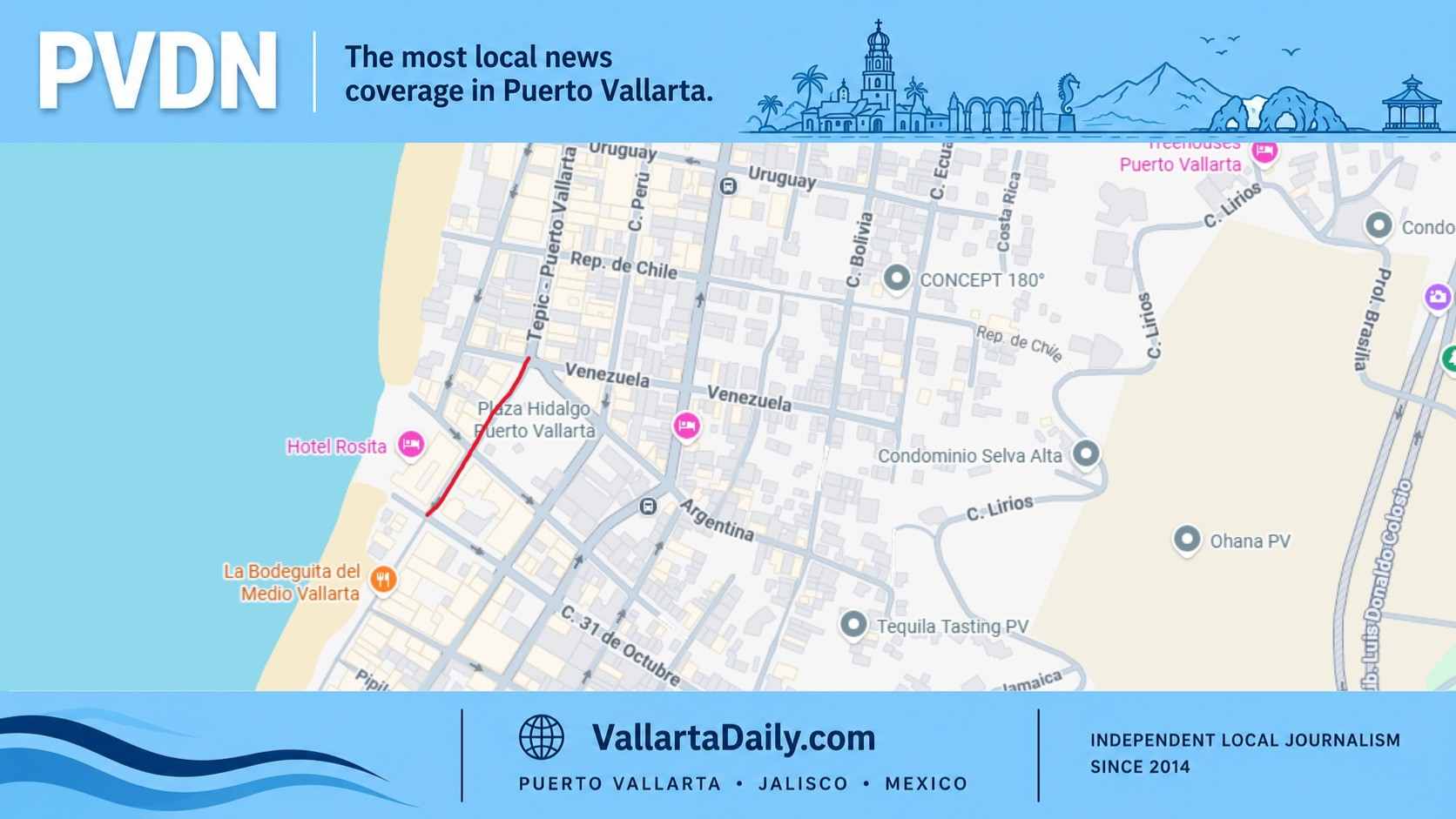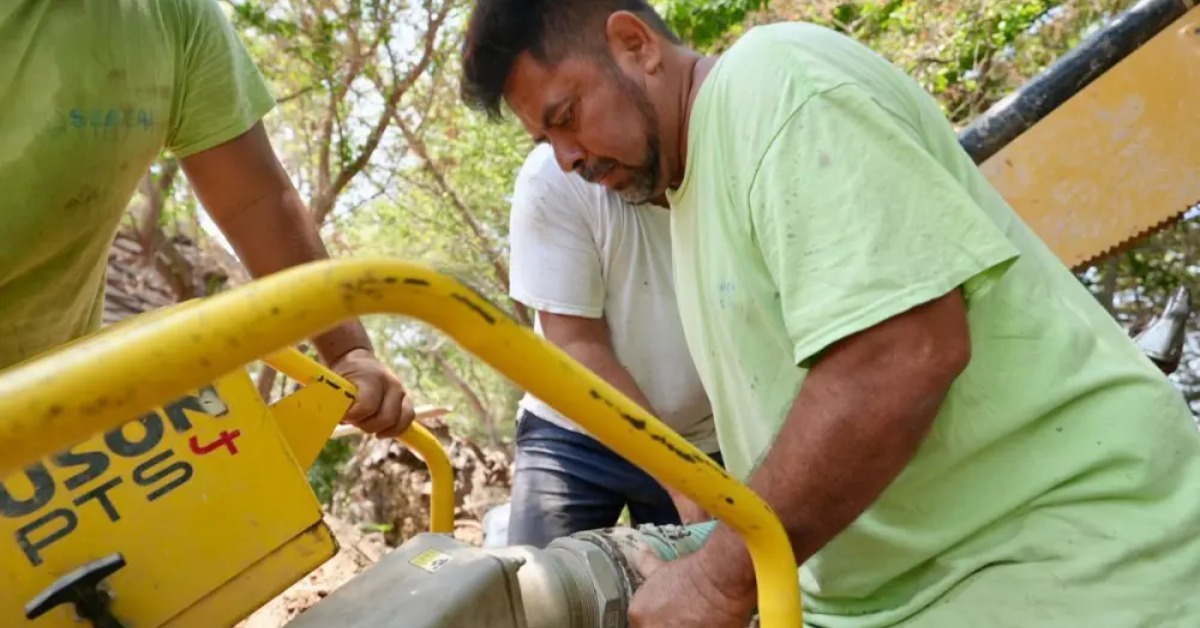
SEAPAL is working to repair a collapsed 24-inch water line that serves Puerto Vallarta’s north side, after the damage triggered one of the city’s largest recent supply disruptions. The break was detected Tuesday morning in Las Juntas, near state highway 544, on the line that carries water from the Pozo Radial to the Cerro del Machete treatment plant. By late Tuesday, the failure had left 143 colonias and subdivisions with little or no service, according to the official estimate.
The affected area is broad. It includes the hotel strip, the upper parts of El Pitillal, Las Juntas, parts of Ixtapa, and neighborhoods such as Versalles, Fluvial Vallarta, Aramara, Vallarta 500, Villas Río, and La Vena. That matters because this is not a small local pipe serving one block. It is a main link in the chain that moves water into a large part of the city.
SEAPAL said crews were working through the night and expected to finish the physical repair by early Wednesday. Even so, officials warned that the return of service would be gradual. The current estimate places normalization between midday Thursday, April 23, and the morning of Friday, April 24, with higher parts of the city likely to wait the longest. That timeline is important for residents because a repaired pipe and a fully recovered network are not the same thing.
Why one broken line can affect so much of Vallarta
For readers who are not used to Puerto Vallarta’s water system, the key point is simple. A citywide network depends on several interconnected components, and this break hit one of the most important. The damaged line is part of the route that carries water from the Pozo Radial, one of the sources that helps sustain the city’s north side. When that route fails, the effect moves quickly through storage tanks, pressure zones, and distribution lines.
Recent official notices already showed the system under stress before this latest break. SEAPAL had been dealing with electrical failures, high holiday demand, and dry-season pressure tied to the estiaje. It also said it had recently carried out preventive work to strengthen operations around the Pozo Radial and nearby supply sources. That background helps explain why a single rupture could produce such a large impact so fast.
Puerto Vallarta’s network is also bigger and tighter than many people assume. SEAPAL says it moves about 109.3 million liters of water per day through 2,969 kilometers of piping, drawing from 40 water sources and five treatment plants. At the same time, the utility said last week that the system is producing about 1,342 liters per second, while demand can reach 1,480 liters per second. In practical terms, that means the city has little slack when something major fails.
Why the repair is only the first step
The first stage is fixing the damaged section. The harder part comes after that. Earlier on Tuesday, officials warned that the storage tanks could begin draining within about 5 hours of the rupture. Once those tanks lose volume, the network has to be rebuilt carefully. Operators must refill tanks, restore pressure in stages, and stabilize flow across different sectors. That takes time, even when the broken pipe has already been patched.
This is why outages often outlast the actual repair window. SEAPAL has recently explained that when supply systems stop, recovery is not immediate. Pumps, treatment infrastructure, and pressure zones must come back online in sequence. The process is even slower in higher-elevation neighborhoods, which are usually the last to recover because the system must regain sufficient pressure before water can reach them consistently.
For many households, the difference comes down to storage. SEAPAL said in a recent notice that only about 30 percent of homes in Puerto Vallarta have a tinaco or another storage system. That leaves a large share of residents exposed when outages stretch beyond a few hours. For foreign residents and long-stay visitors, that is one of the most useful local realities to understand. In Puerto Vallarta, water interruptions are not always only about the duration of a repair. They are also about whether a home has enough reserve to bridge the wait.
A breaking story and a larger warning
The immediate story is an emergency repair. The larger story is aging infrastructure colliding with a city that keeps growing. Officials said the failed pipe was 25 years old. That detail matters because it points to a broader issue. Puerto Vallarta is not only managing day-to-day service. It is also trying to keep older infrastructure operating while demand rises from residents, tourism, and new development.
That is one reason SEAPAL has been talking more openly about long-term investment. On April 17, the utility said it had presented a 900 million peso infrastructure proposal to the Jalisco government, including a new intake project that could add 300 liters per second in its first phase. Whether that project advances or not, the message behind it is clear. The current system is working close to its limits, and emergency repairs are becoming part of daily public life.
For readers living in Puerto Vallarta, this latest outage is both a service disruption and a useful reminder. Even when crews respond quickly, the city’s water system can take days to recover because the problem is never only the broken pipe. It is the combination of old mains, tight production margins, high seasonal demand, and a network that has to be restarted in stages. That is why this repair matters beyond Tuesday night and will likely continue to shape local concerns long after the line is back in service.