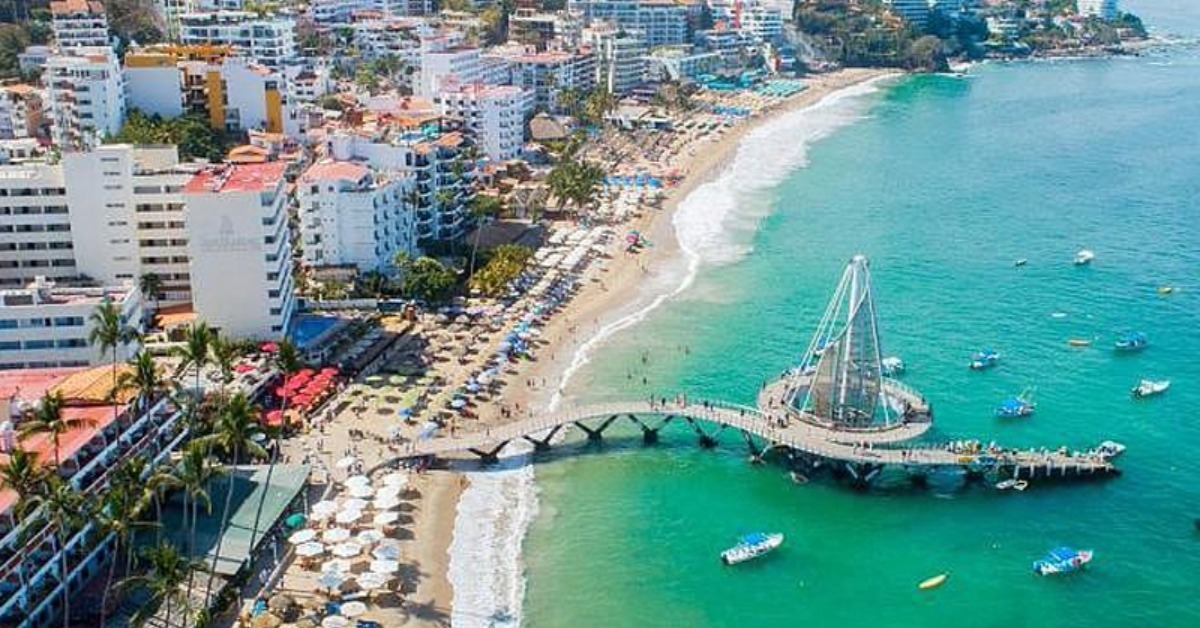
Puerto Vallarta’s rebound is no longer just about official reassurance. Fresh booking figures show hotel occupancy above 80 percent ahead of Holy Week, after a February security shock briefly disrupted flights, transport, and traveler confidence. But the recovery story is more layered than one headline number suggests. Local peak-day bookings are rising faster than broader holiday forecasts, and some markets have returned more quickly than others. That gap helps explain what recovery really means for the city and the weeks ahead.
Bookings are back above 80 percent
Jalisco Governor Pablo Lemus said Puerto Vallarta has moved back above 80 percent hotel occupancy ahead of Holy Week. He said bookings were at 82 percent and had reached 87 percent on recent high-demand days. The figures were presented as proof that the resort city has regained momentum after the Feb. 22 violence that disrupted travel and shook confidence.
For Puerto Vallarta, that number matters beyond hotels. Occupancy is one of the quickest ways to measure how much money will flow through restaurants, tours, transport, and beach businesses. It also shapes staffing decisions across a city where tourism drives a large share of daily economic activity.
The timing matters as well. Lemus made the remarks while speaking to the state’s hotel sector at a moment when Jalisco is trying to project stability before Holy Week and Easter and, more broadly, before the international attention that will come with World Cup 2026. In that sense, the occupancy figure is not just a tourism update. It is also part of a larger effort to reassure travelers, investors, and businesses that the state’s main visitor markets are functioning normally again.
What the recovery numbers actually show
The rebound also builds on a stronger base than many expected. Local and state officials said the city welcomed 1 million visitors in the first two months of 2026. They reported 79 percent occupancy and nearly 7.2 billion pesos in economic activity during that span. Those figures show February hurt demand, but did not erase it.
The recovery has also shown up in transport. Local officials said the airport returned to full scheduling after two days of limited service. They also reported 38 cruise arrivals in January and February, up 15 percent from the same period in 2025. That matters because access by air and sea is central to Puerto Vallarta’s high season.
Those numbers help explain why officials are now speaking in terms of recovery rather than rescue. The city did not enter March from a weak position. It entered March after a strong start to the year, then absorbed a short but visible shock near the end of February. That is an important distinction for international readers. A destination can suffer a real disruption without losing an entire season.
Why the rebound still needs context
The February disruption was brief, but highly visible. On Feb. 22, security alerts tied to operations in Jalisco reached Puerto Vallarta. Taxis and rideshare services were suspended, some businesses paused operations, and flights were disrupted. By Feb. 25, U.S. officials said all restrictions tied to the incident had been lifted.
That quick operational reset did not mean every market recovered at the same pace. Travel industry figures in the city said Mexican and Canadian demand returned sooner. U.S. spring break and group travel, however, remained weaker. That gap helps explain why officials are talking about recovery while still working to restore confidence.
This is where the story becomes more nuanced than a single occupancy number. Recovery in a tourism market is rarely even. Domestic travelers often return first. Regional visitors may follow. International travelers, especially those booking longer stays or group trips, can take more time because they are reacting not only to conditions on the ground, but also to headlines, advisories, and airline planning. Puerto Vallarta appears to be moving in the right direction, but not all parts of the market are moving at the same speed.
Why not every occupancy figure says the same thing
Some of the tourism numbers may look inconsistent at first. The federal Tourism Secretariat projected 78.2 percent occupancy for Puerto Vallarta during the broader Holy Week and Easter break. That still places the city among Mexico’s leading beach destinations. Nationally, the ministry projected 63.8 percent hotel occupancy for the season.
Lemus’s higher figures reflect a tighter window. He was citing current bookings and recent peak days, not the full holiday average. He also said the March 21 long weekend reached 87 percent occupancy. Both sets of numbers point to the same trend: demand is recovering, even if each measure captures a different moment.
That distinction matters because broader holiday forecasts and near-term booking snapshots serve different purposes. A federal projection gives a destination-wide view across the full vacation period. A local booking update shows how the market is behaving right now, as travelers make final decisions. Put together, the figures suggest that Puerto Vallarta is entering the holiday stretch with stronger momentum than it had just weeks ago.
The next test starts now
Jalisco tourism officials now expect about 3 million tourists statewide during Holy Week and Easter. Puerto Vallarta is central to that total. Authorities are pairing the upbeat demand numbers with safety, mobility, and beach operations as the holiday crowds approach. That reflects a simple reality: recovery is now about maintaining confidence, not just filling rooms.
For Puerto Vallarta, that is the real measure to watch. The city appears to have moved beyond the immediate shock of February. Bookings above 80 percent suggest it is entering the holiday period on firmer ground. But the more important question is whether that strength holds across the full vacation cycle and carries into the rest of 2026. Right now, the available data suggest that the rebound is real, though it is still being measured in real time.
With information from Secretaría de Turismo del Gobierno de México
Keep reading:
Puerto Vallarta Tourism Holds After February Shock
Jalisco readies for Holy Week rush in Puerto Vallarta
Puerto Vallarta loses 30,000 travelers after February cartel violence