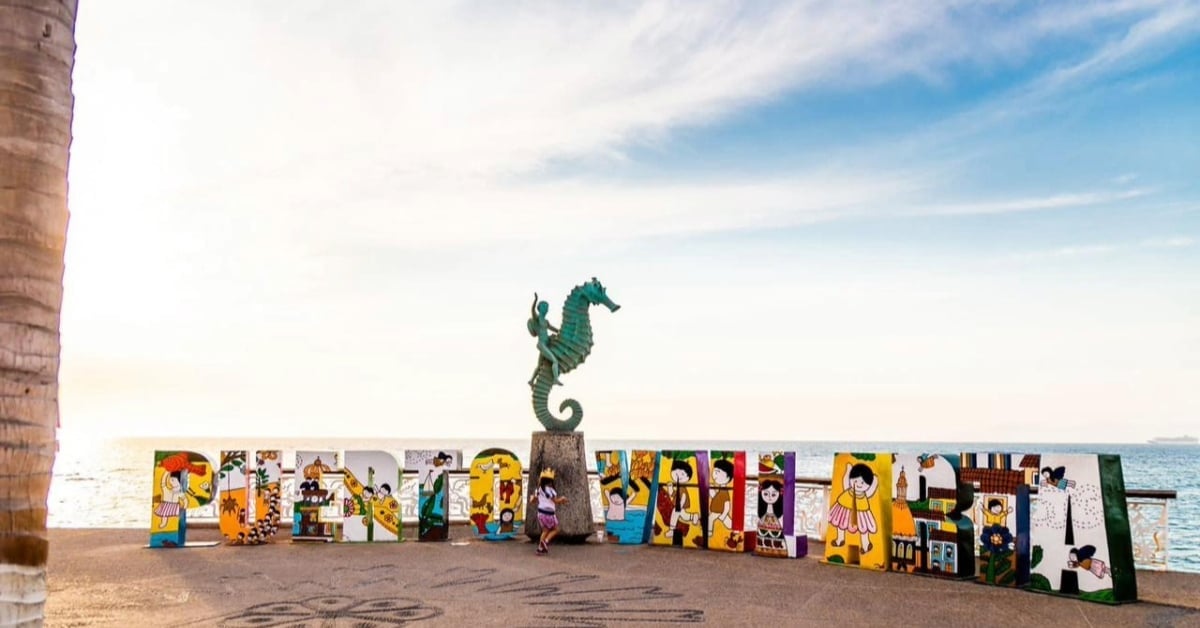
Puerto Vallarta, Jalisco – Puerto Vallarta is emerging as one of the hardest hit Mexican destinations in the first half of 2025, with American tourist arrivals by air falling 5.5%, according to an analysis from the Center for Advanced Research in Sustainable Tourism (STARC) at Anáhuac University. That decline stands out in a regional landscape where other well-known destinations have also lost ground, but few have felt the combination of scale and local dependency that defines Puerto Vallarta’s tourism economy.
Cancún recorded the largest raw drop—6.5%, losing more than 200,000 U.S. visitors year over year—but the impact on Puerto Vallarta’s smaller, tightly interwoven local economy has raised alarm among business leaders and officials. Los Cabos and Guadalajara also saw declines, underscoring a broader erosion of traditional beach and leisure travel from the United States, yet Puerto Vallarta’s mix of reliance on repeat American visitors and seasonal revenue concentration makes its situation especially precarious.
What keeps the Puerto Vallarta economy moving?
Shifting traveler preferences and urban competition
The report highlights a contrast that sharpens the urgency: while coastal and resort destinations struggle, Mexico City posted an 8.1% increase in American tourist arrivals. That divergence suggests a growing preference among U.S. travelers for urban, culturally layered experiences over the familiar sun-and-sand formula. The shift is forcing Puerto Vallarta to confront not just a temporary downturn but a changing baseline in what drives American travel decisions to Mexico.
Francisco Madrid, director of STARC, made clear that the upcoming summer season will be a decisive moment. “We are facing a complex environment, with increasingly aggressive competition,” he said, flagging that the city’s ability to reverse or stabilize the slide during the high season will heavily influence its longer-term trajectory. The comparison with Mexico City also offers a strategic mirror: urban offerings, diverse programming, and evolving narratives are drawing attention that once might have flowed more predictably to beach resorts.
Local economy feeling the ripple effects
The drop in U.S. arrivals is already translating into pressure across Puerto Vallarta’s tourism ecosystem. Hotels, restaurants, tour operators and service providers dependent on American spending are seeing tighter bookings and thinner margins. Some are responding with tactical adjustments—bundling experiences, targeting non-traditional markets, and experimenting with off-season promotions—but many warn those moves alone won’t close the gap if the core appeal to U.S. visitors keeps eroding.
Industry insiders argue the decline is not solely a matter of competition. They point to a mix of factors: shifts in airline capacity and route economics, possible fatigue with repetitive coastal offerings, and broader economic headwinds in the United States that influence discretionary travel. Meanwhile, Mexico City’s growth appears tied to its expanding flight connectivity, cultural festivals, and a narrative of authentic urban exploration that is resonating with travelers looking for new storylines.
Calls for a strategic response and product evolution
Local stakeholders are pushing for more than reactive marketing. They want a recalibration of what Puerto Vallarta sells to the U.S. market. Suggested adaptations include hybrid itineraries that layer cultural and community engagement onto the traditional beach stay, investments in sustainable tourism infrastructure, and authentic storytelling that weaves local residents into the visitor experience. The goal is to refresh the destination’s perception, making it feel distinct and personal rather than interchangeable with other coastal options.
Tourism officials have initiated working groups to draft response plans. Early proposals emphasize targeted outreach to previous American visitors, incentives to lengthen stays, and the development of off-peak campaigns to smooth the seasonal revenue swings. There is also a push to improve data collection—understanding the specific reasons U.S. tourists are choosing alternatives and what could draw them back—so future efforts are based on evidence rather than assumptions.
The test ahead
Puerto Vallarta’s drop in American arrivals is a warning signal: legacy appeal alone may no longer suffice. With competitors adapting and urban alternatives gaining traction, the city’s next moves will define whether the decline marks a temporary setback or the beginning of a deeper repositioning. The summer of 2025 is now the critical window to demonstrate resilience, adjust the product, and reconnect with a U.S. traveler base whose priorities are clearly shifting.