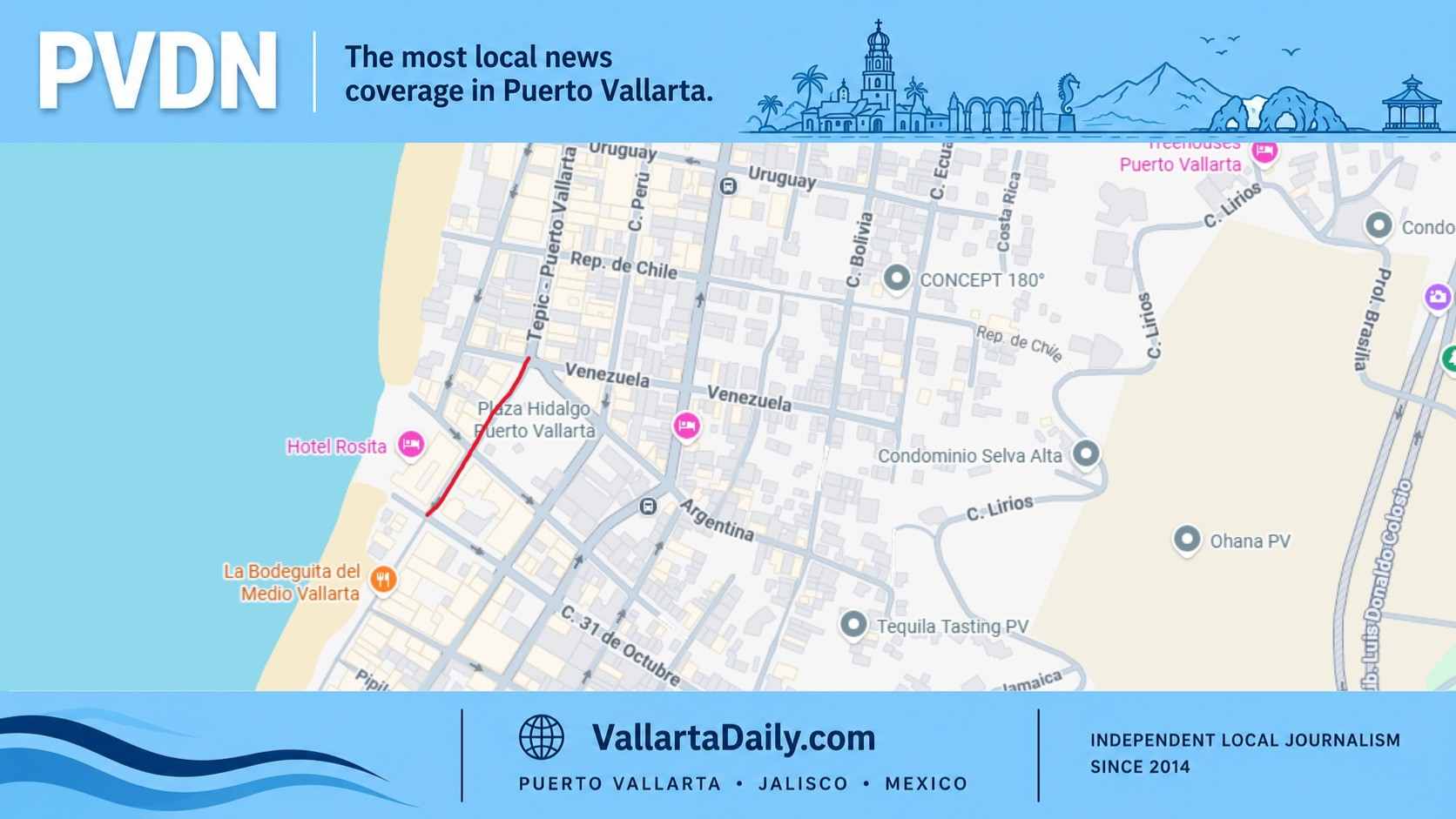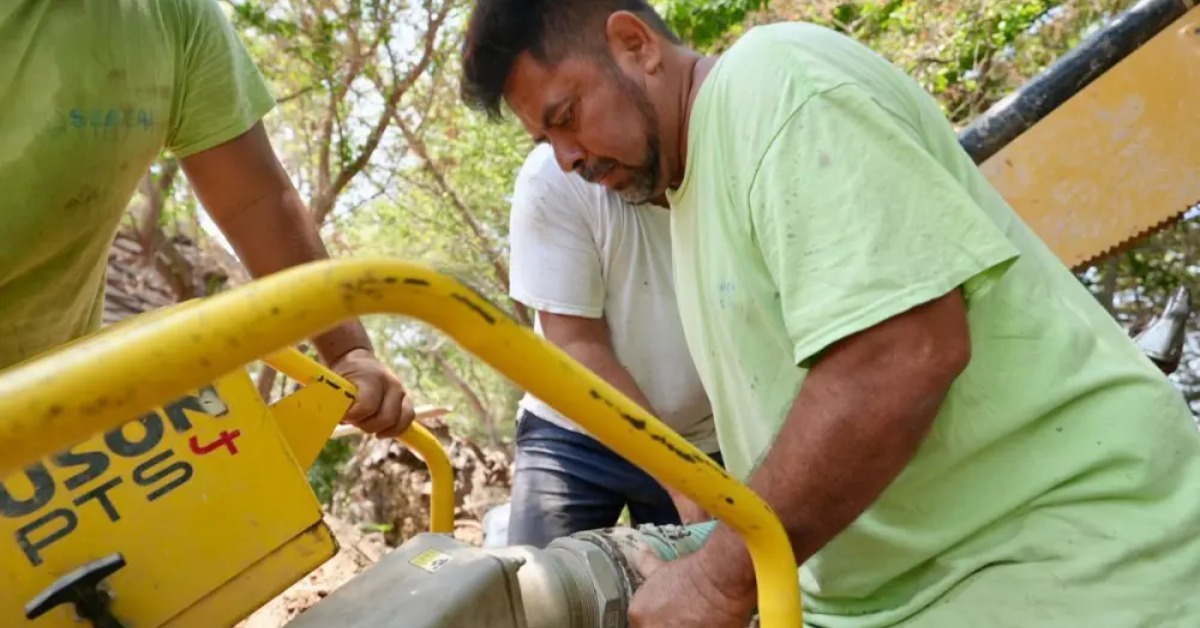
A rupture in a 24-inch water main left 143 colonias and fraccionamientos in Puerto Vallarta without normal service. According to officials, that is a large share of the city’s urban network. The damaged line connects the Pozo Radial system to the Cerro del Machete treatment plant, a key part of the water supply for the north side of the city. The break was detected on Tuesday near State Highway 544 in Las Juntas, an area tied directly to broader distribution.
That helps explain why the outage spread so widely. This was not a neighborhood-level repair. It was a failure on a main line that supports homes, businesses, and parts of the hotel corridor. Officials said the pipe was about 25 years old, which adds another layer to the story. The immediate emergency was the rupture itself, but the deeper issue is what happens when aging infrastructure fails at a critical point in a growing city.
Why water does not return the moment the pipe is fixed
Repair crews moved in after the break was found, and officials later said the damaged section had been repaired early Wednesday. But a pipe repair does not mean instant service. Water systems have to refill tanks, restore pressure, and rebalance the network before the supply returns to anything close to normal pressure. In this case, officials said the interruption stopped production of more than 24,000 cubic meters of water while the line was down.
That is why the official recovery window still runs between midday Thursday, April 23, and Friday morning, April 24. Even then, service may not return evenly. Higher areas are expected to be the last to normalize, because they depend on stronger system pressure and recovered tank levels. In condo buildings and larger properties, residents may also see delays if internal cisterns, rooftop tanks, or pump systems need more time to stabilize after the broader network comes back.
The outage reaches beyond homes
The affected zone includes residential neighborhoods, mixed-use areas, and tourism-linked districts. Officials said areas such as Marina Vallarta, Versalles, Fluvial Vallarta, Aramara, parts of El Pitillal, Las Juntas, and parts of Ixtapa were among those affected. That footprint matters because disruptions in these zones extend well beyond single-family homes. It affects apartments, condo towers, shops, restaurants, and hotels simultaneously.
Officials also said the hotel industry was notified early so larger properties could activate contingency measures. That may soften the impact for some guests, but it does not erase it. Stored water only buys time. Smaller buildings and households often have less room to absorb a sudden outage, especially in places without a tinaco or other backup storage. For many residents, the difference between low pressure and no water can come down to whether the building had reserves before the break happened.
Why this matters in April
This outage did not happen in isolation. Earlier in April, parts of Puerto Vallarta were already experiencing low pressure and intermittent power after an electrical failure near the Pozo Radial area. Officials have also said only about 30 percent of homes in Puerto Vallarta have a storage tank. That helps explain why even a short disruption can become a bigger daily problem for households, especially during a period of high demand.
For readers new to life in Mexico, this is part of the local reality of utility service. In many cities, a building’s own storage system is almost as important as the municipal line itself. When the public network drops, homes with a working tank can extend their supply. Homes without one feel the outage faster. In Puerto Vallarta, where demand rises during busy holiday periods and growth continues to pressure infrastructure, that difference can shape how residents experience the same citywide event.
What residents should watch next
The next meaningful sign of improvement will not be the repair announcement alone. It will be the steady return of pressure across the network. Some neighborhoods are likely to see water come back in stages, first as weak flow, then as more regular service. Others, especially uphill zones, may need to wait longer. Officials have kept free water-truck support active in the hardest-hit areas and continue urging residents to ration any stored water until the system fully stabilizes.
This story also raises a bigger question for Puerto Vallarta. A city that depends on a few strategic lines is always vulnerable when one fails. The immediate problem is when the taps come back. The longer-term issue is how often residents can expect disruptions like this when demand is high and key parts of the system age simultaneously.