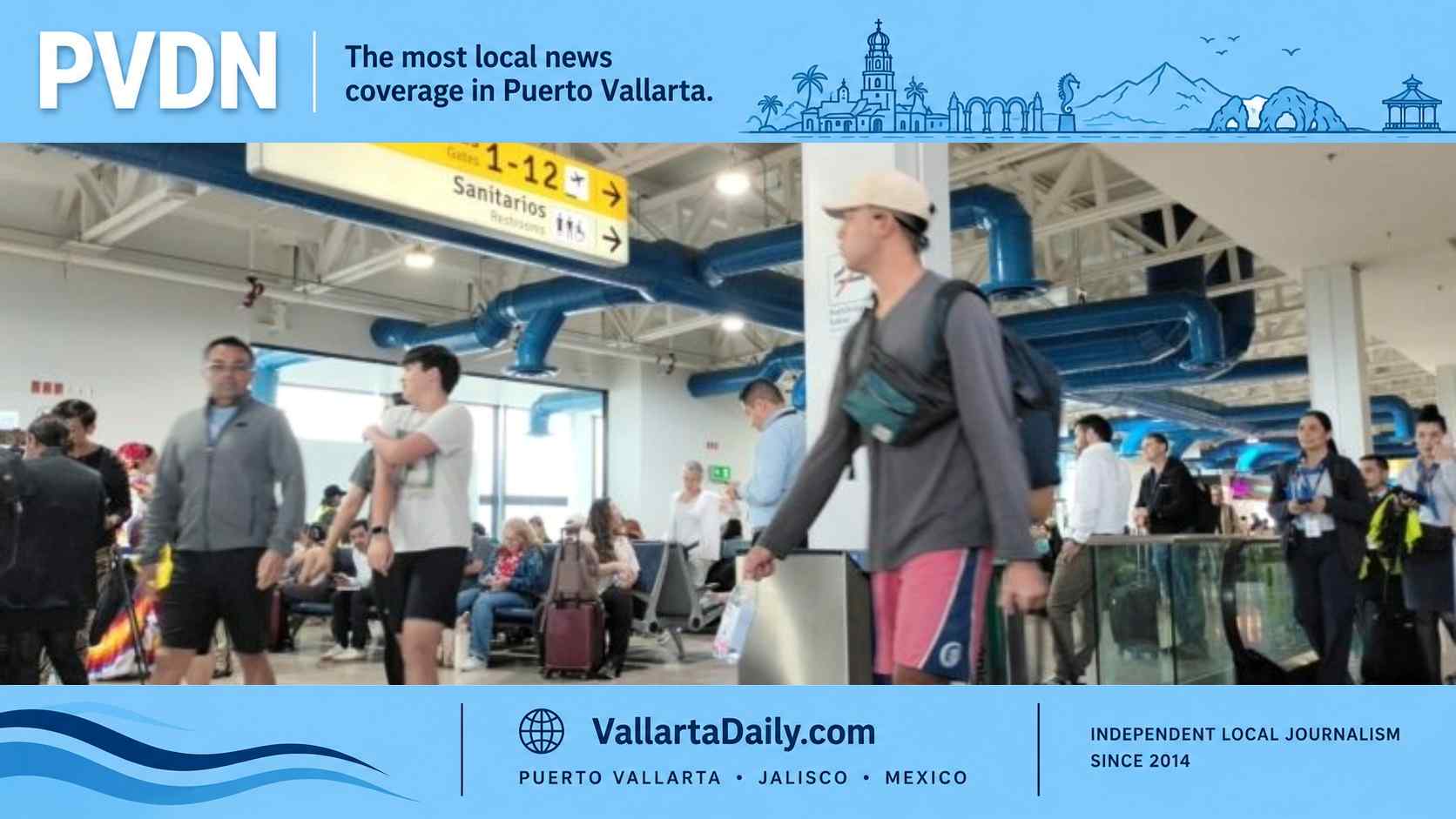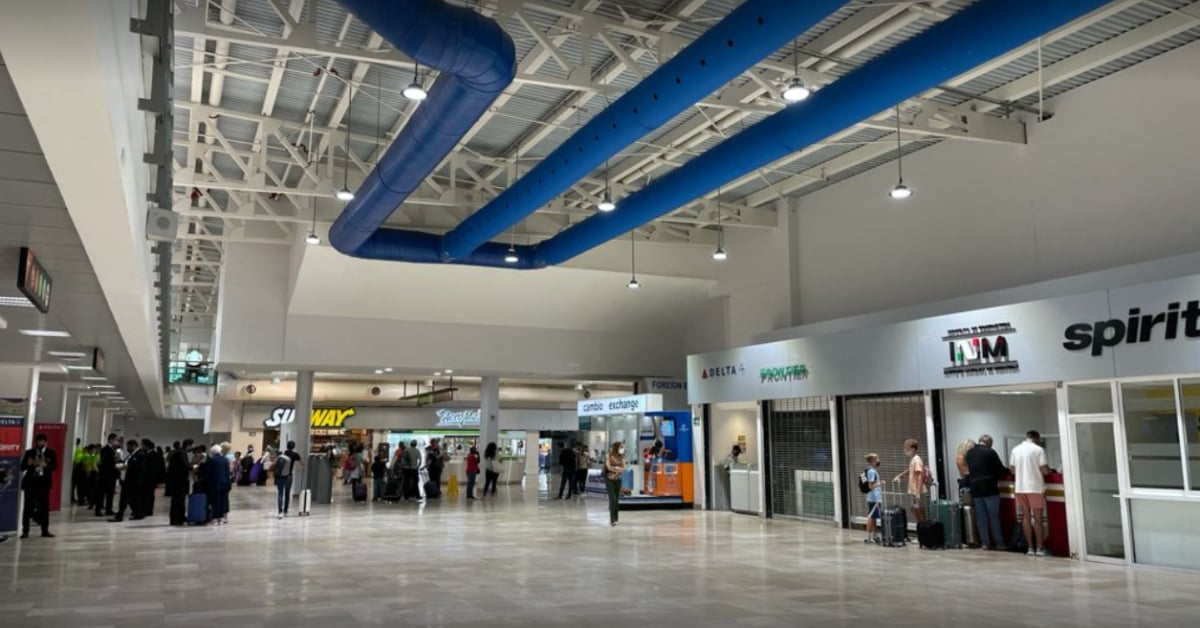
Puerto Vallarta still looks busy on the ground, but the latest airport figures tell a harder story. Foreign arrivals fell sharply in March, weeks after February violence shook confidence in one of Mexico’s top beach destinations. The drop matters beyond tourism headlines. It raises a bigger question about how quickly a city built on international trust can recover after a security shock, even when hotels, beaches, and restaurants appear to be operating normally.
The March numbers were hard to ignore
The clearest signal came from international air traffic. Official airport data show Puerto Vallarta received 360,800 international passengers in March, down from 531,400 in the same month last year. That was a 32.1% drop. Total passenger traffic also fell sharply, dropping 24.4% to 576,600.
That matters because Puerto Vallarta depends heavily on travelers arriving by air, especially from the United States and Canada. A decline of that size is not a small wobble. It points to a real pullback in foreign demand, even though the city still had visitors on the streets and hotels still had rooms to fill.
The broader quarter also weakened. For January through March, international traffic at the airport was down 13.1% from a year earlier. That suggests March was not just an isolated bad month. It was strong enough to drag down the whole quarter.
Why the timing matters
The timing is difficult to separate from the events of February 22. After the reported killing of Nemesio Oseguera Cervantes, “El Mencho,” violence and disruptions in Jalisco fed damaging images across news and social media. For an international destination, those images can linger longer than the incident itself.
Tourism does not react only to what happens on one day. It reacts to perception, especially in the booking window that follows. A traveler planning a beach vacation may not study local geography or security nuances. Many simply see videos of roadblocks, fires, or travel disruptions and choose another destination.
That is why March matters more than late February alone. February captured the shock. March captured the decisions made in the aftermath of the shock.
Security is part of the explanation, but not the only one
There is still debate over how much of the decline should be attributed to insecurity. Some industry voices argue the connection is obvious. Puerto Vallarta took a reputational hit at the exact moment it was moving through a crucial stretch of the high season. In that reading, the March collapse reflects canceled or postponed trips, weaker bookings, and a pause in traveler confidence.
Tourism officials have pushed back against the idea that one event explains everything. Their argument is that global conditions also shape international demand and that March should not be read as a simple before-and-after security chart. That is a fair point. Air travel depends on many moving parts, including demand trends, carrier decisions, pricing, and broader economic conditions in origin markets.
The most careful reading is probably the simplest one. Security fallout appears to have played a major role, but it was likely amplified by wider market pressures. In other words, the violence may not explain every lost traveler, but it likely made an existing soft patch worse.
The city’s tourism picture is more mixed than the airport data suggest
The airport numbers are severe, but they do not tell the whole story. On the hotel side, the picture has been more resilient. Local reporting and municipal tourism updates suggest hotel occupancy rose above 80% before Holy Week and remained around 75% to 80% after Easter.
That does not erase the decline in air traffic. It does show that domestic demand and short-break travel have helped cushion the blow. Puerto Vallarta can still look active even while one of its most valuable segments weakens.
That distinction matters for readers trying to understand the local economy. A crowded holiday weekend does not necessarily mean the tourism machine is fully healthy. Foreign air arrivals are especially important because those visitors often stay longer, book more tours, and spend differently across the local economy. When that segment drops, the pain is not always immediate, but it spreads.
Why this matters beyond the airport
Puerto Vallarta’s challenge is not just about moving passengers through a terminal. It is about protecting the image of a destination that sells ease, comfort, and predictability. Once a place becomes associated with security disruption, even briefly, rebuilding confidence can take longer than reopening roads or restoring schedules.
That is why the next few months matter more than one headline. If the decline eases, the March numbers may end up looking like a sharp but temporary correction after a major shock. If weakness persists into late spring and summer, the story becomes less about a single bad month and more about a deeper hit to the destination’s international standing.
There are some counterweights. The airport operator has continued to highlight new route additions, including service tied to San Diego and St. Louis. Officials are also leaning on promotion, events, and the city’s strong domestic market to keep momentum going. Those efforts can help. But they cannot fully replace confidence if foreign travelers remain hesitant.
What expats and regular visitors should watch next
For people who live in Puerto Vallarta or return often, the key question is not whether the city still has tourists. It clearly does. The real question is whether international confidence returns fast enough to stabilize the high-value side of the market.
One important piece of context is that current U.S. travel guidance still states there are no travel restrictions for U.S. government employees in Puerto Vallarta, even as it warns of risks in Jalisco tied to organized crime. That helps explain why the outlook is not as simple as a collapse narrative. The destination remains active, connected, and heavily visited.
Still, March delivered a warning. Puerto Vallarta’s tourism model is strong, but it is not insulated. A city can post solid occupancy, keep events on the calendar, and still absorb a significant hit when foreign travelers start second-guessing the trip.
In that sense, the 32.1% decline is bigger than a monthly aviation statistic. It is an early test of how durable Puerto Vallarta’s recovery can be when the problem is not just logistics, but trust.