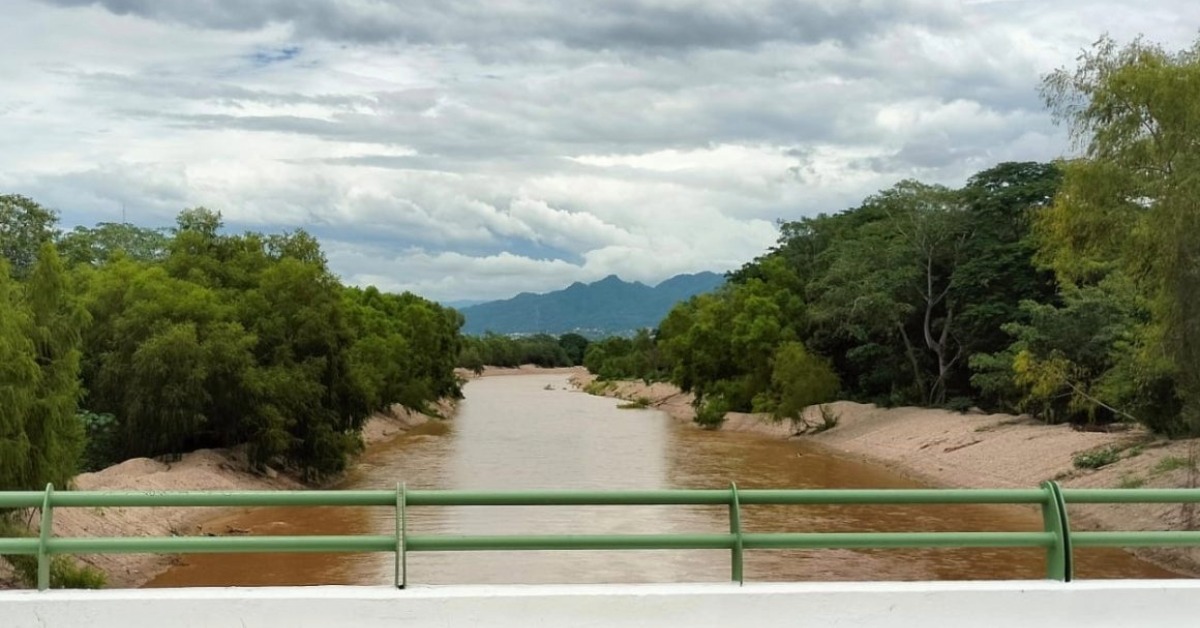
Puerto Vallarta’s water problem is not only about taps, pipes, or dry-season pressure. A CUCosta professor is warning that pollution in rivers, streams, and aquifers could reach deeper into the city’s future supply than many people realize. The concern lies in a place where underground water already carries most of the load. It also raises harder questions about growth, drainage, treatment capacity, and what happens when surface pollution moves underground.
Puerto Vallarta faces new warning over river pollution
Puerto Vallarta’s rivers, streams, and aquifers are facing growing pressure from pollution, fast urban growth, and gaps in sanitation infrastructure, according to a warning from Horacio Ramírez, a professor at the University of Guadalajara’s Centro Universitario de la Costa.
Ramírez said the issue goes beyond dirty water visible in the riverbed. In a city that depends heavily on underground sources, surface contamination can become a deeper water-supply problem.
“When we talk about contamination of water bodies, we are not talking only about an environmental problem, but about a direct risk to the city’s main source of supply. Puerto Vallarta depends mostly on groundwater, and therefore it is essential to protect it,” Ramírez said in comments published with the CUCosta warning.
SEAPAL Vallarta has previously reported that 84 percent of the potable water it produced in 2017 came from underground sources, with the rest taken from surface filtration galleries. The agency said at the time that its hydraulic system included 30 deep wells, five filtration galleries, and the Pozo Radial, a major source near the meeting point of the Ameca and Mascota rivers.
The warning comes as Puerto Vallarta continues to wrestle with a familiar tension. The city grows. Water demand rises. Drainage and treatment systems must keep up, often under stress from older lines, new development, and heavy rains.
Vallarta Daily has also reported on the broader pressure around the bay’s water system, including a recent water stress warning as Bay of Banderas rivers shrink. That earlier reporting noted how heavily the local system leans on groundwater.
Surface pollution can move underground
Ramírez pointed to several pressures on the local water system, including accelerated urban growth, inadequate wastewater discharge, irregular settlements, and limited sanitation infrastructure.
His central concern is simple. Rivers and streams are not separate from the aquifer below them.
“Everything that happens on the surface ends up impacting the subsoil in some way. When a river or stream receives contaminants, there is a risk that these infiltrate and affect the quality of the water that we later use for human consumption,” Ramírez said.
That risk is especially sensitive in a valley where the aquifer, rivers, and coast are physically connected. Conagua’s Puerto Vallarta aquifer availability document describes groundwater flow that naturally moves toward the sea and notes that the Ameca River drains part of the aquifer system. The same document warns that some natural groundwater discharge helps act as a barrier against saltwater intrusion along the coast.
CUCosta has raised similar concerns before. In 2022, researcher Raúl Rogelio Guerrero Galván warned that Puerto Vallarta already faced the risk of aquifer salinization, a process that can raise salt and mineral concentrations in groundwater and degrade water quality.
Guerrero Galván said at the time that groundwater is a primary source of supply for urban needs and agriculture. “The importance of groundwater lies in the way we use it, because it is our main source of supply, from the urban point of view, for agriculture, much more than river water or other bodies of water,” he said in the CUCosta statement.
Treatment capacity remains part of the question
SEAPAL says wastewater is collected through sanitary infrastructure and taken to treatment plants before being returned to the hydrological cycle. Its public explanation of how the system works states that sewage is cleaned and treated to prevent environmental damage.
Still, municipal authorities have acknowledged large infrastructure needs. In 2024, Puerto Vallarta’s government said more than one billion pesos were urgently needed for the Norte II treatment plant and the Centro-Norte collector, describing the investment as needed to continue sanitizing wastewater discharged toward the Ameca River.
That connection places Ramírez’s warning in sharper focus. Pollution control is not only about cleanup after a spill or a foul-smelling stream after rain. It is tied to collectors, treatment plants, drainage coverage, inspections, and the pace of construction across the city.
Ramírez said projects are needed to reduce pressure on the aquifer, diversify supply sources, and improve integrated water management. His warning also called on authorities, business interests, and the public to share responsibility for protecting water bodies.
“The water security of Puerto Vallarta does not depend only on having water available, but on keeping it clean. Protecting our rivers, streams, and aquifers is protecting the future of the city,” he said.