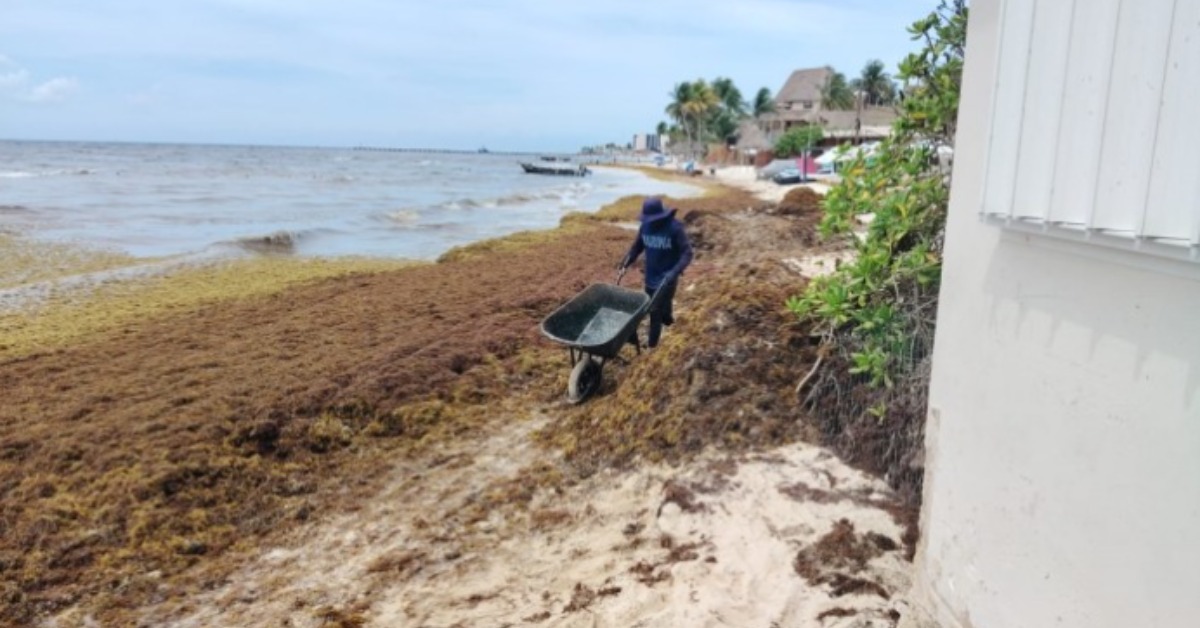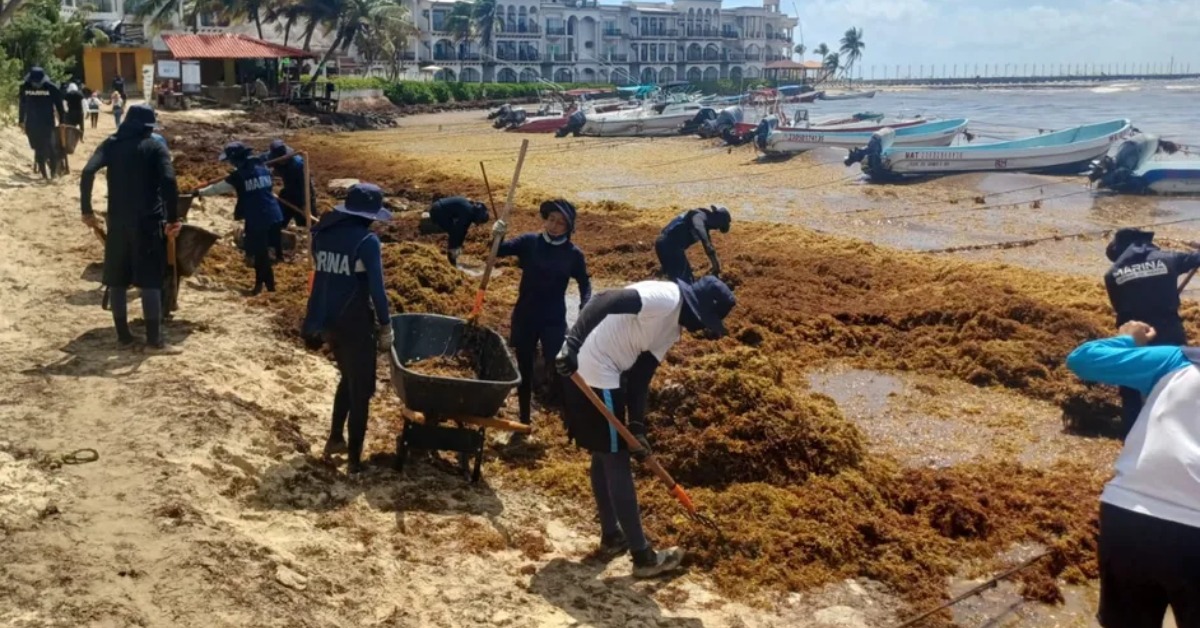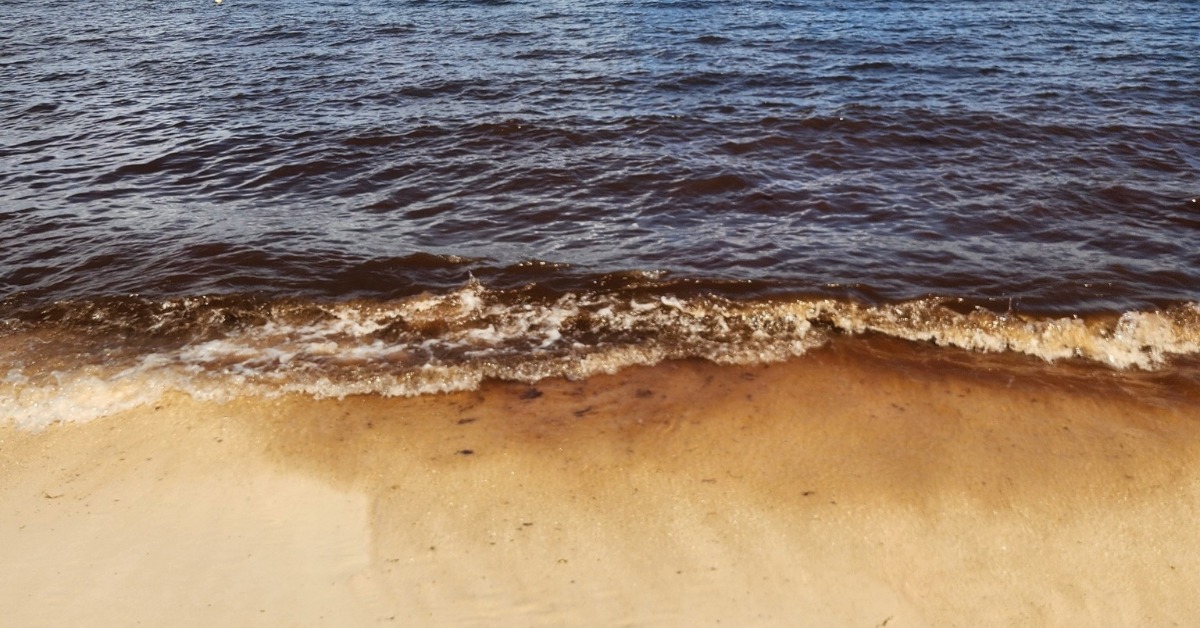
Cancún, QR – The latest sargassum traffic light report for July 31, 2025, shows concentrated arrivals of the brown macroalgae along the eastern corridor of Quintana Roo, with beaches from Cancún through Tulum registering the highest levels. Several high-profile public and hotel beaches are flagged in orange and red, signaling substantial fresh landings even as parts of the state enjoyed a temporary statewide reduction in incoming masses earlier in the week. The Citizen Observatory and the Quintana Roo Sargassum Monitoring Network data underline where the problem is most acute today.
Beaches in Quintana Roo with Most Sargassum Today
The “Sargassum Traffic Light” used by the monitoring efforts ranks beaches by real-time observed accumulation: green or blue means minimal, yellow is moderate, orange indicates heavy recent arrivals, and red marks the most severe present conditions. The system is maintained through citizen reports and official monitoring, giving both residents and visitors a near real-time snapshot of coastal impact.
In Cancún, multiple public and resort zones are showing high levels. Beaches marked orange include Playa Marlín, Playa Ballenas, Playa Delfines, Playa San Miguel, Punta Nizuc, and several resort-adjacent areas, while Playa Coral, Riviera Cancún, Hotel Moon Palace, and Royalton Riviera are in the red zone—signaling the most intense and recent sargassum landings. These concentrations are part of the band of heavy macroalgae streaming between Riviera Cancún and Tulum that the network has been tracking. The localized red and orange alerts contrast with some nearby areas that remain in yellow, underscoring the patchy, dynamic nature of arrivals. (User-provided data; traffic light methodology from the monitoring network).
Puerto Morelos, just south of Cancún, is also seeing critical levels: Bahía Petempich, Punta Caracol, and Puerto Morelos Norte all carry red alerts. That cluster reflects how the sargassum plume, driven by prevailing currents and winds, has hugged the coast in this central-north zone even as satellite indicators earlier in the week showed an overall easing of incoming masses for parts of the region.
Further down the coast in Playa del Carmen, the mix of orange and red signals shows significant arrivals on both public and developed beaches. Orange alerts are on Playa El Secreto, Valentín Imperial, Playa Vidanta, Playa Paraíso, Playa Colosio, Playacar Zona Hotelera Fase 2, Paamul, and Xpu-Ha. Red zones—indicative of the worst current accumulation—include Punta Bete, Playa Xcalacoco, and Punta Esmeralda. These concentrations reflect a corridor of persistent sargassum impact that stretches from northern Riviera Maya into the central zone. (User-provided data).
Tulum’s beaches are similarly affected, with multiple red alert sites: Xcacel-Xcacelito, Zona Arqueológica de Tulum, Zona Hotelera de Tulum Norte, Zona Hotelera de Tulum Sur, and Arco Maya. Orange-level landings are reported at Bahía Solimán, Tankah, Punta Piedra, and Kantenah sits among the affected areas (though not all specified with color, it is part of the heavy arrival band between Riviera Cancún and Tulum). Akumal Media Luna remains at yellow, a relative respite amid heavy nearby accumulations. (User-provided data).
On Cozumel, numerous public points—Punta Molas, Playa Xhanan, Playa El Castillo, Mirador San Martín, Playa Bonita, Playa Encantada, Playa El Mirador, Punta Morena, and Punta Celarain—are noted for sargassum presence. The report lists them without color coding here, but their inclusion among monitored sites in the high-arrival corridor signals sustained pressure from drifting masses. (User-provided data).
In contrast, Isla Mujeres shows no beaches currently flagged with significant fresh sargassum arrivals, offering a temporary break from the heavier accumulations seen on the mainland. (User-provided data).
Further south, the Grand Costa Maya area—specifically Mahahual—has entered the monitoring view via the Sargassum Citizen Observatory after July 8. As of July 31, Mahahual is marked orange, indicating a noteworthy but slightly lower intensity than red zones further north. The Quintana Roo Sargassum Monitoring Network has not published current data for Chetumal proper, leaving Mahahual as the primary southern data point in this latest snapshot. (User-provided data).
Why concentrations remain uneven
Sargassum arrivals along the Mexican Caribbean are shaped by a mix of ocean currents, wind direction, and seasonal variability. Earlier in the week, satellite and local reports noted a relative breather in the broader region—especially north of Playa del Carmen—where incoming masses had softened from previous highs, a shift attributed to changing currents and temporary dispersion. Nevertheless, the uneven distribution means some beaches remain heavily impacted even as nearby shores see less.
The accumulation is part of a broader season that has seen extensive collection and mitigation efforts. By mid-July, authorities reported more than 44,000 tons of sargassum removed across Quintana Roo, with the Navy coordinating removal zones in three strategic regions and deploying vessels, containment barriers, and personnel to try to stay ahead of arrivals.
Impact and what comes next
The persistent red and orange alerts on popular tourism beaches carry immediate consequences for beachgoers, resort operators, and local economies dependent on clear shorelines. Hotels in the hardest-hit areas—such as those in red zones around Cancún and Tulum—must accelerate daily clearing operations to protect guest experience, while public beach managers face logistical strain when upstream conditions shift rapidly overnight. The monitoring network’s traffic light system, supplemented by citizen observations, remains a critical early warning and planning tool for both tourism businesses and municipal response teams.
Visitors planning beach days in Quintana Roo are advised to check the latest traffic light updates, favoring areas currently free of red alerts or with active local cleanup, and to prepare for sudden changes; sargassum concentrations can build or disperse quickly depending on wind and sea state.
Local authorities and environmental groups continue to stress the need for coordinated removal, research into long-term mitigation, and responsible tourist communication so that expectations match rapidly evolving beach conditions.
sargassum, Quintana Roo beaches, Cancun sargassum, Playa del Carmen sargassum, Tulum sargassum, Puerto Morelos sargassum, Cozumel sargassum, Mahahual sargassum, environmental alert, tourism impact