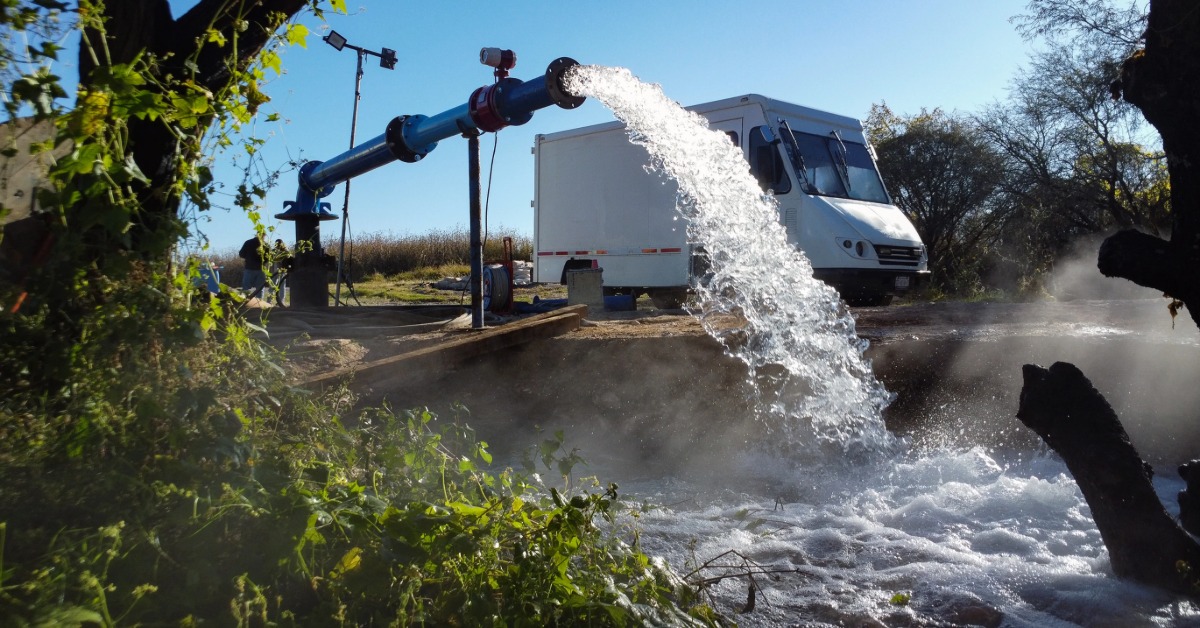
A Guanajuato lawmaker has introduced a proposal seeking greater transparency and legal clarity regarding public drinking-water wells in San Miguel de Allende.
Deputy Luis Ricardo Ferro Baeza, a Morena legislator in the Guanajuato Congress, is asking municipal, state, and federal authorities to identify and review public wells tied to the city’s drinking-water system. The proposal focuses on wells operated by, controlled by, or registered to the municipality or SAPASMA, San Miguel’s water and sewer agency.
The measure does not target private wells. It also does not declare that any specific well is operating illegally. Instead, it asks authorities to produce a technical and legal review showing which wells are properly documented and which may need regularization.
For residents, the proposal matters because San Miguel depends heavily on groundwater. In a growing city with high tourism demand, expanding housing, and long-standing concerns about water pressure, water quality, and aquifer stress, clear records are not merely a small administrative issue. They are part of how a city plans for future supply.
What the proposal asks authorities to do
The proposal calls on the San Miguel de Allende municipal government to instruct SAPASMA to prepare a full technical and legal study of public drinking-water wells in the municipality.
That study would identify each public well, its location, and its registration status. It would also review whether each well has valid concession, assignment, extension, or permit paperwork before the proper authority.
The proposal also asks for a classification of wells that are already regularized and those that may lack complete documentation. Any finding would need to be backed by documents, not only statements from officials.
The measure also asks Conagua, Mexico’s federal water authority, to provide official information on concessions, assignments, authorized volumes, pending applications, and administrative procedures involving San Miguel’s public wells.
At the state level, the proposal asks Guanajuato’s Secretaría del Agua y Medio Ambiente to provide technical studies, hydrogeological information, water availability assessments, and planning documents relevant to San Miguel.
If any public wells lack proper documentation, the proposal asks the city and SAPASMA to begin the needed procedures before Conagua and other agencies. It also asks for a schedule with steps, deadlines, and goals.
Why water paperwork matters
For many readers, the phrase well regularization may sound like paperwork. In Mexico, it can be much more than that.
Groundwater is generally regulated as part of the national water system. Conagua oversees concessions, assignments, authorized extraction volumes, and related records. For a public water agency, having the correct documents can affect planning, legal certainty, future investment, and the ability to defend public water use.
A regularized well is not only a hole in the ground with a pump. It should have legal recognition, technical records, and an authorized extraction framework. Those details help authorities understand how much water is being used and whether that use fits within broader aquifer limits.
Without clear records, cities can face problems. Officials may not know which wells are fully documented, which ones need updated paperwork, or whether authorized volumes match actual demand. That can create legal risk and weaken long-term planning.
The proposal argues that public wells should be fully known and controlled because they are directly tied to a basic public service: drinking water.
San Miguel’s water debate is already active
San Miguel de Allende has been talking about water for years. The city’s growth has made the issue more visible, especially among residents who watch new developments, hotels, and tourism projects add demand.
The municipal government has previously promoted new water infrastructure as a major step toward long-term supply. In November 2025, officials said a fifth well in the Presa Allende area, known as TSA-14, joined other wells in a system meant to strengthen the city’s main water network.
That announcement was presented as a long-term supply gain. The new proposal in Congress does not directly challenge that claim. But it does raise a related question: whether the public water system has a complete and transparent legal file.
That distinction is important. A city can add infrastructure while still needing better public records. A new well can increase supply, while residents can still ask whether concessions, volumes, and operating records are clear.
For San Miguel’s international community, this is also a practical issue. Many foreign residents own homes, rent long-term, or spend part of the year in the city. They may not follow local water law closely, but they are affected by pressure drops, service interruptions, rate decisions, and long-term planning failures.
The aquifer context
Federal water availability data show that the San Miguel de Allende aquifer is under pressure. Conagua’s published figures list a negative annual availability balance for the aquifer, meaning authorized extraction and committed natural discharge exceed estimated recharge.
That does not mean taps will suddenly run dry. It does mean the region faces a long-term groundwater challenge.
San Miguel is not alone. Many parts of central Mexico rely on stressed aquifers. Guanajuato has several groundwater basins with negative availability balances, and water management has become a larger political issue across the state.
In that context, a public inventory of wells can help answer basic questions. How many wells serve the public system? Where are they? What volumes are authorized? Which documents are current? Which wells need legal updates?
Those answers matter before any serious discussion about growth, conservation, infrastructure, or future restrictions.
What happens next
The proposal is a punto de acuerdo, a legislative resolution that calls on authorities to act or provide information. It is not the same as a law that creates new penalties or directly takes control of local wells.
The measure would still need to move through the legislative process. If approved, it would formally ask the named authorities to provide information and take steps toward regularization where needed.
For residents, the main point is transparency. The proposal seeks a public accounting of wells that supply drinking water in San Miguel de Allende, with technical and legal details attached.
The issue is likely to remain important even if the proposal moves slowly. San Miguel’s water future depends not only on drilling new wells or extending pipes. It also depends on credible records, legal certainty, and coordination between municipal, state, and federal authorities.
In a city where growth and water demand remain closely linked, knowing exactly how the public system is supplied is a basic starting point.