A new multi-deportivo has opened in Santa Anita, but the story is bigger than just a new field and track. The project gives Los Cabos officials a visible public works win in a growing area outside the better-known tourist zones. It also raises a bigger question for residents and longtime observers of the region: What does it mean when federal social infrastructure money is used to build a major sports and community space? The answer says a lot about where Los Cabos is trying to grow next.
A new public space takes shape in Santa Anita
The opening of the Enrique Ruiz Guillins multideportivo in Santa Anita, a community in the San José del Cabo area, is being presented by Los Cabos officials as more than a sports project. Municipal authorities say the new complex is intended to expand access to recreation, strengthen public spaces, and provide local families with a more formal place for exercise and community use.
That framing matters. For many international readers, Los Cabos is usually understood through its beach corridor, resorts, golf courses, and tourism economy. This project points somewhere else. It focuses attention on a community setting rather than a visitor-facing one, and on everyday urban infrastructure rather than destination marketing. In that sense, the opening fits a broader local conversation about who benefits from public spending in one of Mexico’s most internationally known municipalities.
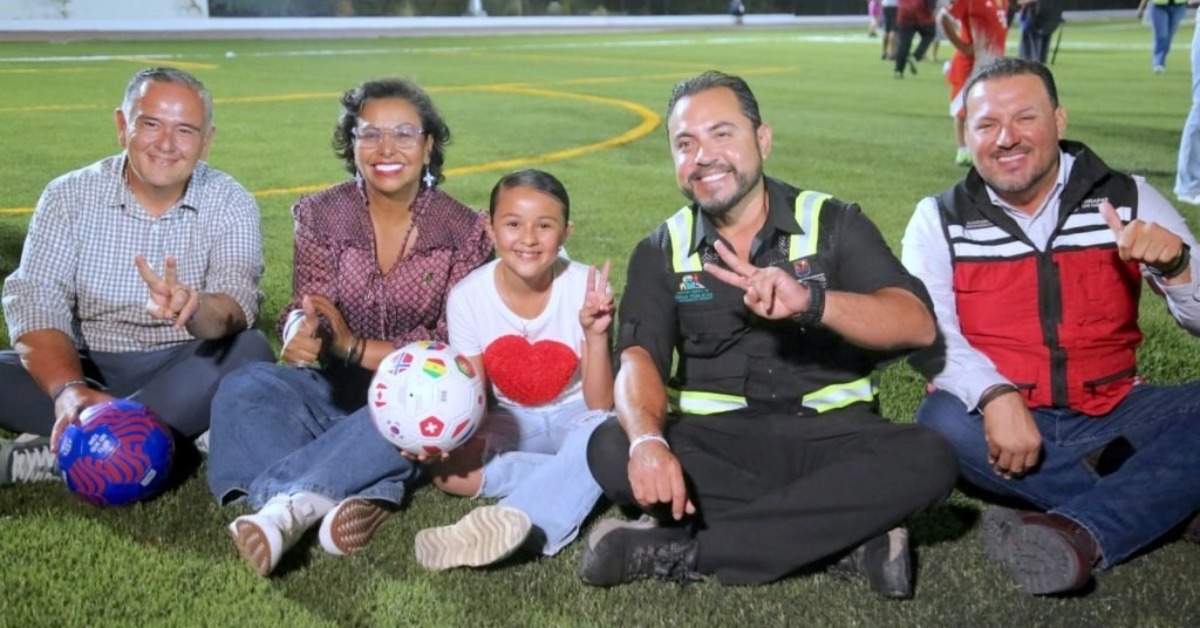
Officials placed the total investment at 45.499 million pesos, a figure that local reports rounded to about 45 million pesos. The project was formally inaugurated on April 8, 2026, with Mayor Christian Agúndez Gómez and other municipal officials in attendance. The municipality described the complex as a project for sectors that have historically had less public investment, and it said the space is intended to serve thousands of users in Santa Anita and nearby communities.
More than a football field
The new complex is substantial by local public works standards. According to the municipal description, it includes a football field with more than 10,500 square meters of synthetic turf, a tartan running track of about 3,400 square meters with six lanes, and eight youth divisions tied to the football area. It also includes stadium-style lighting, with 48 LED floodlights and solar lighting, as well as upgraded stands, locker rooms, restrooms, and improvements to the electrical and water systems.
That combination matters because it turns the site into a usable civic facility rather than a symbolic ribbon-cutting project. A field alone can host matches. A field with lighting, a track, changing areas, and basic services can support regular training, school use, community leagues, and events that continue after sunset. The addition of a 580-meter perimeter fence also suggests that authorities are treating the complex as a managed public asset that will need security and maintenance, not just a one-day inauguration.
The municipality also said the site includes native vegetation and durable urban furniture designed for local weather conditions and heavy daily use. That detail may sound minor, but it points to a more practical question behind almost every public-space project in Mexico: not whether it opens well, but whether it lasts. In coastal and semi-arid environments like Los Cabos, maintenance often decides whether an investment becomes a community anchor or another neglected facility a few years later.
Why the funding source matters
One of the more important details in this story is the source of the money. Officials said the project was built with resources from the Fondo de Aportaciones para la Infraestructura Social, better known as FAIS. At the federal level, that fund is intended to finance works and social actions that directly benefit populations facing social lag and poverty. That does not make the Santa Anita complex unusual on its face, but it does give the project a broader meaning.
By funding a sports and public-space project through FAIS, the municipality is placing the complex within a social infrastructure framework. In plain terms, it argues that the project’s value is not limited to sports. The official case is that the complex can help improve public life, expand options for children and teenagers, and provide a safer setting for physical activity and community gathering. That is a stronger claim than simply saying a new sports venue was built.
For readers outside Mexico, this is useful context because public works in tourist-heavy municipalities can sometimes look disconnected from everyday neighborhood needs. Los Cabos has long balanced a global image of prosperity with local complaints about uneven services and infrastructure. Seen through that lens, a project like this carries political and social weight. It allows the municipal government to say it is investing beyond the visitor economy and into communities that do not usually define the region’s international image.
What this says about growth in Los Cabos
The Santa Anita opening also fits into a wider pattern. Los Cabos continues to grow, putting pressure on housing, roads, water, public services, and neighborhood-level infrastructure. Santa Anita itself has appeared in other recent local public works and planning discussions, which suggests the area is part of a broader municipal push rather than an isolated stop on a ceremonial tour.
That does not mean a single complex change can alter the balance of development in Los Cabos. It does mean the municipality is trying to show visible progress in places that are not usually in the spotlight. Whether this becomes a meaningful shift will depend on what comes next. A sports complex can improve daily life, but only if it is paired with maintenance, programming, access, and surrounding infrastructure that help people use it regularly and safely.
For now, the opening gives Los Cabos a concrete local story with a wider takeaway. The Enrique Ruiz Guillins multideportivo is a sports project, but it is also a statement about where the municipality wants to show results. In a region where the global brand often overshadows neighborhood realities, that may be the real significance of the ribbon-cutting.