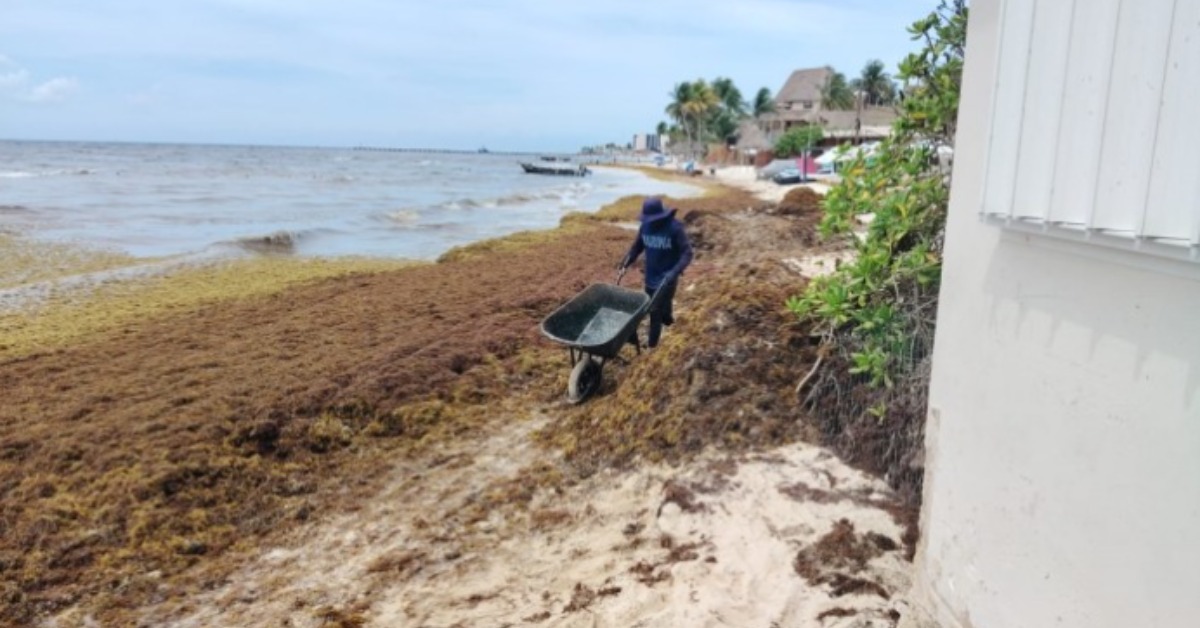
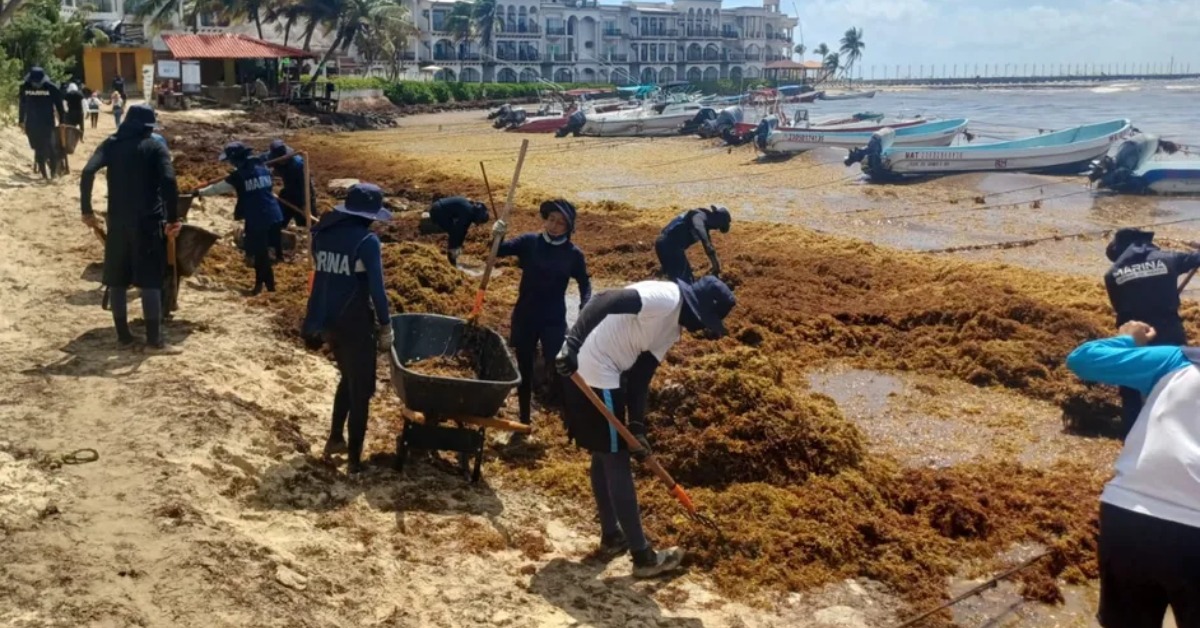
Stand on a beach in Quintana Roo in summer, and the first thing you notice is the smell from Sargassum in Mexico. The second is the color. Brown mats of floating seaweed change turquoise water to tea, then drift ashore in thick, rotting piles. The region has learned to live with it since 2011, when the Great Atlantic Sargassum Belt first appeared and began returning almost every year.
Scientists now argue this is not a simple pollution story. It is an ocean-atmosphere story. A 2025 study led by Julien Jouanno, with Mexican oceanographer Julio Sheinbaum as coauthor, traces the “tipping point” to an extreme negative North Atlantic Oscillation in 2009–2010 that shoved seed populations south, where they found warm, bright, nutrient-rich waters and began to thrive.
What changed after 2011
Before 2011, sargassum’s home base was the Sargasso Sea, a calm gyre north of the tropics. Then the pattern flipped. Satellite maps captured vast summer belts stretching from West Africa to the Gulf of Mexico. That new belt recurs most years and fuels heavy landings in the Caribbean and the Mexican coast.
The belt’s growth draws on nutrients from several places: upwelling, vertical mixing, Saharan dust, and major rivers. Recent work emphasizes the ocean’s own “fertilizer”—nutrients mixed up from depth by shifting winds and currents—while other studies still find strong signals of rising nitrogen and phosphorus in the algae itself. The likely answer is “both.”
2025 is already exceptional
By July, European satellite analysts were calling 2025 a record year for sargassum across the Atlantic. University of South Florida’s monthly bulletins reported sustained inundations around the Caribbean, including the Mexican Riviera. Forecasts and near-real-time maps continue to show heavy loads through summer.
Mexico’s federal navy, SEMAR, has made sargassum a seasonal operation. In Quintana Roo, authorities report thousands of meters of offshore barriers and a fleet of “sargacero” vessels that corral and remove algae before it hits the sand. Mid-season figures show 7,545 meters of barriers installed in Puerto Morelos, Playa del Carmen, Tulum, and Mahahual. Recent updates cite hundreds of tons collected in August alone, and tens of thousands of tons over the year to date.
Science is reshaping the playbook
Sheinbaum and colleagues urge a preventive model: treat sargassum as a coupled ocean-atmosphere-biosphere system, forecast months ahead, and position resources before the landings. The FORESEA program uses the NEMO-Sarg model to issue seasonal forecasts up to seven months out, now operational through the SeSaM system. Mexico’s agencies already consult satellite products; mainstreaming these skillful forecasts would tighten timing and cut cleanup costs.
When sargassum rots, hydrogen sulfide smells like rotten eggs. For beach workers and lifeguards, that is more than a nuisance. Health agencies recommend reducing exposure and taking symptoms seriously. This is an equity issue too. Residents and informal workers often spend more hours in that air than short-stay visitors.
The costs—and the search for value
Cleanup is expensive. Hotel groups in Quintana Roo reported billions of pesos in annual spending to keep beaches swimmable, while economists have measured real hits to local activity during heavy years. These costs recur each season and strain municipal budgets.
At the same time, a circular-economy push is taking shape. Engineers and researchers are piloting biogas, fertilizer, and even construction panels made from sargassum. Industry groups in the Riviera Maya now frame the algae as a potential fishery-class resource, though scaling remains tricky given toxins, salt content, and inconsistent supply.
Mexico and the Dominican Republic have proposed a joint initiative against sargassum, arguing that blooms do not respect borders. Shared forecasting, shared procurement, and standardized disposal could help. For now, each beach fights its own daily battle, while the belt that feeds these landings stretches almost ocean-wide.
The science is clear enough to change strategy. Treat the problem upstream, not just on the sand. Use seasonal forecasts to pre-position barriers and boats. Protect workers with clear health protocols. And keep investing in uses that make economic sense at scale. The brown tide is not going away. But with better timing, more innovative logistics, and honest science, sargassum in Mexico can be managed rather than endured.